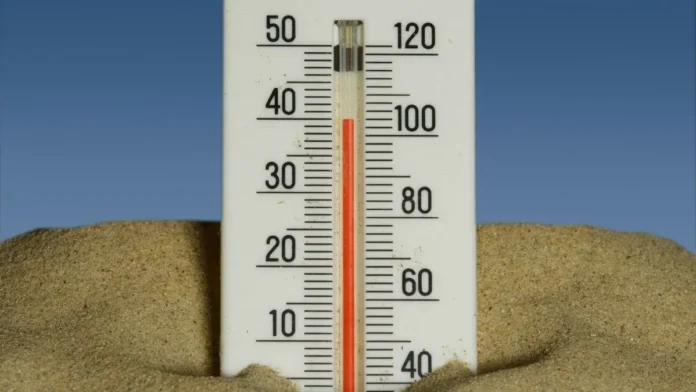

The United States heat dome that forecasters warned would coincide with the nation’s 250th birthday celebrations has arrived with full force, breaking or tying more than 300 temperature records across dozens of states as of Friday afternoon and placing 185 million Americans under active heat alerts. Cities from Boston to Miami, from Chicago to Washington DC, are experiencing their hottest July 4 temperatures in recorded history.
Heat-related deaths are being reported in multiple states. And the combination that makes this event particularly dangerous — extreme daytime highs followed by unusually warm overnight lows that give the body no time to recover — is expected to persist through Saturday before conditions begin to ease from the west.
The Records That Have Fallen
This July Fourth could be the hottest on record for millions of Americans as a massive heat wave traps more than half of the United States under a heat dome through the holiday weekend. Between daily high temperatures and warm overnight lows — which will not be low enough to offer much relief — more than 300 records are expected to be set by Saturday, the National Weather Service confirmed.
More than 185 million people were under heat alerts Friday, including residents of multiple major metropolitan areas — Boston, New York City, Philadelphia and Washington DC — according to the National Weather Service, which issued a mix of “extreme heat” warnings and heat advisories for dozens of states. The heat wave sweeping the eastern US was expected to peak Friday and Saturday, forecasters said, as dangerously high temperatures continued to ramp up from the Midwest to the East Coast.
Philadelphia, which has an all-time temperature record of 106°F from August 7, 1918, is approaching that benchmark. Washington DC is expected to exceed 100°F for two consecutive days. New York City’s Central Park could record its first triple-digit temperature in almost 14 years. Boston, which does not typically reach extreme heat levels, is recording temperatures well above its July 4 historical average.
The Overnight Problem — Why This Heat Wave Is Particularly Dangerous
The element of this heat wave that distinguishes it from many previous events — and makes it more dangerous — is not the daytime peak temperatures alone. It is the persistence of heat through the night.
As Americans endure another bout of extreme heat, experts say small thermostat adjustments and other energy-saving steps can help reduce soaring cooling costs — but the deeper problem is that overnight temperatures are not falling enough to allow the human body to recover from the physiological stress of extreme daytime heat.
In a normal heat event, even an extreme one, temperatures drop significantly overnight, providing a window during which the body can recover thermal equilibrium. When overnight lows remain in the mid- to upper 70s in suburban areas — and potentially in the low 80s in urban centres where the heat island effect adds additional degrees — recovery is severely limited. The cumulative physiological toll of two, three or four nights of insufficient cooling is significantly more dangerous than the same daytime temperatures with cooler nights.
This phenomenon — known as warm nights — has been identified by climate scientists as one of the most rapidly accelerating consequences of climate change. As average temperatures rise, overnight lows are rising faster than daytime highs in many regions, reducing the cooling window that historically gave populations in hot climates their physiological resilience.
Heat Deaths Across Multiple States
Heat-related deaths are being reported across multiple states, with emergency rooms seeing sharp increases in heat-related presentations. Outdoor Fourth of July events — parades, concerts, fireworks gatherings — are proceeding in many cities with enhanced medical presence.
Washington DC’s Fourth of July celebration, deemed a “national special security event” with the highest possible designation, is proceeding with additional water distribution and cooling stations. Fireworks displays in multiple cities are planned for late evening when temperatures will have partially moderated.
The CDC has been monitoring emergency room visit data and has noted elevated rates of heat-related presentations across the South and Midwest since Wednesday. Heat is already the deadliest form of extreme weather in the United States, killing more people annually than hurricanes, tornadoes, floods or any other weather hazard. In extreme heat events of this scale, the death toll accumulates not in a single dramatic moment but in hundreds of individual medical emergencies spread across dozens of states over several days — a pattern that makes the final toll impossible to know until weeks afterward.
Who Is Most at Risk
Public health officials have identified several populations facing the highest risk during this event. Older adults — particularly those living alone, without air conditioning and in urban areas — face the greatest danger, as confirmed by data from France’s parallel heatwave, where 85% of excess deaths involved people aged 65 and above. Outdoor workers, including construction crews, agricultural workers and utility workers, face acute exposure risk. Athletes and fans attending outdoor World Cup matches — including Friday’s Miami match between Argentina and Cape Verde, where temperatures are approaching 90°F with a heat index in the low 100s — face elevated risk without adequate preparation.
The CDC is also reporting the highest rate of emergency room visits from tick bites since 2017 in many parts of the US — a separate climate-related health signal reflecting how expanding tick habitats, driven by warmer winters, are increasing exposure risk.
What Comes After the Peak
The National Weather Service forecasts the heat dome to begin weakening from the west early next week, with the Midwest seeing some relief over the weekend. The East Coast — where the heat dome’s centre of gravity will settle for the next 24 to 48 hours — is expected to see moderate cooling beginning Sunday or Monday, as the upper-level ridge of high pressure shifts and thunderstorms develop along the front.
Utah Governor Spencer Cox has maintained his emergency order restricting fireworks across the state through the holiday, as wildfires continue to burn across the West. The Cottonwood Fire in southern Utah — the largest active wildfire in the country — remains at low containment despite cooler temperatures than last week.
For the 185 million Americans currently under heat alerts, the practical guidance from the National Weather Service, CDC and local emergency management agencies remains consistent: limit outdoor activity during peak hours, locate cooling centres, check on elderly and vulnerable neighbours, and — particularly for this holiday — ensure that fireworks events and outdoor gatherings include access to water, shade and emergency medical support.
The Fourth of July 2026 will be remembered as one of the hottest in American recorded history. Whether it is also remembered as a turning point in how the country prepares for the climate reality it now inhabits — or as another event that passed without producing durable policy change — remains to be seen.