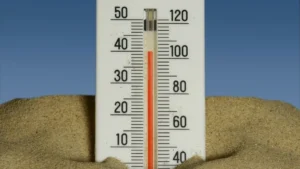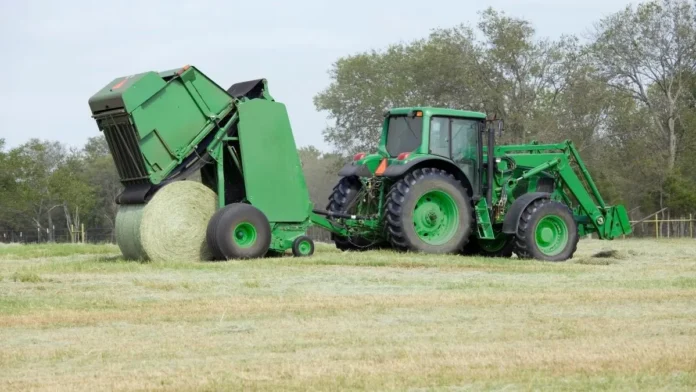

American farmers entered 2026 already under significant financial and operational stress. By the Fourth of July, their situation had deteriorated further — pressed by fertilizer prices elevated sharply by the Iran war, a record heat dome threatening crops across the farm belt on the hottest Independence Day in living memory, a tariff regime that has created deep uncertainty over export market access, and rural labour shortages made acute by immigration enforcement. Farm bankruptcies are at a 15-year high. And food prices, which had been easing after years of post-pandemic inflation, are showing signs of renewed upward pressure.
The Fertilizer Crisis Nobody Is Talking About
High fertilizer prices due to the war in Iran have hit farms already dealing with severe weather, tariffs and the high costs of fuel and labour, NPR reported this week. The connection between the Middle East conflict and American agriculture runs through natural gas — the primary feedstock for nitrogen fertiliser production worldwide, and a commodity whose price was disrupted severely by the closure of the Strait of Hormuz from late February through mid-June.
Nitrogen fertilisers, derived from natural gas through the Haber-Bosch process, account for the single largest input cost for most grain and row-crop farmers. When the Hormuz closure drove global natural gas prices sharply higher in March and April, fertiliser producers — many of whom use long-term natural gas contracts but faced elevated spot prices for additional supply — passed through the cost increase. Fertiliser prices rose approximately 40% above pre-war levels at the peak of the disruption, according to industry data. Even with the partial ceasefire and the modest reopening of Hormuz, fertiliser prices remain well above their pre-war baseline.
For a 500-acre corn operation in Iowa or Indiana, a 40% increase in fertiliser costs represents tens of thousands of additional dollars in annual input costs — a figure that can determine whether a farm turns a marginal profit or records a loss. For larger operations, the arithmetic is correspondingly more severe.
The Heat Wave Arrives at the Worst Time
The July 4 heat dome — with the National Weather Service warning of potentially historic temperatures across the Midwest, South and East Coast, including feel-like temperatures of 110°F in some areas — is arriving at a critical moment in the agricultural calendar.
For corn, the most widely planted crop in the United States, July is the pollination window — the period during which high temperatures can directly damage the fertilisation process and reduce yields. Sustained temperatures above 95°F during pollination are associated with significant yield losses. For soybeans, heat stress during pod-filling in late July similarly reduces output. For wheat — still being harvested across the southern plains — extreme heat accelerates ripening and can damage grain quality.
The USDA’s June crop condition report, released Monday, showed corn conditions at 68% good to excellent nationally — slightly below the five-year average. With the heat dome persisting through the holiday weekend, analysts expect July crop condition ratings to show further deterioration in the most affected regions.
Tariffs and Export Uncertainty
American farmers sell a substantial portion of their output on global markets. Corn, soybeans and wheat are internationally traded commodities, and US export competitiveness depends critically on trade access and currency dynamics. Both have been disrupted in 2026.
The Trump administration’s decision not to renew the USMCA — triggering a cycle of annual reviews and threatening the trade framework governing Canada and Mexico, the two largest US agricultural export markets — has introduced significant uncertainty for agricultural exporters. Canada purchases roughly $25 billion in US agricultural products annually. Mexico purchases approximately $30 billion. Both remain USMCA trading partners for now, but the non-renewal signals that access could be contested.
The broader tariff regime — with investigations into 60 countries and potential tariffs of 10% to 12.5% on their exports to the United States, triggering reciprocal measures — has complicated US agricultural trade across Asia, Europe and Latin America. China, which halted soybean purchases from the United States during the 2018-2019 trade war and redirected to Brazil, has maintained diversified sourcing strategies that leave US soybean exports exposed to retaliatory risk.
Labour — the Crisis Below the Surface
US immigration enforcement actions have reduced the agricultural workforce in several key farming regions. Agriculture relies heavily on seasonal and permanent immigrant workers — the USDA has estimated that roughly 40% to 50% of US crop farm workers are undocumented. Mass deportation proceedings and heightened enforcement in rural areas have disrupted labour availability in key production regions, including California’s Central Valley, Florida’s citrus belt and the Carolinas’ tobacco and sweet potato operations.
Farmers who have lost seasonal workers mid-harvest face a stark choice: leave crops in the field, pay significantly higher wages to attract domestic workers who are reluctant to do agricultural labour, or invest in mechanical harvesting systems for crops not yet amenable to full automation. None of these options is without cost.
Farm Bankruptcies at a 15-Year High
The combined pressure of elevated input costs, weather volatility, trade uncertainty and labour disruption is reflected in the financial data. Farm bankruptcies in the United States have reached their highest level in 15 years in 2026, according to USDA data. Small and medium-sized family operations — which operate on thinner margins, carry higher debt-to-asset ratios relative to large commercial operations, and have less capacity to hedge input costs — are disproportionately represented in the bankruptcy figures.
The American Farm Bureau Federation, the country’s largest agricultural lobbying organisation, has called on the administration to accelerate trade negotiations with Canada and Mexico, provide emergency fertiliser cost relief, and extend crop insurance programmes to cover heat-related damage more comprehensively.
What It Means for Food Prices
The farm-level crisis has not yet translated fully into supermarket prices — supply chains are long and price transmission is slow. But the conditions that produce farm financial stress eventually work their way through to consumer costs. Corn and soybean prices at the Chicago Board of Trade have risen roughly 15-20% since the start of the year, driven by the combined effect of the energy disruption and weather concerns. Livestock producers, who use corn and soybean meal as feed inputs, are absorbing cost increases that will eventually appear in beef, pork and poultry prices.
The Federal Reserve, which is already managing headline inflation of 4.2%, will be watching food price indices closely. Any renewed upward pressure from agricultural commodity markets — arriving just as energy price pass-through from the Hormuz disruption was beginning to ease — would complicate the Fed’s already difficult inflation management challenge.