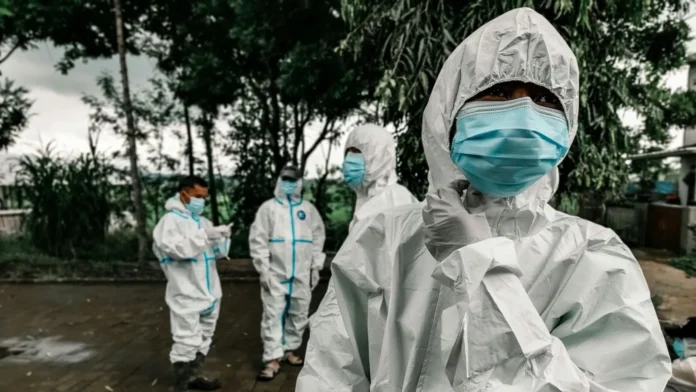

The Ebola outbreak in the Democratic Republic of Congo has become the country’s largest on record, with infections continuing to accelerate across five provinces despite an extensive response from national health authorities and international partners, more than two months after the World Health Organization declared it a global health emergency.
What Happened
As of the first week of August, the outbreak has caused 1,707 confirmed deaths in the DRC and two additional deaths in neighboring Uganda, according to figures tracked from the Congolese Ministry of Public Health’s ongoing situation reports. The World Health Organization declared the outbreak a Public Health Emergency of International Concern on May 16, its highest level of global alert, after the virus, identified as Bundibugyo virus, a strain of Ebola, began spreading across multiple health zones.
The outbreak was first publicly confirmed by Congolese health authorities on May 15 in Ituri Province, with 246 suspected cases reported at that time across the health zones of Bunia, Mongwalu, and Rwampara. Since then, the virus has spread to additional provinces, with confirmed cases also identified in the DRC’s capital, Kinshasa, and Uganda’s capital, Kampala, raising concerns about the outbreak’s potential for wider geographic spread beyond its initial epicenter.
Health officials caution that the true scale of the outbreak likely considerably exceeds the confirmed case and death figures, given the DRC’s limited healthcare infrastructure in affected regions and the presence of ongoing armed conflict, both of which significantly hinder case detection, treatment, and broader containment efforts.
Why It Matters
The outbreak’s designation as the DRC’s largest Ebola outbreak in history is significant given the country’s extensive prior experience with the disease. The DRC has recorded 16 known previous Ebola outbreaks, giving the country substantial institutional experience in outbreak response, making the current epidemic’s scale a notable indicator of how severely conflict and infrastructure limitations are constraining what would otherwise be a comparatively well-prepared national health response.
The Bundibugyo strain specifically carries an estimated case fatality rate between 25% and 50%, and unlike the more extensively studied Zaire ebolavirus strain, there is currently no vaccine or medicine specifically approved for Bundibugyo virus. Limited research involving macaques suggests that Ervebo, the vaccine approved for Zaire ebolavirus, may offer partial protection against the Bundibugyo strain, but this has not been established through human clinical trials specific to the current outbreak.
The involvement of two capital cities, Kinshasa and Kampala, adds significant concern given the population density and connectivity of major urban centers, which historically increase the risk of accelerated transmission compared with outbreaks confined to rural areas, even as the majority of cases and deaths remain concentrated in the initial affected provinces.
Context and Background
The DRC has more Ebola outbreak experience than any other country, reflecting the virus’s endemic presence in Central Africa’s forest ecosystems, where it is believed to circulate among wildlife reservoir species before periodically spilling over into human populations. Despite this experience, the ongoing armed conflict in eastern DRC, involving multiple armed groups and complicating humanitarian access across large parts of the country, has created particularly challenging conditions for this outbreak’s containment compared with several previous, more successfully contained epidemics.
The WHO’s Public Health Emergency of International Concern declaration, its highest level of alert reserved for outbreaks posing significant risk of international spread, places the current epidemic in the same formal category as previous major global health emergencies, reflecting the severity with which international health authorities are treating the outbreak’s trajectory.
Uganda’s confirmed cases, though currently limited to two deaths and a small number of confirmed infections in Kampala, represent a significant concern for regional health authorities given the extensive cross-border movement between the DRC and Uganda, a pattern that has complicated containment efforts during previous Ebola outbreaks in the region.
Expert Analysis
Public health researchers tracking the outbreak note that the combination of armed conflict and weak healthcare infrastructure represents one of the most challenging possible environments for Ebola containment, since effective outbreak response typically depends heavily on rapid case identification, contact tracing, and community engagement, all of which are significantly complicated by active conflict zones and population displacement.
Infectious disease specialists emphasize that the current outbreak’s designation as the DRC’s largest ever, despite the country’s extensive institutional experience with Ebola response, underscores how significantly conflict-related access constraints can undermine even well-established public health response capacity, a pattern researchers say has broader implications for how the international community approaches outbreak response in active conflict settings globally.
Researchers also note that the lack of a strain-specific approved vaccine for Bundibugyo virus represents a significant gap in the current response toolkit, one that distinguishes this outbreak from more recent, better-contained Zaire ebolavirus outbreaks in the DRC, where the availability of the Ervebo vaccine has historically played a significant role in outbreak containment.
What Happens Next
International health authorities and the Congolese government are expected to continue expanding response efforts across the five affected provinces, though the trajectory of the outbreak will likely remain heavily dependent on the security situation in conflict-affected areas. Continued monitoring of potential spread beyond the currently affected provinces, particularly given confirmed cases in both Kinshasa and Kampala, will remain a key priority for international health officials.
Given the outbreak’s continued acceleration more than two and a half months after the WHO’s emergency declaration, sustained international funding and logistical support are likely to remain critical to eventual containment, particularly as health officials continue to caution that confirmed case and death figures likely understate the outbreak’s true scale.