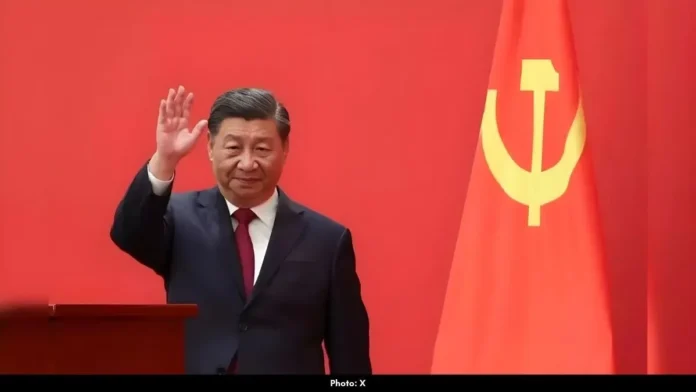

Chinese President Xi Jinping will travel to the United States from September 23 to 25 for a state visit at the invitation of President Donald Trump, putting the relationship between Washington and Beijing back at the centre of international diplomacy.
The visit follows preparatory economic talks in New York between U.S. Treasury Secretary Scott Bessent and Chinese Vice Premier He Lifeng on September 20. Those discussions covered trade, artificial intelligence and other economic issues and were intended to prepare the ground for the leaders’ meeting later this week.
The summit is taking place against a complicated backdrop. Washington and Beijing have reduced some of the immediate pressure generated by the previous tariff confrontation, but important disagreements remain over market access, advanced technology, critical minerals, supply chains and the implementation of earlier commitments.
What Has Been Confirmed
China’s Foreign Ministry confirmed on September 21 that Xi will make a state visit to the United States from September 23 through September 25.
According to China’s official statement, Xi and Trump are expected to exchange views on major issues concerning China-U.S. relations as well as broader international issues involving peace and development. Chinese officials described the reciprocal leadership visits within six months as significant for bilateral relations.
The confirmation ends speculation over the timing of the leaders’ next meeting and places a major diplomatic event on the calendar during the United Nations General Assembly period in New York.
The summit also comes at a moment when economic relations are relatively more stable than during the most intense periods of the tariff confrontation, but far from settled.
Preparatory Talks Focused On AI And Trade
The September 20 talks between Bessent and He produced several areas for further discussion. One of the more notable proposals involved artificial intelligence.
Bessent said the United States had proposed establishing a bilateral AI safety notification mechanism covering AI-related incidents that rise to a national-security level. The idea would move discussions toward greater communication and transparency between the two countries, which are among the world’s leading AI powers.
The proposal is significant because competition between the United States and China over AI is no longer limited to commercial applications. The technology has implications for cybersecurity, military capabilities, critical infrastructure, data processing and industrial competitiveness.
At the same time, the discussions demonstrated the limits of cooperation. Reuters reported that China’s response to the U.S. proposal remained unclear and that Chinese state media offered only limited details on the AI portion of the talks.
The two sides also discussed a mechanism known as the “Board of Trade,” intended to identify selected non-strategic goods that could potentially receive tariff reductions.
U.S. Trade Representative Jamieson Greer said potential Chinese exports could include consumer goods and lower-technology items, while American exports could include energy, agricultural products and medical devices.
Critical Minerals Remain A Major Issue
One of the hardest problems in the relationship concerns critical minerals. China has a dominant position across significant parts of the global rare-earth supply chain, including processing and production of materials used in technology, electronics and defense applications.
A Reuters analysis published on September 21 said China’s position in rare-earth mining, processing and magnet production has constrained Washington’s leverage in the broader technology and trade dispute. This matters because modern manufacturing relies on materials that are difficult to replace quickly.
Rare earths are used in areas including electric motors, consumer electronics, industrial equipment and advanced defense systems. Building alternative supply chains requires mining capacity, processing facilities, financing and years of development. That means export restrictions can produce effects much faster than alternative supply can be created.
The September 20 talks did not produce an announced breakthrough on critical-mineral flows to U.S. companies. American officials have said previous Chinese commitments to ease restrictions have not yet gone far enough.
The Trade Truce Has A Deadline
The summit also takes place with a specific timeline in the background. The current U.S.-China trade truce is set to expire on November 10, meaning that decisions made during the September meeting could shape negotiations before that deadline.
That creates a narrow window for both sides. They could use the summit to extend existing arrangements, negotiate additional sector-specific measures or establish processes for resolving individual disputes.
But the list of unresolved questions remains long. Earlier agreements reportedly included commitments involving agricultural purchases and Boeing aircraft, and Reuters reported that U.S. officials did not provide updates on progress on those issues during the latest talks.
The presence of unresolved commitments demonstrates why the summit cannot be understood solely through the lens of tariffs.
Why AI Is Now Part Of Geopolitical Diplomacy
Artificial intelligence has emerged as a strategic issue alongside conventional trade questions. The United States and China are competing over semiconductor technology, computing infrastructure, AI models, talent and industrial applications.
At the same time, both countries have an interest in understanding the risks associated with advanced systems. That creates an unusual diplomatic problem.
Competition can encourage secrecy, export controls and restrictions on technology flows. Risk management, by contrast, requires communication. Bessent’s proposal for an AI notification mechanism reflects this tension. The United States is seeking greater transparency around high-level AI risks while continuing to compete with China over advanced technology.
George Chen of the Asia Group told Reuters that future discussions could move toward subjects such as AI weaponization, AI safety principles, critical infrastructure protection and cyberattack prevention, while noting that distrust between the countries remains a significant obstacle.
These issues could become increasingly important as AI systems are integrated into national infrastructure and industrial processes.
Taiwan Remains A Strategic Backdrop
Although the immediate preparatory economic talks have concentrated on trade and AI, the wider U.S.-China relationship also includes persistent disputes over Taiwan. The island remains one of the most sensitive security issues between Washington and Beijing.
Reuters reported last week that U.S. allies in Asia were watching closely for indications of how Trump would approach Taiwan during the summit, amid concerns over the possibility of changes in U.S. messaging.
China regards Taiwan as a core national interest, while the United States maintains longstanding relations with Taiwan and provides it with military equipment. Because Taiwan is also central to the global semiconductor industry, developments around the island have consequences far beyond security policy.
A shift in the political temperature between Washington and Beijing can therefore affect technology markets, supply chains and strategic planning across Asia.
The Yuan Is Also Moving
The summit is already being watched by financial markets. China’s yuan rose to its strongest level against the U.S. dollar in more than three and a half years on September 21. Reuters reported that the People’s Bank of China had softened its resistance to currency appreciation in the run-up to the summit.
The yuan reached 6.6950 per dollar during trading, its strongest level since January 2023, while the central bank’s daily midpoint was also set at its strongest since February 2023.
Analysts quoted by Reuters cautioned that the currency move should not automatically be interpreted as the beginning of a prolonged appreciation cycle. The distinction is important.
Currency movements can respond to immediate policy signals, market positioning and diplomatic conditions without necessarily indicating a fundamental shift in a country’s long-term economic outlook.
What Happens Next
The leaders are scheduled to meet in Washington from September 23 to September 25. The outcome will be closely watched for concrete measures rather than broad diplomatic language.
Key areas to monitor include:
- Whether the trade truce can be extended beyond November 10
- Whether tariff reductions on selected goods are formalized
- Whether critical-mineral supply restrictions are eased
- Whether a bilateral AI dialogue is established
- Whether earlier agricultural and commercial commitments advance
- How the two governments address continuing technology restrictions
The importance of the meeting goes beyond the immediate relationship between Washington and Beijing. The United States and China sit at the centre of global manufacturing, technology, finance and trade. Their policy decisions can affect commodity markets, industrial investment, semiconductor supply chains and corporate planning around the world.
The summit therefore represents another attempt to manage a relationship that combines deep economic interdependence with strategic competition. For markets and businesses, the most consequential question may not be whether the two leaders produce a sweeping agreement. It may be whether they can maintain enough dialogue to prevent existing disputes from turning into fresh disruptions.
That will become clearer after the meetings in Washington later this week.