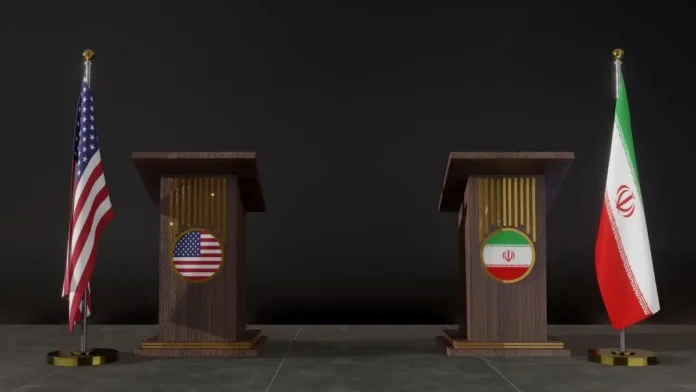

U.S. and Iranian officials held a three-hour meeting in New York on September 22, opening a new channel for diplomacy as the war between the two countries approaches its seventh month and the disruption of the Strait of Hormuz continues to affect global energy markets.
President Donald Trump said the meeting was positive and that reaching an agreement would be in Iran’s interest. Iranian officials, meanwhile, conveyed conditions for reopening the strategic waterway and restarting a broader diplomatic process, according to Iranian state media and reporting based on the talks.
The meeting came after Trump used his address to the United Nations General Assembly to warn that Iran faced the possibility of further military escalation if a peace agreement was not reached. Trump also said the United States remained focused on preventing Iran from obtaining a nuclear weapon.
At the same time, Iran has signaled that it is prepared to return to negotiations through mediators. A senior Iranian official told Reuters that Tehran could reopen the Strait of Hormuz within seven days if Washington eased military pressure and lifted its blockade on Iranian ports.
The combination of direct contact, conditional diplomacy and a possible reopening of the world’s most important energy chokepoint gives the current UN gathering an immediate economic as well as diplomatic significance.
What Happened At The UN
The meeting followed Trump’s September 22 speech at the United Nations, where he defended the U.S.-Israeli military campaign against Iran and outlined his position on the conflict. Trump subsequently said members of his team had met with an Iranian delegation for about three hours in New York.
According to reports, U.S. Special Envoy Steve Witkoff was involved in the meeting. Iranian Foreign Minister Abbas Araghchi was also reported to have been involved on the Iranian side. The discussions took place on the sidelines of the UN General Assembly rather than as a formal summit between Trump and Iranian President Masoud Pezeshkian.
Trump described the encounter as “very good” and said he believed an agreement was possible. The Iranian side also used the meeting to present conditions linked to the Strait of Hormuz and the broader conflict.
Those conditions reportedly include an end to the naval blockade, the release of frozen Iranian assets and an end to fighting across what Tehran describes as the wider “resistance” fronts. No formal agreement was announced after the meeting.
That is important because the two governments remain far apart on several fundamental issues.
Iran’s Conditions For Reopening Hormuz
The Strait of Hormuz has become one of the most visible consequences of the war. A senior Iranian official told Reuters that Tehran could reopen the waterway within seven days if the United States eased military pressure and lifted the blockade on Iranian ports. The official also said Iran’s delegation at the UN had authority to revive diplomacy with Washington.
The statement does not mean the Strait is already open to normal shipping. Commercial traffic has remained far below pre-war levels, and energy companies, shipowners and insurers need evidence of a sustained improvement in security before operations can return to normal.
The waterway previously carried roughly one-fifth of global oil and liquefied natural gas supplies. That makes any sustained reopening potentially significant for fuel markets far beyond the Persian Gulf. The distinction between a political agreement and physical reopening is therefore critical.
A government can announce that a route is safe. Shipping companies still need to decide whether their vessels can use it without unacceptable risks.
Why Hormuz Matters To The Global Economy
The Strait of Hormuz connects the Persian Gulf with the Gulf of Oman and the Arabian Sea.
Its geography makes it difficult to replace. Large quantities of crude oil, petroleum products and liquefied natural gas normally pass through the route, making it central to energy supplies in Asia, Europe and other importing regions.
When traffic falls, the immediate effect is often higher freight, insurance and fuel costs rather than a complete disappearance of supply. Markets adjust through inventories, alternative pipelines, additional production and rerouting. But those alternatives are not unlimited.
That is why even a possibility of renewed shipping through Hormuz can influence oil prices.
On September 22, crude prices fell as Saudi shipments increased and traders responded to signs that diplomacy around Iran could eventually improve energy flows. Brent futures settled at $99.25 a barrel, down 1.09%, while WTI settled at $94.99, down 1.24%.
Saudi Arabia Is Already Increasing Alternative Flows
The market response has not depended entirely on Iran. Saudi Arabia has restarted its East-West oil pipeline and was preparing to resume exports from the Red Sea port of Yanbu, according to sources cited by Reuters.
Saudi crude shipments through Hormuz have also increased from the extremely low levels recorded during the worst part of the disruption. Reuters reported that Saudi oil moving through Hormuz had averaged about 2.9 million barrels per day over six days, compared with roughly 700,000 barrels per day in August.
That recovery matters because the global market is not waiting for one single diplomatic outcome. Producers and traders are already using alternative routes and adjusting logistics to keep energy supplies moving.
However, those measures don’t completely replace normal Hormuz traffic.
The Meeting Came After A Major Warning From Trump
Trump’s UN speech added another layer of uncertainty. In his address, he warned that the United States could take further military action against Iran if no peace deal was achieved. He framed the nuclear question as a central condition and said Iran could either reach an agreement or face the continuation of the conflict.
Trump also said the United States had been communicating with Iran. Later, after meeting British Prime Minister Andy Burnham, he said Iranian officials were still talking with Washington and suggested that the relationship was developing.
The sequence is notable. The same day included a sharply worded public warning and a private diplomatic meeting lasting several hours. That combination suggests that pressure and negotiation are being used simultaneously.
It does not establish that the two countries have reached common ground.
The Nuclear Issue Remains The Core Dispute
For Washington, the question of Iran’s nuclear capability remains central. Trump said the United States would not accept a situation in which Iran obtained a nuclear weapon. Iran, for its part, has sought guarantees that negotiations are genuinely aimed at ending the military confrontation rather than simply imposing additional conditions.
That difference has repeatedly complicated attempts to revive negotiations. An agreement would therefore need to address more than the immediate military situation.
It would also need to establish how nuclear restrictions would be handled, what sanctions or economic measures would change, how verification would work and what guarantees each side would receive.
The three-hour meeting may provide an opportunity to begin working through those issues, but it is not evidence that they have already been resolved.
Why Gulf States Are Watching Closely
The countries surrounding the Persian Gulf have direct economic and security interests in the conflict. Saudi Arabia, the United Arab Emirates, Qatar, Kuwait, Bahrain and Oman all face some combination of shipping, energy and regional-security consequences.
Oil and gas exports underpin much of the region’s economic activity. Any sustained disruption to Hormuz therefore affects not only international buyers but the producers that rely on the route to reach global markets.
Reuters reported that Trump was due to meet representatives of Arab countries during the UN gathering, with several expected to urge the administration to reduce tensions and pursue a diplomatic solution.
For Gulf governments, a de-escalation that restores predictable shipping would reduce one major source of economic uncertainty.
The Energy Market Is Especially Sensitive To Diesel Shortages
Crude oil is not the only concern. Diesel markets have been under significant pressure because refined-product supplies have also been affected by disruptions involving major producers.
Reuters reported that diesel prices in Europe and the United States had reached record levels as the Iran and Ukraine conflicts reduced exports from major suppliers.
That matters because refined fuel markets respond differently from crude markets. Even if additional crude becomes available quickly, refineries still need to process it, while shipping capacity, storage and regional demand determine where finished products can actually reach consumers.
A reopening of Hormuz could therefore help, but it wouldn’t necessarily eliminate fuel-market tightness overnight.
Shipping Data Will Provide The Clearest Test
Political announcements can move markets quickly. Physical shipping data moves more slowly. The clearest indication that Hormuz is truly reopening would be a sustained increase in vessel traffic through the waterway.
Before the war, about one-fifth of global oil and LNG supplies passed through the route. During the disruption, commercial traffic fell dramatically.
Reuters reported that only two commodity vessels crossed the strait on one recent day, compared with normal levels of around 125 large commercial vessels daily before the conflict.
That gap illustrates the scale of the disruption. For international buyers, what matters is not simply whether Iran says the strait can reopen.
It is whether shipowners, insurers and cargo operators believe that the route has become reliably usable.
What Happens Next
The next stage will revolve around whether the UN contacts produce a formal negotiating framework. The three-hour meeting gives both sides a fresh line of communication.
Iran has indicated that it is prepared to discuss reopening Hormuz and reviving diplomacy under certain conditions. The United States continues to insist on preventing Iran from obtaining a nuclear weapon while maintaining military pressure.
Those positions are not yet aligned.
The immediate questions are therefore practical:
- Will Washington formally respond to Tehran’s conditions?
- Will the blockade affecting Iranian ports be eased?
- Will follow-up meetings take place?
- Can the two sides agree on a process for discussing the nuclear issue?
- Will commercial shipping begin returning to Hormuz?
The energy-market response will depend heavily on those developments. A credible diplomatic process could reduce some of the risk premium built into oil prices. A breakdown in talks could have the opposite effect, particularly while refined fuel inventories remain tight.
For now, the most important development is that Washington and Tehran have returned to direct high-level contact in New York. The meeting has not produced a peace agreement, and the Strait of Hormuz has not returned to normal.
But diplomacy is now taking place alongside military pressure, and the outcome of those parallel tracks could have consequences for global energy markets as well as the future course of the conflict.