
A proposal to halt attacks on energy infrastructure in the war between Russia and Ukraine is being discussed at the United Nations this week, with French President Emmanuel Macron saying he raised the idea with U.S. President Donald Trump.
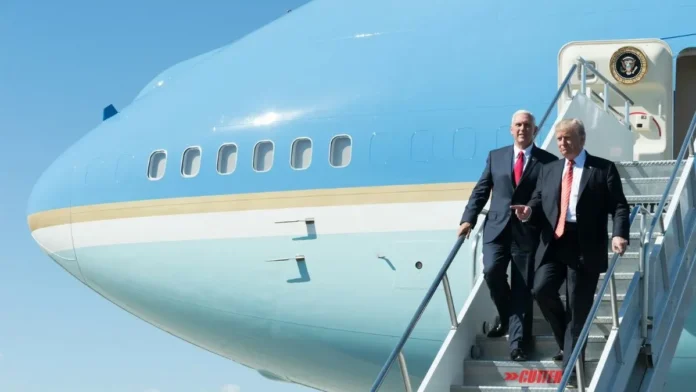
Macron said after meeting Trump in New York on September 21 that the two had discussed initiatives aimed at securing a moratorium on attacks involving the energy sector. He also said they discussed strengthening Ukraine’s defensive capabilities, particularly by supplying additional interceptor missiles.
The proposal comes as Ukraine prepares for another winter under wartime conditions and amid continuing attacks on power, fuel and energy infrastructure on both sides.
Ukrainian President Volodymyr Zelenskiy is due to meet Trump at the United Nations on September 22. According to Reuters, Zelenskiy is expected to press for an energy truce while also seeking additional U.S.-made Patriot air-defense missiles. The talks are taking place against a broader diplomatic effort around the UN General Assembly, but no comprehensive ceasefire has been announced.
What The Proposed Energy Truce Would Cover
Macron did not provide detailed terms for the proposed moratorium. He said the discussions with Trump included the idea of stopping strikes against energy infrastructure and that he intended to raise the subject with Zelenskiy as well.
The purpose would be narrower than a full ceasefire. An energy truce would focus on facilities such as power-generation infrastructure, fuel facilities, transmission systems and other assets whose destruction directly affects civilian energy supplies or industrial capacity.
That distinction is important because the war has continued across multiple fronts. A limited agreement could theoretically restrict attacks against energy infrastructure while allowing combat operations elsewhere to continue.
The practical problem would be defining which installations fall within the agreement and determining how compliance would be verified.
Why Energy Infrastructure Has Become Central
Ukraine’s energy system has been repeatedly affected by the war. Power stations, transmission facilities and fuel infrastructure are strategically important because damage to them can affect millions of civilians as well as military logistics and industrial production.
The approach of winter increases the importance of electricity and heating infrastructure. Ukraine’s concern is that attacks on energy facilities could again create widespread disruptions during periods of extreme cold.
Reuters reported that Ukrainian officials fear Russia may target heating and power infrastructure during the coming winter, while Russian energy infrastructure has also been attacked by Ukrainian drones.
The issue is therefore not restricted to one side. Both countries have used strikes against energy-related targets as part of the wider conflict, although the scale, targets and military effects differ.
A Previous Agreement Did Not Last
The current proposal follows an earlier attempt to establish a similar arrangement. Trump said last week that Russia and Ukraine had agreed not to strike energy targets. The arrangement did not hold.
Reuters reported that Russia struck petrol stations in Kyiv the next day, while Ukraine subsequently attacked a Russian oil refinery. That experience presents a major obstacle for the latest diplomatic initiative.
An agreement is meaningful only if both sides understand its scope and observe it. A temporary pause could also fail because the two militaries interpret permissible targets differently.
For example, a facility that one side considers a civilian energy installation could be viewed by the other as supporting military operations.
Verification would therefore be a central issue.
Macron’s Role In the discussion
Macron said the meeting with Trump focused heavily on strengthening Ukraine’s air defenses. He described interceptor missiles as a particularly important defensive requirement for Kyiv.
Air-defense systems are relevant to the energy truce because infrastructure can remain vulnerable even when diplomatic discussions are underway. Ukraine relies heavily on missile and drone interception to protect cities and critical facilities.
Patriot systems are particularly important because they can engage some ballistic missile threats that are more difficult for other defensive systems to intercept. Reuters reported that Ukrainian officials are seeking more Patriot missiles ahead of winter amid increased Russian missile and drone attacks.
This creates two parallel tracks.
One is diplomatic: reduce attacks against energy infrastructure.
The other is defensive: increase Ukraine’s ability to protect the infrastructure if attacks continue.
Zelenskiy’s Position
Zelenskiy has indicated that Ukraine is prepared to consider matching de-escalation measures if attacks on its energy sector and other critical infrastructure stop. According to Reuters, he described the situation as an opportunity for diplomatic momentum following a phone call with Trump.
At the same time, Kyiv has remained reluctant to stop attacks on Russian oil infrastructure unilaterally. The reason is strategic.
Ukraine’s drone strikes against Russian oil facilities can disrupt refining and fuel supplies that support Russia’s economy and military system. Reuters reported that Kyiv views damage to Russia’s oil industry as an important means of increasing pressure on Moscow. That creates a basic negotiating problem.
Ukraine can agree to stop attacks on Russian energy facilities only if it believes Russia will simultaneously stop attacks on Ukrainian infrastructure.
A unilateral pause would remove one of Kyiv’s military tools without necessarily guaranteeing reciprocal protection.
Russia’s Position Remains Unclear
As of September 22, Russia had not signaled that it was seeking a broader pause in the air war. That makes implementation uncertain.
The Kremlin and Russian officials have continued to describe the conflict through the lens of military objectives, while Ukraine has maintained that attacks on critical infrastructure must stop as part of any broader de-escalation.
Without an agreed mechanism, even a political announcement could be followed by competing accusations over violations. The problem is particularly acute because infrastructure damage can have long-lasting effects.
Destroying a transformer, refinery unit or generating station does not simply remove capacity for the duration of an attack. Replacement equipment can take months or longer to manufacture and install.
Energy Security Extends Beyond Ukraine
The consequences of attacks on Russian and Ukrainian energy systems are not confined to the two countries. Russia is a major energy producer, while Ukraine plays an important role in regional electricity connectivity and transport infrastructure.
Damage to Russian refineries can reduce diesel and gasoline supplies. Damage to Ukrainian electricity infrastructure can affect industrial production, public services and regional power flows.
The effects can therefore enter international commodity markets. This is one reason the energy truce proposal has attracted attention beyond Europe.
The global diesel market has already been under pressure from disruptions involving Russia, the Middle East and other producers. Reuters reported that diesel prices in Europe and the United States had reached record levels amid the broader energy disruption.
A reduction in attacks could help stabilize some of those supply risks, although it would not immediately restore lost refining capacity.
The Winter Deadline
Winter gives the negotiations an additional time constraint. Ukraine needs to prepare its energy system before the period of highest heating demand.
That means repairing damaged infrastructure, protecting key facilities, stockpiling fuel and maintaining sufficient generation capacity. An energy truce could simplify some of that preparation by reducing the risk of repeated attacks.
But infrastructure protection also depends on air defenses. Macron’s comments about interceptor missiles therefore fit directly into the broader energy discussion.
A reduction in attacks would lower the number of threats. Stronger air defenses would increase the ability to stop the threats that remain.
What An Agreement Would Need
For an energy truce to function in practice, several questions would have to be resolved. These would include the exact definition of protected infrastructure, the duration of the moratorium, procedures for reporting alleged violations and mechanisms for determining responsibility.
Both sides would also need to clarify whether certain dual-use facilities were covered. That could include refineries, fuel depots, electricity substations, pipelines and ports.
International monitoring could provide another layer of verification, although establishing such a system during an active war would be complicated.
The experience of previous ceasefires suggests that political statements alone aren’t necessarily enough. The agreement would need clearly defined obligations and some way of establishing whether violations occurred.
What Happens Next
Zelenskiy’s meeting with Trump at the UN is the next immediate step. Macron said he hoped progress could be made during the annual UN gathering and that supporting Ukraine’s energy system remained a priority.
Trump is also due to meet Russian Foreign Minister Sergei Lavrov’s U.S. counterpart in separate diplomatic discussions during the assembly. The outcome of these contacts should provide more information about whether an energy-specific agreement is realistic.
For Ukraine, the immediate concerns remain air defense and energy resilience before winter. For Russia, the central question will be whether Moscow is prepared to limit strikes against Ukrainian energy infrastructure while accepting constraints on attacks against its own oil and energy assets.
For the United States and European governments, the issue connects military support, diplomacy and energy security. An energy truce would not end the war.
It would instead address one specific category of attacks that has consequences for civilians, industrial production and regional energy security.
The next stage will depend on whether the parties can turn the political idea discussed by Macron and Trump into clearly defined commitments that both Moscow and Kyiv are prepared to observe.