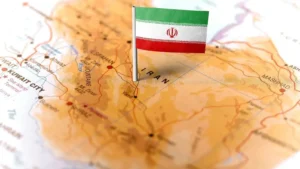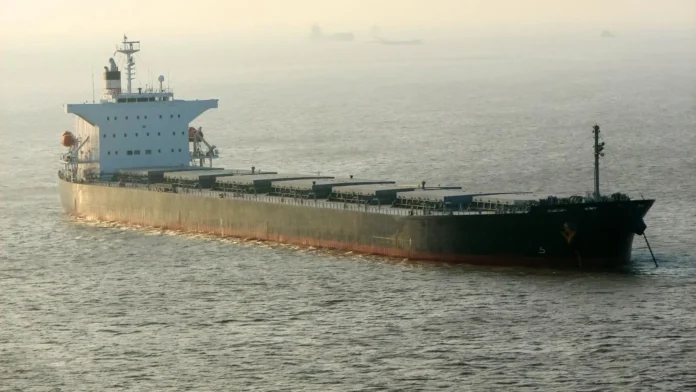

A US Navy helicopter fired Hellfire missiles to disable a cargo ship attempting to break Washington’s naval blockade of Iran on Tuesday, as a separate Houthi attack on another vessel in the Bab el-Mandeb Strait killed six people, marking the first confirmed shipping deaths from the group since the US-Iran war began in February.
What Happened
US Central Command said a Navy MH-60 helicopter fired two AGM-114 Hellfire missiles into the engine room of the Panama-flagged M/V Vela Nova after the ship’s civilian crew ignored repeated warnings to stop sailing toward an Iranian port in the Gulf of Oman. CENTCOM said the strike disabled the vessel’s propulsion, and that “the ship is no longer transiting to Iran in violation of the U.S. blockade.” No casualties were reported in that incident. It marked the third vessel the US has forcibly disabled since reimposing the blockade on July 14, and the twelfth since the blockade was first announced in April.
Separately, an Iran-backed Houthi attack on the Egyptian-owned cargo ship Tihamah in the Bab el-Mandeb Strait killed six people, according to Pakistani and Yemeni officials. Four crew members, three Pakistani and one Indonesian, died in the initial strike. Two Yemeni rescuers from the National Resistance Forces, an anti-Houthi military group, were killed when the Houthis struck again after rescue crews arrived at the scene. Ten more people were injured, including crew members, coast guard personnel, and a rescuer.
CENTCOM said it has redirected 55 commercial vessels attempting to run the blockade and boarded two others as of Tuesday. Iranian officials have said Tehran will continue restricting traffic through the Strait of Hormuz until the US lifts its naval blockade, withdraws military forces from the region, lifts sanctions, and pays compensation for damages caused by the war.
Why It Matters
The Tihamah attack’s death toll represents a grim milestone: the first confirmed fatalities from a Houthi strike on commercial shipping since the broader US-Iran conflict began nearly six months ago, despite the group’s sustained campaign of attacks on vessels throughout that period. The deliberate targeting of rescue crews who arrived after the initial strike adds a particularly severe dimension to the incident, raising serious humanitarian law concerns.
The escalating US enforcement campaign against Iran, now having forcibly disabled three vessels in less than a month since the blockade’s mid-July reinstatement, illustrates Washington’s continued reliance on economic pressure as its primary lever against Tehran even as broader ceasefire and Hormuz negotiations continue through separate diplomatic channels involving Oman and Pakistan.
Together, the two incidents underscore how dangerous Gulf and Red Sea shipping lanes remain nearly six months into the conflict, with vessels facing risk from multiple directions: US enforcement actions targeting blockade violators, and Houthi attacks targeting vessels connected to Saudi Arabia or its allies, creating an increasingly hazardous environment for commercial shipping across the broader region.
Context and Background
The US imposed its naval blockade on Iranian ports on April 13, following the failure of earlier Islamabad-mediated talks to end the conflict, with the explicit goal of blocking vessels entering and leaving Iranian ports. According to CENTCOM figures, the blockade has intercepted 85 vessels total and seized three ships outright, with the operation estimated to be costing Iran roughly $500 million daily in lost trade revenue.
The Houthis, an Iran-aligned armed movement controlling much of northern Yemen, have separately declared a blockade of Saudi Arabia and Saudi-linked shipping since July, part of a broader campaign of attacks on commercial vessels transiting the Bab el-Mandeb Strait and Red Sea that has continued intermittently since the group first began targeting shipping in November 2023.
The Bab el-Mandeb Strait, alongside the Strait of Hormuz, has become one of two major regional maritime chokepoints disrupted throughout the current conflict, with both waterways experiencing sustained attacks, damaged and captured vessels, and mounting casualties among crew members over the course of the war.
Analysis
Maritime security analysts note that Tuesday’s Hellfire strike on the Vela Nova reflects an evolution in US blockade enforcement tactics, moving from primarily boarding operations and warnings toward more direct precision strikes when vessels refuse to comply, a shift that suggests growing US determination to maintain the blockade’s effectiveness even as it raises the stakes for individual ship crews.
Regional security analysts describe the Houthi strike on rescue personnel following the initial Tihamah attack as a particularly troubling development, given that targeting rescuers responding to an emergency represents a violation of well-established maritime humanitarian norms regardless of the underlying conflict’s broader political dynamics.
Some analysts point to Pakistan’s continued diplomatic engagement, including its defense minister’s recent comments suggesting the US and Iran are close to “some sort of arrangement,” as evidence that back-channel negotiations continue even as enforcement actions and attacks on both sides intensify, illustrating the complex, multi-track nature of the ongoing conflict.
What Happens Next
The US blockade of Iranian ports remains in full effect, with CENTCOM signaling continued willingness to use direct force against vessels attempting to violate it. Continued Houthi attacks on shipping in the Bab el-Mandeb Strait remain a significant risk, particularly following Tuesday’s demonstrated willingness to strike rescue operations following an initial attack.
Diplomatic efforts to resolve the underlying conflict, including the Oman-mediated Hormuz negotiations and broader US-Iran engagement, continue in parallel with these escalating enforcement and attack incidents, leaving the overall trajectory of the maritime security situation highly uncertain in the near term.