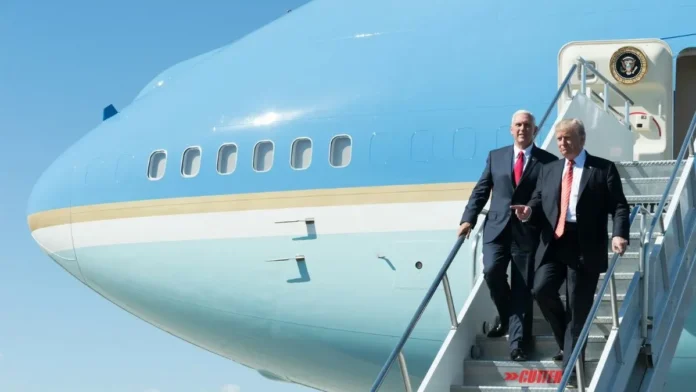

The CIA had “low confidence” in Israeli intelligence claiming Iran was plotting to shoot down Air Force One last month, according to current and former US officials, even as the warning prompted an elaborate Secret Service operation that saw President Trump secretly moved to a smaller military aircraft using a catering truck as cover.
What Happened
The Washington Post reported Wednesday that Israel relayed intelligence to the CIA suggesting Iran intended to use a shoulder-fired missile to attack Air Force One as it departed Ankara, Turkey, following the NATO summit on July 8. According to current and former US officials cited by the Post, CIA analysts found the intelligence unconvincing, with one official describing it as “Israeli-derived, not U.S.-generated, and viewed as low confidence.”
Despite that assessment, the Secret Service executed a covert operation in which Trump was moved off the newer Air Force One and onto a smaller military aircraft, reportedly using a catering truck to shield the transfer from view, before flying home separately. One US official defended the decision despite the low-confidence intelligence assessment, telling the Post, “the Secret Service has had three near misses with this president, so they’re not taking any chances,” adding, “they did what they had to do.”
Secretary of State Marco Rubio reportedly flew on the same aircraft as Trump during the switch despite the alleged threat, a detail some observers have suggested further indicates the CIA did not treat the intelligence as credible. Separately, Reuters reported that the US has received several distinct warnings from Israel over the past year claiming Iran intended to assassinate Trump, including alleged plots involving a sniper attack or a knife attack at a public event, none of which US intelligence agencies were able to independently verify.
Why It Matters
The episode raises pointed questions about the reliability and potential motivations behind intelligence Israel has shared with the United States regarding alleged Iranian threats to Trump personally, particularly given the CIA’s repeated inability to independently verify multiple such warnings over the course of the past year. One US official quoted anonymously suggested Israel may have sought “to influence Trump as much as protect him,” though this characterization was not confirmed on the record by named officials.
The disclosure adds a new dimension to understanding US-Israel intelligence dynamics amid the broader US-Iran conflict, illustrating how allied intelligence sharing, even from close partners, can create significant operational and diplomatic complications when the receiving agency’s own analysts assess the information as unreliable, yet decision-makers still act on it out of caution.
For the broader conflict, the incident underscores the genuinely elevated security environment surrounding senior US officials throughout the war, with the Secret Service’s stated rationale, citing multiple prior “near misses,” suggesting threat assessment protocols have shifted toward heightened caution regardless of the specific confidence level assigned to any individual piece of intelligence.
Context and Background
The alleged threat emerged during Trump’s departure from the NATO summit in Ankara on July 8, a gathering at which alliance members also pledged €70 billion in military support for Ukraine for 2026, indicating the high-profile, high-security nature of the broader trip during which the alleged threat surfaced.
US intelligence agencies have historically maintained close but occasionally friction-laden intelligence-sharing relationships with Israeli counterparts, particularly regarding assessments of Iranian capabilities and intentions, a dynamic that has taken on additional significance during the ongoing conflict given Israel’s direct military involvement alongside the United States since fighting began in February.
The disclosure follows a broader pattern of reporting throughout the conflict examining various aspects of the war’s conduct and decision-making, including recent reporting on significant Pentagon drone losses during the conflict and a declassified report finding the US killed 153 civilians in Yemen over the past year, reflecting sustained media scrutiny of the war’s operational details as it continues into its sixth month.
Analysis
Intelligence analysts note that the CIA’s explicit low-confidence assessment, combined with the Secret Service’s decision to act on the intelligence regardless, illustrates a recurring tension in security decision-making: officials tasked with protecting the president often choose to err toward maximum caution even when the underlying intelligence supporting a specific threat does not meet a high evidentiary bar, given the catastrophic consequences of an intelligence failure.
Some foreign policy analysts point to the pattern of multiple, unverifiable Israeli warnings about threats to Trump specifically, rather than broader threats to US forces or interests, as worth examining for what it suggests about how Israeli intelligence services may be calibrating the specific warnings they choose to share with Washington during an active, jointly waged conflict against a common adversary.
Others caution against over-interpreting the anonymous official’s suggestion that Israel sought to influence rather than protect Trump, noting that such characterizations, attributed to a single unnamed source, warrant caution given the absence of corroborating on-the-record confirmation and the inherent difficulty of definitively establishing motive behind intelligence-sharing decisions between allied governments.
What Happens Next
Further reporting and potential congressional inquiry into the intelligence-sharing dynamics underlying the incident may follow, given the significant security and diplomatic questions the episode raises. Neither the CIA nor Israeli officials have offered extensive on-the-record comment addressing the specific claims made in the Washington Post’s reporting.
The broader pattern of unverifiable Israeli threat warnings regarding Trump is likely to remain a subject of continued scrutiny as the US-Iran conflict continues, particularly given the operational and diplomatic complications such warnings can create even when their underlying reliability remains genuinely uncertain.