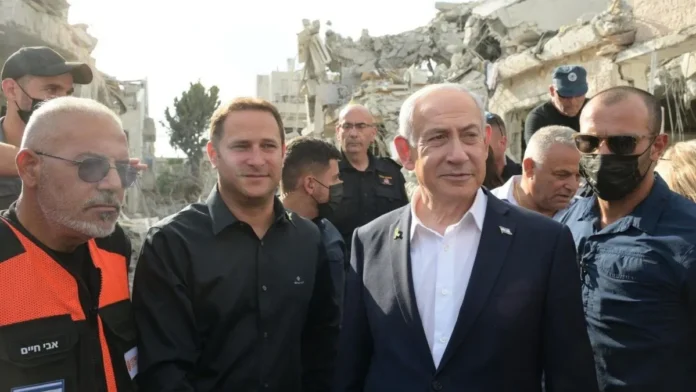

Israeli Prime Minister Benjamin Netanyahu rejected President Trump’s 15-point plan for establishing permanent peace in Gaza, according to reporting on the decision, marking a rare public break with the US leader just weeks after Trump hailed a “historic agreement” to disarm Hamas.
What Happened
Netanyahu formally rejected the Board of Peace’s 15-point roadmap for Gaza’s postwar transition, according to the Wall Street Journal, which described the move as an unusual public split with Trump given the administration’s heavy investment in the peace process. Netanyahu had earlier told his cabinet that Israel “rejects” claims it had accepted the US-backed proposal, stating, “I want to clarify here,” and adding that he has no issue standing up to pressure from Trump to accept the terms.
Hamas, for its part, said Saturday that it remained ready to proceed with the plan and urged Washington to pressure Israel to implement it, according to Agence France-Presse. Israeli officials pushed back on that characterization, warning that Hamas was exploiting the diplomatic process to prevent a renewed Israeli military offensive rather than genuinely engaging with the disarmament framework.
Separately, Israel’s military closed the West Bank village of Taybeh to non-residents on Sunday, according to Reuters, saying the move was intended to prevent growing settler attacks on Palestinians across the territory. Israeli fighter jets also reportedly struck more than a dozen branches of Al-Qard al-Hassan, a financial institution long linked to Hezbollah, extending Israel’s campaign against the group’s financial infrastructure in Lebanon.
Why It Matters
Netanyahu’s explicit, public rejection represents a more significant break with the Trump administration than the earlier rounds of disagreement over specific disarmament sequencing details, given the direct and public nature of his pushback against a plan Trump himself had personally championed and previously described in triumphant terms.
The gap between Hamas’s stated readiness to proceed and Israel’s warnings that the group is using the process as cover reflects the fundamentally unresolved trust deficit that has plagued the Gaza peace process since its inception roughly nine months ago, with each side now publicly accusing the other of bad faith rather than working through intermediaries as in previous rounds of disagreement.
The parallel developments in the West Bank, including the closure of Taybeh to non-residents specifically to prevent settler violence, illustrate how the broader Israeli-Palestinian conflict continues to generate friction across multiple fronts simultaneously, even as international attention remains heavily focused on the Gaza-specific disarmament dispute.
Context and Background
Trump’s original disarmament announcement came roughly two weeks earlier, when he described a “historic agreement” for the complete disarmament of Hamas negotiated through his Board of Peace, the international body established to oversee implementation of his broader 20-point peace plan for Gaza. That announcement was almost immediately complicated by conflicting accounts from Israeli and Hamas officials over the actual sequencing of disarmament, ceasefire compliance, and troop withdrawal.
Israel’s finance minister has separately requested Netanyahu’s approval for three new Jewish settlements inside Gaza, a request that, if approved, would represent a substantial escalation given that Israeli settlement construction in occupied Palestinian territory is widely considered illegal under international law and would directly conflict with the reconstruction and governance framework envisioned under the Board of Peace’s roadmap.
The West Bank has experienced a significant escalation in settler violence throughout 2026, with UN officials describing 2026’s settler-related death toll as already exceeding all of the previous year even before this week’s developments, providing important context for Israel’s stated rationale in closing Taybeh to non-residents.
Analysis
Middle East analysts note that Netanyahu’s public rejection, delivered directly at a cabinet meeting rather than through quieter diplomatic channels, suggests a calculated decision to signal domestic political resolve, particularly given the presence of hardline coalition partners who have previously pushed for an even harder line on Gaza’s future than Netanyahu himself has publicly staked out.
Regional observers point to the widening gap between Hamas’s public statements of readiness and Israel’s accusations of bad-faith stalling as a sign that the underlying trust deficit between the two parties may now be too significant for the current diplomatic framework to bridge without more direct and sustained American pressure than has been applied to date.
Some analysts caution that Netanyahu’s willingness to publicly break with Trump, a departure from his more typically cautious public posture toward the US president, could reflect either growing confidence in his domestic political position or a calculated bet that Trump’s broader strategic priorities elsewhere, including the Iran conflict, limit how much pressure Washington is ultimately willing to apply.
What Happens Next
The Board of Peace and US officials are likely to face a more difficult diplomatic challenge going forward, given Netanyahu’s explicit public rejection rather than the more ambiguous behind-the-scenes disagreements that have characterized earlier stages of the dispute. Whether Trump responds with direct pressure on Netanyahu or allows the current impasse to persist will be closely watched by regional mediators.
Continued developments in the West Bank, including the response to Taybeh’s closure and any further escalation in settler violence, are likely to remain a parallel and complicating factor as the broader Gaza disarmament dispute continues without clear resolution.