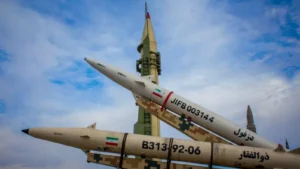

The United States and Iran have been at war for 140 days. In casually threatening US military might against Iran, Trump may have got his own forever war — the phrase appearing in a CNN analysis this week — captures a fear that is now being expressed widely across the US foreign policy community, in both parties and among former officials who have managed previous Middle Eastern conflicts: that the conflict that began on February 28 does not have an achievable political endpoint, and that the pattern of escalation, brief pause, resumed escalation that has defined it since the first ceasefire collapsed on July 8 may continue indefinitely.
The Pattern That Defines the War
The war has followed a recognisable cycle four times since it began. It begins with military escalation — US strikes on Iranian military targets, Iranian strikes on Gulf states, shipping attacks in the Strait of Hormuz. It produces an emergency diplomatic response, typically mediated by Qatar and Pakistan, which generates a ceasefire or pause. The pause is brief — typically measured in days rather than weeks. Military activity resumes, triggered by a provocation that each side attributes to the other. The cycle restarts.
The first ceasefire agreement was signed at Versailles on June 17. It lasted 22 days before Trump declared it “over” on July 8. A second, informal pause was agreed on July 10 through Qatari mediators. It lasted two days before Iran struck six Gulf nations simultaneously on July 12. The naval blockade was reimposed on July 14. Strikes continued on July 15 and 16, with Qatar and Kuwait fending off fresh Iranian attacks.
There is no public indication that either side has an endgame that it believes is achievable through military action alone. The United States cannot bomb Iran into ceasing to claim authority over the Strait of Hormuz. Iran cannot force the United States to accept Iranian toll collection on international shipping. The military actions on both sides are not aimed at achieving decisive strategic objectives — they are aimed at maintaining pressure, signalling resolve and extracting concessions in a negotiation that keeps collapsing before those concessions can be agreed.
What “Diplomatic Malpractice” Looks Like
Ali Vaez on escalating war, US “diplomatic malpractice” — the phrase used by the Crisis Group’s Iran programme director captures the failure of the US diplomatic approach that the ceasefire’s repeated collapse has exposed.
The fundamental problem is that the June 17 MoU was signed before the hard questions were answered. The nuclear commitment was a pledge without verification mechanisms. The Hormuz governance arrangement was a text with two incompatible interpretations. The sanctions relief was promised without a timeline. The IRGC was not a party to the agreement and has not behaved as if it is bound by it.
Building a ceasefire agreement on foundations this fragile, without a sustained back-channel that could address the IRGC’s independent agency and the internal Iranian power dynamics, was a diplomatic failure that has now produced a conflict which is harder to end than it was to begin.
The 60-day negotiating window — which was always optimistic — has been consumed by military exchanges, funeral pauses and precondition-setting, without producing the technical working groups on nuclear issues and Hormuz governance that were supposed to be the actual content of a permanent agreement.
The Congressional Dimension
A “Forever War” in Iran? Ali Vaez on escalating war, US “diplomatic malpractice” — Congress wants answers. Several members of both parties have demanded that the administration seek congressional authorisation for a conflict that is now in its 141st day without a formal declaration of war or an authorising resolution.
The constitutional issue is real but politically complicated. Republicans who support Trump are reluctant to force a confrontation with a president who describes the Iran operation as a necessary response to provocation. Democrats who oppose the war are reluctant to vote for authorisation that they regard as validation of a military adventure they never endorsed. The result is a constitutional stalemate in which Congress debates but does not act, and the war continues under executive authority alone.
What an Endgame Would Actually Require
Foreign policy analysts who have studied the Iran file consistently identify the same set of conditions that a durable resolution would require — conditions that are not currently present. Iran must reach an internal political settlement about who speaks for the country on the nuclear question and the Hormuz question — a settlement that requires Mojtaba Khamenei to exercise visible, public authority over the IRGC.
The US must accept that Iran will retain some nuclear enrichment capability, as it has in every nuclear negotiation since 2003. Iran must accept that the Strait of Hormuz will remain an international waterway, not a choke point it can toll or close at will. And both sides must find a sequencing for sanctions relief and compliance verification that addresses the core of the trust deficit.
None of these conditions is currently met. The diplomatic infrastructure that might have built toward them — the Swiss technical working groups, the Doha indirect talks, the Pakistan-Qatar mediation channel — has been repeatedly disrupted by resumed military action before the hard questions were even formally tabled.
The fear expressed in the “forever war” framing is not that the war will continue at its current intensity indefinitely. It is that a conflict without an achievable endpoint settles into a pattern of managed, low-grade hostility punctuated by periodic escalations — the kind of conflict that the United States managed in Iraq after 2003 and in Afghanistan after 2001, each time for far longer and at far greater cost than the initial planners anticipated.