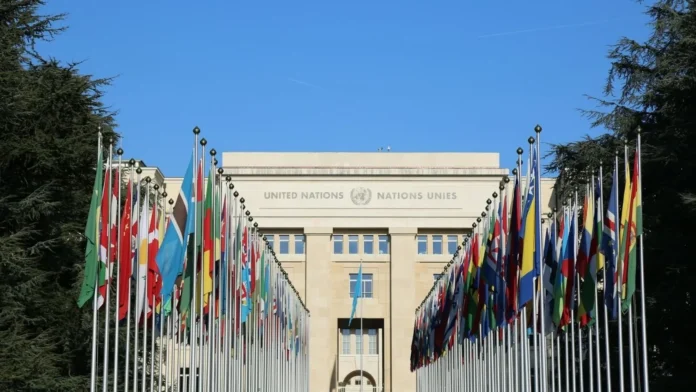

The global economy is on track to grow just 2.7% in 2026, according to the United Nations’ latest World Economic Situation and Prospects report, a pace well below the pre-pandemic average as the Middle East conflict and ongoing trade tensions continue to weigh on the world economy.
What Happened
The UN’s report projects global growth of 2.7% for 2026, marginally below the 2.8% pace recorded in 2025 and notably below the 3.2% average growth rate that prevailed before the COVID-19 pandemic. Despite the slower growth trajectory, the report found that global trade expanded 3.8% in 2025, a figure officials described as notable resilience given the scale of tariff actions and geopolitical friction affecting international commerce over the past year.
The report highlights significant regional divergence within the overall global growth figure. The United States is forecast to grow 2.0% in 2026, while the European Union is projected at just 1.3%, reflecting the bloc’s greater exposure to energy price volatility tied to the Middle East conflict. South Asia, by contrast, is forecast to grow at a comparatively robust 5.6%, illustrating what the report characterizes as an ongoing shift in global economic momentum toward Asia even as advanced-economy central banks continue setting the cost of capital for the broader global financial system.
The World Bank and Trading Economics separately estimate global GDP at approximately $111.33 trillion in 2024, with projections pointing to roughly $114.56 trillion by the end of 2026, reflecting continued long-run growth in absolute economic output despite the cyclical slowdown identified in the UN’s report.
Why It Matters
The report’s explicit identification of the Middle East conflict and tariff tensions as key drivers shaping energy prices, inflation trajectories, and central bank decision-making across both advanced and emerging economies underscores how directly this year’s geopolitical developments have translated into measurable economic consequences worldwide, beyond the direct impact felt within the conflict zone itself.
The pronounced growth gap between South Asia’s 5.6% pace and the EU’s 1.3% forecast highlights a broader structural shift in the global economy, with demand increasingly concentrated in Asian markets even as European economies continue grappling with the direct fallout from disrupted energy supplies tied to the ongoing Strait of Hormuz crisis and related Middle East instability.
For emerging markets and commodity-exporting economies specifically, the report’s findings suggest that near-term economic performance will increasingly hinge on Asian industrial demand and Middle East energy dynamics, a dependency that adds a further layer of vulnerability to economies already navigating elevated global interest rates and ongoing trade policy uncertainty.
Context and Background
This year’s slower growth trajectory follows a period of persistent global economic disruption tied significantly to the US-Iran conflict that began in February, which has repeatedly affected global oil and gas markets through its impact on the Strait of Hormuz, a corridor that normally carries roughly a fifth of global oil and liquefied natural gas shipments. The compounding effect of tariff actions implemented throughout 2025 and 2026 has added a separate but related layer of trade friction affecting global commerce.
The report’s finding that global trade still expanded 3.8% in 2025 despite these headwinds suggests a degree of underlying resilience in global commercial activity, even as growth in overall economic output has slowed, potentially reflecting businesses and countries adapting supply chains and trade routes in response to both the direct conflict-related disruptions and the broader tariff environment.
Financial markets continue closely tracking developments tied to these same underlying drivers on a near-daily basis, as illustrated by this week’s sharp swings in oil prices tied to shifting sentiment around potential Strait of Hormuz diplomacy, underscoring how directly geopolitical developments continue to translate into real-time market and economic effects.
Analysis
Economists reviewing the UN’s projections note that the report’s framing, explicitly linking this year’s growth slowdown to specific, identifiable geopolitical drivers rather than more diffuse structural economic factors, suggests that the trajectory of both the Middle East conflict and global trade tensions will remain the dominant variables shaping global economic performance through the remainder of 2026.
Some analysts point to the report’s regional growth disparities as evidence of an accelerating longer-term shift in global economic center of gravity toward Asia, a trend that predates this year’s specific disruptions but which the current combination of Middle East-driven energy volatility and Western economic softness appears to be reinforcing rather than reversing.
Trade economists caution that the resilience shown in 2025’s trade expansion figure should not be read as evidence that tariff and geopolitical disruptions are without cost, noting that the report’s broader growth slowdown, even amid continued trade volume growth, suggests businesses may be absorbing higher costs and reduced margins rather than avoiding the underlying economic friction entirely.
What Happens Next
The report’s authors are likely to continue monitoring how the ongoing Strait of Hormuz negotiations, along with broader Middle East developments, affect global energy prices and inflation trajectories in the coming months, given the direct linkage the UN report draws between these factors and overall global growth performance.
Upcoming economic data releases, including US jobless claims and productivity figures, alongside central bank decisions across multiple economies including Brazil and Mexico this week, will provide further near-term signals on how individual economies are navigating the broader global slowdown the UN’s report identifies.