President Trump said Iran faces a “last chance” to reach a deal reopening the Strait of Hormuz, as Qatar announced Tuesday that a proposal had been drafted and mediators were making measurable progress, even as Iran continued to deny that direct negotiations with Washington were taking place.
What Happened
Qatar’s foreign ministry spokesperson Majed al-Ansari said diplomatic contacts had reached “very progressive stages” toward reopening the strait, a corridor that normally carries roughly a fifth of global oil and liquefied natural gas shipments. Trump discussed efforts to de-escalate US-Iran tensions in a phone call with Qatar’s Emir Sheikh Tamim bin Hamad Al Thani on Tuesday, according to the Gulf state’s government, though a White House official who confirmed the call did not provide further details.
US officials struck an increasingly optimistic tone. Secretary of State Marco Rubio told reporters there had been “progress made in those talks, but not finality yet,” while Treasury Secretary Scott Bessent suggested a deal could be reached “today or tomorrow.” Trump told reporters Monday that this represented “a last chance” for Iran to “sign a good document,” warning “I want to give them every last chance before decapitation.”
Iran, meanwhile, continued to publicly deny that direct talks with the United States were underway, instead confirming it was pursuing a separate negotiating track with Oman focused on establishing a temporary shipping corridor through the strait. Iranian Foreign Ministry spokesperson Esmaeil Baghaei said Monday that Tehran now sought a single corridor rather than the two separate routes previously discussed, with a member of Iran’s negotiating committee telling state broadcaster IRIB the goal was an arrangement lasting one to three months in which “Iran is dominant” over security, demining, and maritime services.
Why It Matters
The apparent contradiction between Iran’s public denial of direct US talks and the optimistic assessments from Rubio and Bessent reflects a pattern that has recurred repeatedly throughout the five-month conflict, complicating outside efforts to gauge how close a genuine resolution actually is. Qatar’s spokesperson explicitly noted this gap, confirming progress in mediation efforts while acknowledging Tehran’s denial of Trump’s assertion that talks were already underway.
The stakes of a genuine breakthrough remain significant given the strait’s outsized role in global energy markets. Brent crude fell more than 4% following Tuesday’s comments from Qatar, extending Monday’s steep losses, illustrating how directly market sentiment continues to track even incremental diplomatic signals from the region.
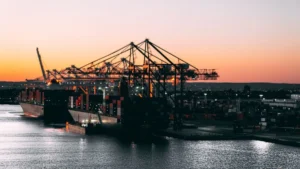
At the same time, the physical situation on the ground has not meaningfully changed despite the diplomatic optimism: the strait remained virtually shut as of Tuesday, with another vessel reportedly losing power after being struck by an unknown projectile while attempting to cross, underscoring the gap between diplomatic momentum and the operational reality still facing shipping companies.
Context and Background
Iran’s proposed arrangement with Oman would reportedly involve Tehran maintaining significant operational control, including security, demining, and monitoring of both inbound and outbound shipping, according to Iranian officials. Bloomberg has separately reported that Iran is quietly considering allowing European nations to begin removing mines from the strait, a step that could provide shipping and insurance companies with greater confidence that transit risk has genuinely decreased.
The current diplomatic push follows a now-familiar cycle in this conflict: an earlier memorandum of understanding reached in June to reopen Hormuz collapsed in July when fighting resumed, and Trump has announced planned strikes on Iran on several occasions since February, only to cancel them citing diplomatic progress that has not always translated into a lasting resolution.
Separately, US military officials disclosed this week that the Pentagon has burned through nearly 80% of its interceptors for a key missile defense system during the conflict, leaving stockpiles “dangerously low,” according to sources familiar with the matter, a development that could factor into how much appetite the administration has for further direct military escalation regardless of how the diplomatic track proceeds.
Analysis
Regional analysts note that Iran’s continued emphasis on the Oman-mediated track, rather than direct engagement with Washington, likely reflects a deliberate effort to avoid the domestic political costs of appearing to negotiate directly with the United States, even as substantive progress may be occurring through intermediary channels that Tehran can characterize differently for domestic audiences.
Shipping analysts, according to the BBC, remain notably less optimistic than the diplomatic rhetoric suggests, pointing to the continued reports of vessels being struck or losing power in the strait as evidence that any eventual agreement will need time to translate into a genuinely safer operating environment for commercial shipping, even if a framework is reached in the coming days.
The disclosed depletion of US missile interceptor stockpiles adds a further, less publicly discussed dimension to the administration’s calculus, with some analysts suggesting that constrained US military readiness for further escalation could itself be contributing to the administration’s stated urgency in pursuing a negotiated resolution now rather than continuing the current cycle of strikes and pauses.
What Happens Next
Qatar and Pakistan, both of which have helped mediate earlier phases of the conflict, are reportedly now working alongside Oman to facilitate continued dialogue. Bessent’s suggestion that a deal could emerge within a day or two will be closely tested in the coming hours, though similar optimistic timelines have not always held throughout this conflict.
Markets, shipping companies, and regional governments will continue monitoring both the diplomatic track and the physical security situation in the strait, given the demonstrated gap between announced progress and on-the-ground conditions that has characterized much of this year’s negotiations.