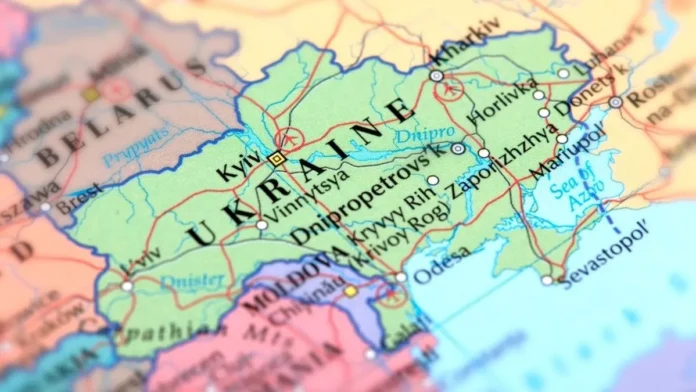

Russia launched its deadliest attack on Kyiv this year early Wednesday, killing at least 17 people and wounding 44 others in a two-hour barrage of ballistic missiles and drones that Ukrainian officials say exposed the direct human cost of the country’s critical shortage of Patriot interceptors.
What Happened
Ukrainian President Volodymyr Zelenskyy said Russia fired 24 ballistic missiles, four Zircon or Oniks cruise missiles, and 115 drones during the overnight assault, which struck Kyiv and the surrounding Kyiv Oblast. According to Ukraine’s State Emergency Service, 16 people were killed and 29 injured in Kyiv Oblast alone, with the town of Brovary, roughly 15 miles east of Kyiv, particularly hard hit by both ballistic missiles and jet-powered Shahed-type drones. Eight people died at a train station in the nearby village of Kvitneve, according to local officials.
Zelenskyy said the primary targets were warehouse facilities belonging to civilian businesses, alongside strikes on infrastructure. Fires burned for hours at logistics warehouses on Kyiv’s outskirts, including facilities belonging to the retailer NOVUS and the postal service Nova Post. Crucially, Ukraine’s depleted air defenses failed to intercept a single one of the incoming ballistic missiles, according to Ukrainian officials, a stark contrast to a partial interception rate in previous large-scale attacks earlier in the summer.
Kyiv’s regional military administration declared Thursday an official day of mourning for the 17 people killed. UN Secretary-General António Guterres condemned the strikes as “a clear violation” of international law and described them as the deadliest attack on Kyiv this year, on the heels of what the UN’s human rights office in Ukraine called the deadliest month for Ukrainian civilians since the war’s early days.
Why It Matters
Zelenskyy directly attributed the scale of the casualties to Ukraine’s dwindling supply of interceptors for the Patriot missile defense system, the only weapon in Ukraine’s arsenal capable of reliably countering ballistic missile threats. “It is crucial that our partners realize that delays in their delivery or a reluctance to provide anti-ballistic systems lead precisely to such horrific casualties and destruction,” he wrote in a social media post, adding that partners unwilling to send more interceptors could instead help by imposing new sanctions on Russia.
The attack came just days after President Trump appeared to backtrack on an earlier promise to grant Ukraine a license to produce Patriot interceptors domestically. In a telephone interview with the Financial Times on July 30, Trump said he had not yet decided whether to allow Ukraine to manufacture the missiles itself, a reversal from the commitment he made at the NATO summit in July, which had raised hopes in Kyiv of a more sustainable long-term solution to the interceptor shortage.
The strike also illustrates how the war’s various fronts continue to intersect: the same US-made interceptors now in critically short supply for Ukraine have also been heavily consumed during the ongoing US-Iran conflict, with Pentagon officials disclosing this week that American forces have burned through nearly 80% of their own stockpile of the same missile defense system.
Context and Background
Wednesday’s attack came directly on the heels of Ukraine escalating its own campaign of deep strikes against Russian targets, including a series of drone strikes on warehouses belonging to the Russian retailer Wildberries, an Amazon-style e-commerce company. Ukrainian officials have described this campaign as an effort to raise the cost of the war for Russia and test President Vladimir Putin’s resolve after more than four years of conflict. Russia’s Defense Ministry said its forces destroyed 107 Ukrainian drones overnight in a separate exchange.
Zelenskyy has accepted an unconditional ceasefire proposal demanded by Trump, but Putin has so far refused to agree to the same terms, leaving US-led peace efforts for the broader war effectively stalled even as diplomatic attention has increasingly shifted toward the separate US-Iran conflict in recent weeks.
Beyond Wednesday’s attack, Russian drone incidents have increasingly spilled beyond Ukraine’s borders in recent days, with fragments of a Russian Geran-2 attack drone discovered in southern Moldova near the Ukrainian border, prompting a forensic investigation by Moldovan authorities into how the drone entered the country’s territory.
Analysis
Military analysts note that Wednesday’s zero-interception rate against incoming ballistic missiles represents one of the starkest demonstrations yet of how severely Ukraine’s air defense capacity has deteriorated, a pattern consistent with several other large-scale attacks in recent months in which Ukraine has managed to intercept only a small fraction of incoming ballistic threats.
Regional security analysts point to the timing of Trump’s apparent hesitation on licensing Ukrainian Patriot production as particularly consequential given Wednesday’s outcome, suggesting that continued delay in resolving the interceptor supply question carries direct and measurable human costs that are likely to recur with each subsequent large-scale Russian attack until the underlying shortage is addressed.
Some analysts also note that the competing demands on the global Patriot interceptor supply, drawn down simultaneously by both the Ukraine war and the separate Iran conflict, illustrate a broader strategic tension facing the Trump administration as it attempts to manage multiple active conflicts that draw on the same limited pool of advanced US weapons systems.
What Happens Next
Ukrainian officials are likely to continue pressing Western partners, and the Trump administration specifically, for a resolution on the stalled Patriot production licensing question in light of Wednesday’s casualties. Zelenskyy has also floated alternative approaches, including seeking permission to use Elon Musk’s Starlink satellite system to help guide strikes against Russian missile launch sites inside Russia.
Recovery and cleanup operations in Kyiv and Kyiv Oblast are expected to continue in the coming days following Thursday’s official day of mourning. Given the pattern of recent months, further large-scale Russian strikes remain a significant risk while the underlying interceptor shortage remains unresolved.