
An independent UN fact-finding mission said Thursday it has reasonable grounds to believe the United States committed war crimes in two February airstrikes on a school and a sports facility in Iran, while the same report found Iranian authorities separately committed crimes against humanity during their deadly crackdown on anti-government protests that preceded the war.
What Happened
The Independent International Fact-Finding Mission on Iran, chaired by Bangladeshi jurist Sara Hossain and created by the UN Human Rights Council in 2022, said it found reasonable grounds to believe US forces were responsible for the February 28 strike on the Shajareh Tayyebeh Primary School in Minab, where more than 150 people were killed, including around 120 schoolchildren, according to Iranian officials. Different outlets citing the report put the combined death toll from both strikes at approximately 178 civilians.
According to the mission, the school sat adjacent to an Islamic Revolutionary Guard Corps naval complex, and US forces had intelligence indicating a senior Iranian military commander was present at the site, but the report concluded American forces failed to adequately verify that information or update their targeting data before the strike. “The US directed the strikes at the building of the school while being aware of a substantial risk of striking a civilian object and acting recklessly as regards the possibility that this would happen,” the report stated, concluding the attack was indiscriminate and amounted to a war crime.
A second strike examined by the mission hit a sports complex and adjacent residential area in Lamerd the same day, killing and injuring 22 civilians, including children, an attack the mission similarly found to be indiscriminate. The same report concluded that Iranian authorities committed crimes against humanity, including murder, torture, and rape, during their violent crackdown on nationwide protests that broke out in late December, weeks before the war began. The Iranian and US permanent missions in Geneva did not immediately respond to requests for comment.
Why It Matters
The findings represent one of the most significant independent international assessments of both combatants’ conduct since the war began, and mark a rare instance of a UN body concluding there are grounds to believe a strike carried out by US forces specifically constituted a war crime under international law.
The report’s dual findings, war crimes attributed to US strikes alongside crimes against humanity attributed to Iran’s own government, present a complicated picture that resists simple characterization of either side as solely responsible for the war’s civilian toll, reflecting the mission’s stated mandate to examine conduct by all relevant parties rather than a single actor.
For families of the victims, particularly the roughly 120 schoolchildren reported killed at the Minab school, the findings provide the first authoritative international assessment supporting accountability claims Iran’s government made from the earliest days of the conflict, though the report itself does not carry direct enforcement power.
Context and Background
Iranian Foreign Minister Abbas Araghchi had described the Minab strike as “a calculated, phased assault” and “a war crime and a crime against humanity” in remarks to the UN Human Rights Council shortly after the attack, while UN rights chief Volker Turk said at the time that the bombing evoked “visceral horror” and called for justice.
The fact-finding mission’s examination of Iran’s protest crackdown addresses events distinct from the war itself, covering the government’s response to nationwide demonstrations that erupted in late December 2025, roughly two months before the US and Israel launched their February 28 strikes that killed Iran’s Supreme Leader Ali Khamenei and dozens of senior officials.
Video footage previously reported to contradict Trump’s own claim that the US was not responsible for the deadly Minab blast had circulated in the weeks following the strike, adding to the body of evidence the fact-finding mission examined in reaching its conclusions.
Analysis
International law experts note that the mission’s specific finding, that US forces acted “recklessly” rather than with intent to target civilians, reflects a legal distinction with significant consequences, since recklessness combined with awareness of substantial civilian risk can still meet the threshold for a war crime under international humanitarian law even absent deliberate targeting.
Some human rights analysts point to the report’s parallel findings against Iran as evidence the mission sought to maintain independence and evenhandedness in examining the broader conflict, rather than focusing exclusively on either the war’s foreign combatants or the domestic crackdown that preceded it.
Legal analysts caution that UN fact-finding mission findings, while carrying significant moral and diplomatic weight, do not themselves establish criminal liability or trigger automatic prosecution, meaning any accountability process would require separate action by international courts or national judicial systems willing to act on the report’s conclusions.
What Happens Next
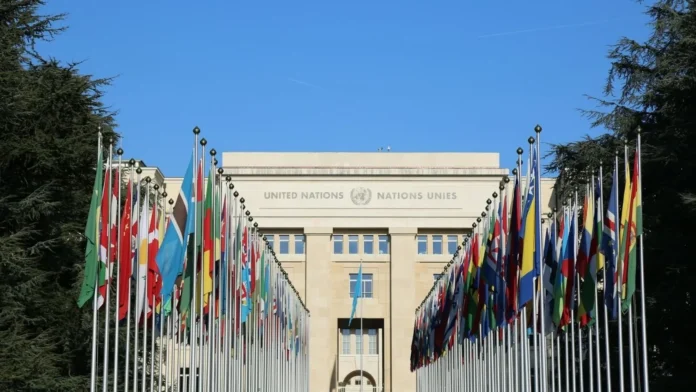
The mission’s findings are set to be formally submitted to the UN Human Rights Council in Geneva, where they will likely be debated by member states and could inform further international scrutiny of the conflict’s conduct on all sides. Neither Washington nor Tehran has indicated whether it will formally respond to or contest the specific findings.
Continued documentation of civilian casualties throughout the ongoing conflict is likely to remain a focus for international human rights bodies, given that fighting between the US and Iran has continued well beyond the February incidents examined in this specific report.