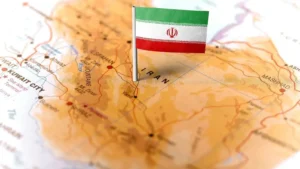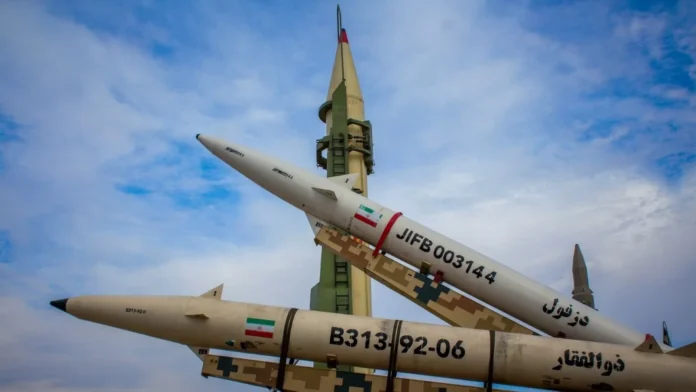

The Iran war is 140 days old. There may yet be a ceasefire. Oil prices may eventually fall. Shipping may eventually normalise through the Strait of Hormuz. But five structural changes to the global energy architecture that have occurred since February 28 will not be reversed by diplomacy — because they were not caused solely by the war’s military dimension, but by the responses of governments, companies, insurance markets and investors to the realisation that the Strait of Hormuz is not a permanent feature of the world’s energy geography. It is a vulnerability. And the world, having been reminded of that vulnerability in the most dramatic way possible, has spent 140 days beginning to hedge against it.
Change One: Gulf Pipeline Investment Has Accelerated Beyond Any Pre-War Projection
Before February 28, the Gulf states had invested steadily in pipelines and export infrastructure that could bypass the Strait of Hormuz — primarily Saudi Arabia’s East-West Pipeline connecting Eastern Province oil fields to the Red Sea, and Abu Dhabi’s pipeline to Fujairah on the Gulf of Oman. These were valuable insurance policies, but their expansion was proceeding at the pace of commercial logic rather than strategic urgency.
The war changed that pace entirely. Saudi Arabia, the UAE, Kuwait, Qatar and Bahrain collectively committed approximately $180 billion in accelerated infrastructure investment during the three months of the conflict — targeting expanded pipeline capacity, additional export terminals, refined product storage facilities and LNG liquefaction capacity at locations outside the strait’s chokepoint.
The Saudi East-West Pipeline’s capacity is being expanded from 5 million barrels per day to 7 million barrels per day on an accelerated timeline. Abu Dhabi’s Fujairah terminal is being expanded to handle an additional 2 million barrels per day of crude and product exports.
Even if the Strait of Hormuz returns to full operation and remains open for a decade, the strategic calculus that drove this investment will not change. The Gulf states have learned that Hormuz can be closed and that the closure costs them billions per week in lost revenue. The investment to reduce that vulnerability will not be unwound regardless of what any peace agreement says.
Change Two: Europe Has Permanently Rebuilt Its LNG Supply Chains
Europe’s dependence on Qatar for LNG — which accounted for approximately 12-14% of European LNG imports before the war — was the specific energy vulnerability that the Hormuz closure exposed most immediately for European consumers. When Qatar’s LNG tankers could not transit the strait, European spot LNG prices spiked sharply and European utilities scrambled for alternative supply.
Over 140 days, European LNG import infrastructure has been permanently reconfigured. Long-term supply agreements with US LNG exporters — primarily Cheniere Energy, Venture Global and NextDecade — have been signed or expanded at a pace that has pulled forward the diversification trajectory by approximately five years. New FSRU terminal capacity — floating storage and regasification units that can be deployed quickly at any port — has been contracted across six additional European ports from Portugal to Finland. And the political consensus for accelerating domestic gas production in Norway and the Netherlands — which had been facing headwinds from climate policy — has been strengthened by the supply security crisis.
Qatar will remain a major LNG supplier to Europe. But the share of European LNG that transits the Strait of Hormuz will be structurally lower five years from now than it was on February 27 — because the contracts, infrastructure and political will to diversify have been put in place in a way that will not be reversed.
Change Three: Shipping Insurance Has Been Permanently Repriced
Before the war, the insurance premium for a tanker transiting the Strait of Hormuz was a modest addition to standard hull and cargo coverage — reflecting a risk that the market treated as remote and manageable. After 140 days of attacks, sinkings, groundings, detentions and combat damage claims in the strait, the insurance market has rebuilt its entire model for “conflict zone” pricing.
The Lloyd’s market and the P&I clubs that insure the global shipping fleet have repriced Hormuz and Gulf of Oman transits at levels that reflect the demonstrated probability of damage, detention or loss. Those levels will not return to pre-war norms even if the war ends tomorrow — because the insurance market’s pricing reflects the demonstrated reality that the Hormuz can be closed and ships can be attacked, not a theoretical risk that can be dismissed once a ceasefire is signed.
The economic consequence is that the cost of transiting Hormuz has permanently increased. That cost falls on shippers, who pass it to exporters, who pass it to importers, who pass it to consumers. The repricing is a durable inflationary impulse embedded in the supply chains of every commodity that transits the strait.
Change Four: The US Strategic Petroleum Reserve Is Emptied — and Will Take Years to Refill
US Strategic Petroleum Reserves plunged to the lowest level since 1983 during the Iran war — with the US drawing heavily on the reserve to manage domestic petroleum prices during the period of maximum Hormuz disruption. The SPR now holds approximately 380 million barrels, compared to its theoretical capacity of 714 million barrels.
Rebuilding the reserve to its pre-war level would require purchasing and injecting hundreds of millions of barrels of crude oil — a process that typically takes several years at market prices and that competes with other demands on US fiscal resources. The depleted reserve is not merely a bookkeeping issue — it is a reduction in America’s strategic buffer against future supply shocks. If a second Hormuz disruption occurs in the next three to five years, the US will have less strategic petroleum capacity to deploy in response.
Change Five: The Petrodollar Is Under Renewed Pressure
The most structurally significant long-term change may be the one that is hardest to observe directly: the challenge to the petrodollar system that has anchored US dollar dominance in global commodity markets since the 1970s.
China, which imports approximately a third of its oil from the Gulf and which has been developing yuan-denominated oil trading infrastructure for years, used the disruption of the Iran war to accelerate bilateral oil purchase agreements with Gulf states that are priced in yuan rather than dollars. Saudi Arabia — which signed a yuan oil deal with China in 2022 — has expanded the volume of oil sold in yuan during the conflict, as both a commercial hedge and a geopolitical signal.
The petrodollar system will not collapse overnight, and the US dollar’s dominance in global financial markets has roots that go far beyond oil pricing. But the 140 days of the Iran war have done more to accelerate the diversification of oil pricing away from dollar denomination than the preceding decade of geopolitical pressure — because they demonstrated, in real time, that the Gulf oil exporters who anchor the petrodollar system are willing to build alternative payment and trade architecture when circumstances require it.
Each of these five changes was underway before February 28. The war has not created new trends — it has accelerated existing ones by years or decades. That acceleration will shape the global energy economy of 2027, 2030 and 2035 in ways that no ceasefire agreement, however durable, will reverse.