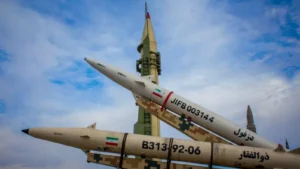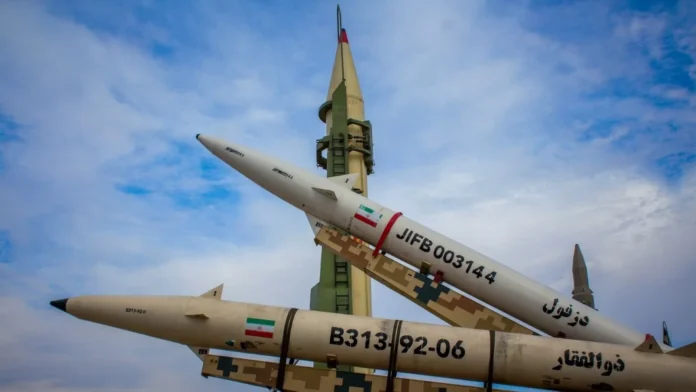

The conflict that began on February 28, 2026, when US and Israeli forces launched coordinated strikes against Iran’s nuclear and missile infrastructure, is now in its 141st day. US Central Command has conducted more than 700 individual strikes against Iranian military targets across that period — targeting air defences, coastal radar, command-and-control networks, anti-ship missile systems, drone storage facilities, port infrastructure and naval assets.
Oil is trading above $82 per barrel, up more than 43% from its pre-war level of $57. The Strait of Hormuz is carrying approximately one-third of the commercial traffic it carried before the war began. And there is currently no active diplomatic framework between the United States and Iran — the fourth ceasefire agreement having collapsed on July 12 when Iran struck six Gulf nations simultaneously.
The Military Balance After 141 Days
The United States’ air campaign against Iran has been sustained and systematic. CENTCOM’s strikes have targeted Iran across four broad categories: nuclear and missile infrastructure, which was the primary focus of the initial strikes; coastal and maritime military capability, which became the focus during the Hormuz escalation; command-and-control and communications infrastructure, targeted to degrade the IRGC’s ability to coordinate operations; and air defence systems, targeted specifically to enable further strike operations.
Iran ramps up execution of political prisoners amid war with US, human rights data shows. The internal dimension of the conflict — while receiving less international attention than the military exchange — reveals a government under acute pressure, using the cover of wartime to eliminate perceived internal threats at a pace that human rights groups describe as the worst since 1988.
Iran’s military capacity has been degraded but not destroyed. The IRGC retains the ability to conduct drone and missile strikes against Gulf states — as it demonstrated on July 12 when it hit six nations simultaneously. It retains the ability to attack commercial shipping in the Strait of Hormuz.
It retains the ability to mine the strait and threaten maritime traffic. What it has lost is its pre-war air defence coverage across large sections of the country, significant coastal radar infrastructure, and substantial quantities of anti-ship missiles and drone stockpiles. Those losses are real and meaningful — but they have not prevented Iran from sustaining a campaign of regional destabilisation that has made the Strait of Hormuz commercially dysfunctional for 141 days.
The Energy Market After 141 Days
Iran and US widen attacks as renewed conflict shows no sign of de-escalating. The energy market’s response to the conflict has been the most immediate and globally consequential dimension of the war’s economic impact.
Brent crude peaked at approximately $113 per barrel in April, at the height of the Hormuz closure, before falling back toward the mid-$70s during the brief ceasefire period. The reimposition of the naval blockade on July 14 and the collapse of the ceasefire framework have pushed Brent back above $82, with analysts at Goldman Sachs and Citi both projecting further upward pressure if the Hormuz disruption persists. The naval blockade effective from July 14 applies to vessels transiting to or from Iranian ports and coastal areas — a measure that removes Iranian oil from global markets while also adding friction and risk premiums to the broader Hormuz transit route.
Traffic through the Strait of Hormuz — which carried approximately 20 million barrels per day of oil before the war — has recovered from the near-complete closure of April to approximately 6-7 million barrels per day, representing roughly 33% of pre-war levels. Insurance premiums for Gulf of Oman and Hormuz transits have been permanently repriced at conflict-zone levels that will not revert to pre-war norms regardless of any diplomatic resolution.
The Diplomatic Vacuum
The most significant strategic development of the past week has been the absence of any active diplomatic framework. The June 17 Versailles MoU has been formally repudiated by Iran’s deputy foreign minister. The Doha indirect talks — the most recent diplomatic channel — were suspended following Iran’s July 12 barrage against six Gulf nations and Qatar’s warning that it would reconsider its mediating role under attack.
Describes issues in US-Iran talks in 2026, including the Strait of Hormuz, Iran’s nuclear and ballistic missile programme and US sanctions. The fundamental issues remain unresolved: Iran’s nuclear enrichment capacity, the governance of the Strait of Hormuz, the sequencing of sanctions relief, and the verification mechanisms that would give any permanent agreement credibility. None of these questions has been formally tabled in a negotiating session — the previous sessions having been consumed by the Hormuz transit dispute before the nuclear file could even be opened.
Iran’s Degraded but Functioning Leadership
The question of who is governing Iran — and with what level of coherence — remains genuinely contested. Mojtaba Khamenei, the new supreme leader, has issued one written statement in 141 days and has not appeared in public since the war began. The IRGC has consistently acted in ways that contradicted the diplomatic positions of Iran’s foreign ministry — attacking ships while talks were in progress, striking Qatar while it was mediating, and rejecting the MoU while Iran’s negotiators were in Doha discussing its implementation.
Whether this reflects a deliberate two-track strategy — negotiating with one hand while fighting with the other — or a genuine fracture between Iran’s institutional actors that prevents coherent policy from being made and executed, is the central analytical question for Western intelligence agencies trying to assess whether a durable diplomatic resolution is achievable.
What the Next Phase Looks Like
The war has entered a phase of managed, indefinite hostility without an active diplomatic track. US strikes continue on a frequency determined by CENTCOM’s operational assessment of Iranian military activity. Iran continues to attack commercial shipping and Gulf military infrastructure at intervals. The blockade limits Iranian oil exports. Global oil markets price in a risk premium that fluctuates with the intensity of the military exchange.
For this phase to end — or for a new diplomatic framework to emerge — one of three things needs to happen: Iran’s internal leadership dynamics need to resolve in a direction that allows coherent diplomatic engagement; the US needs to offer terms that the Iranian government can accept without the IRGC overriding them; or a third-party mediator needs to find terms that both sides can present domestically as a win. None of these conditions currently exists. That is what Day 141 of the war looks like.