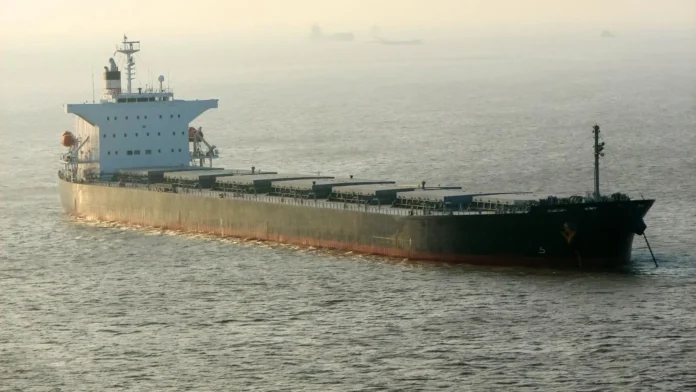

The United Arab Emirates and Qatar condemned Iran on Saturday after a missile struck a tanker operated by Abu Dhabi’s state oil company while it was crossing the Strait of Hormuz, the 16th such attack on an ADNOC vessel since the conflict began, as Iran signaled the waterway would not fully reopen despite advancing separate negotiations with Oman.
What Happened
The Abu Dhabi National Oil Company confirmed that one of its vessels was targeted by a missile early Saturday while transiting the strait, with state news agency WAM reporting the situation was “under control.” No injuries were reported, and neither ADNOC nor UAE officials disclosed details about the tanker’s cargo or the extent of any damage. The UAE Foreign Ministry condemned what it called “the hostile Iranian attack,” describing it as an act of piracy by Iran’s Revolutionary Guard Corps and a violation of a UN Security Council resolution protecting freedom of navigation.
Qatar’s Foreign Ministry separately condemned the attack, affirming solidarity with the UAE and rejecting the use of the strait “as a tool of pressure,” while renewing calls for the waterway to be reopened unconditionally. The Gulf Cooperation Council’s secretary-general, Jassim Mohammed al-Budaiwi, called the strike a “dangerous and unacceptable escalation” and urged international action to protect maritime navigation.
Iran’s position on the broader status of the strait added further complexity. Mohammad Bagher Zolghadr, secretary of Iran’s Supreme National Security Council, said Saturday that the Strait of Hormuz “will never fully reopen until the United States corrects its behavior.” Separately, an IRGC spokesperson said the strait’s reopening is “completely independent” of the ongoing Oman-mediated negotiations over a specific commercial shipping corridor, framing Iran’s control of the waterway as a matter of national sovereignty rather than solely an economic issue.
Why It Matters
The attack, ADNOC’s 16th since the war began on February 28, underscores the severe and sustained toll the conflict has taken on Gulf shipping despite months of intermittent diplomatic progress. ADNOC said Friday that 15 of its vessels had been struck by missiles or drones while transiting the strait, including three in the past week alone, killing one crew member and injuring 20 others, a sharply escalating tempo of attacks even as broader talks continue.
The apparent contradiction between the advancing Oman-mediated negotiations and Iran’s continued insistence that the strait will not fully reopen until Washington changes course illustrates a persistent gap between diplomatic optimism and the physical reality facing commercial shipping. That gap has repeatedly whipsawed oil markets and shipping companies throughout the conflict.
Iranian President Masoud Pezeshkian added a further complication, stating that the US had “breached the Strait of Hormuz clause” in the memorandum of understanding reached in June, and that Iran’s recent actions were a direct response. That characterization suggests Tehran views its continued attacks not as a rejection of diplomacy but as retaliation for what it considers prior American violations of an earlier agreement.
Context and Background
About a fifth of the world’s oil and liquefied natural gas passed through the Strait of Hormuz before the conflict began, making it one of the most economically consequential waterways globally. Since fighting broke out between the US and Iran in late February, shipping through the strait has been repeatedly disrupted, driving up freight rates and creating sustained security concerns for vessels and their insurers.
The UAE has faced disproportionate targeting throughout the conflict, according to independent tracking of the war, having been attacked by Iranian missiles and drones more than any other country, with strikes causing severe damage to energy facilities, airports, and hotels and killing at least 10 civilians. Iran has repeatedly cited the UAE’s close ties with Israel and its hosting of US military assets as justification for the targeting.
Iran’s Revolutionary Guard has previously threatened action against any vessels transiting the strait deemed linked to Tehran’s adversaries or failing to comply with Iranian directives, a stated policy consistent with the pattern of attacks on ADNOC-linked vessels specifically, given the UAE’s close alignment with the US and Israel throughout the conflict.
Analysis
Regional security analysts note that Iran’s explicit framing of the strait’s reopening as “completely independent” of the Oman negotiations suggests any deal reached through that specific channel may address only a narrow slice of the broader shipping crisis, rather than resolving Gulf security concerns more comprehensively as some diplomatic statements earlier in the week had implied.
Analysts tracking the UAE’s position note that its increasingly forceful public language, invoking terms like “piracy” and citing UN Security Council violations, reflects growing frustration with a conflict that has now generated 16 separate attacks on its national oil company’s vessels, even as broader ceasefire negotiations involving the US and Iran continue to show incremental progress on other fronts.
Some analysts caution that Iran’s continued attacks on UAE-linked shipping, even amid advancing talks with Oman, may reflect an intentional strategy of maintaining pressure on US-aligned Gulf states specifically, distinct from and potentially in tension with its broader diplomatic engagement with Washington through intermediary channels.
What Happens Next
The UAE and Qatar’s calls for an unconditional reopening of the strait are likely to remain a central point of friction with Iran’s stated position that any reopening depends on changes in US conduct. Continued attacks on ADNOC or other Gulf-state-linked vessels remain a significant risk given the pace of recent incidents.
Markets and regional governments will continue to watch closely for how the parallel Oman-mediated negotiations, and any eventual outcome from broader US-Iran diplomacy, might address the continued targeting of UAE and other Gulf shipping specifically, given Iran’s explicit statements distinguishing that issue from the narrower Oman-focused talks.