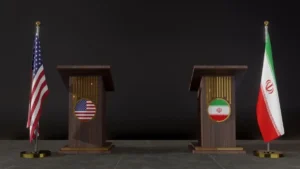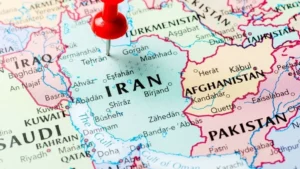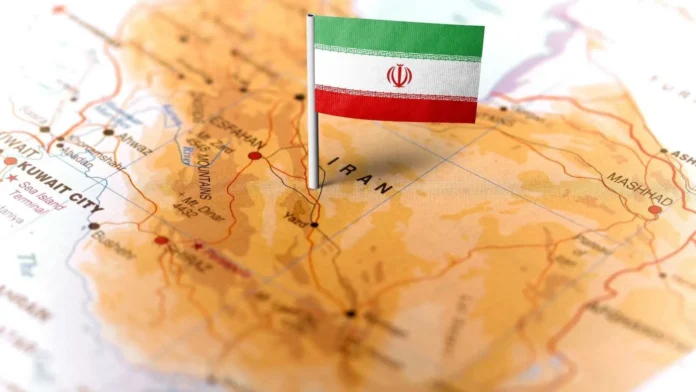

As the Iran-US memorandum of understanding approaches what mediators are describing as its final hours before signing, the Council on Foreign Relations has identified six key issues that remain genuinely unresolved — each of which represents a potential deal-breaker. Understanding them is the difference between informed anticipation and wishful thinking.
The United States and Iran are reportedly close to a long-awaited agreement, but it remains to be seen whether it resolves their major differences—including nuclear and missile programs, the Strait of Hormuz, and Israel’s war with Iranian proxies.
That caveat — from the Council on Foreign Relations, published June 12 — is the most important analytical contribution to the current diplomatic moment. Both sides are saying they are close. Both sides’ statements fall short of confirmed. And the specific issues on which the deal is not yet complete are the same issues that have prevented a deal for the past four months.
Issue 1: Nuclear Enrichment Duration
The duration of the moratorium on uranium enrichment is being actively negotiated, with three sources saying it would be at least 12 years and one putting 15 as a likely landing spot. Iran proposed a 5-year moratorium on enrichment and the US demanded 20.
The gap between 5 and 20 years is not just numerical. It reflects fundamentally different visions of what the deal is for. Iran’s 5-year proposal preserves Iran’s ability to restart enrichment within a presidential term — limiting what any agreement can actually achieve in terms of permanently constraining Iran’s nuclear capability. The US 20-year demand would outlast multiple Iranian political cycles and create structural constraints more similar to the JCPOA’s long-term provisions.
The 12-15 year estimate that multiple sources have converged on represents a compromise that neither side’s stated position can claim as a victory. Whether that is sufficient for Trump to present the deal as having “eliminated” Iran’s nuclear threat — which is how he has described his objectives — and for Iran to present it as having preserved its sovereignty over its nuclear programme, is a political question that rests on presidential calculations, not technical ones.
The US wants to insert a provision whereby any Iranian violation on enrichment would prolong the moratorium, the source said. This “snapback” mechanism for the enrichment pause — automatic extension in response to violation — could in theory make even a 12-year deal function more like a permanent constraint if Iran consistently violates it. Whether Iran accepts this mechanism is itself a sticking point.
Issue 2: The Inspections Regime
“The details matter here,” Ewers said at CFR, in terms of what the inspection and verification regime will be, what dismantlement entails in the context of facilities that were targeted in June 2025’s bombings, and several other provisions.
Iran would commit to an enhanced inspections regime, including snap inspections by UN inspectors. This goes further than the original JCPOA’s managed access provisions, under which Iran maintained some ability to delay or contest IAEA inspection requests.
Snap inspections — where inspectors can arrive at any declared or undeclared facility without advance notice — are the gold standard of nuclear verification. They are also the provision that Iran’s conservative political factions most strongly resist, as they are perceived as an infringement on sovereignty that creates opportunities for intelligence gathering by adversaries.
According to a US official, the parties are discussing a clause whereby Iran would commit not to operate underground nuclear facilities. This provision directly targets Fordow — the deeply buried enrichment facility that US military planners have considered the hardest to destroy militarily. Whether Iran accepts a prohibition on underground enrichment as part of a deal that stops the US from bombing it is one of the genuinely binary remaining questions.
Issue 3: Hormuz Sequencing
Iran’s restrictions on shipping through the strait and the US naval blockade would be gradually lifted during a 30-day period, according to a US official.
The sequencing question — who moves first — has been the central sticking point in Hormuz negotiations since the ceasefire began. Iran wants the US blockade lifted before it removes mines. The US wants mines removed before it lifts the blockade. Each side sees moving first as a concession that the other side could exploit if good faith fails.
The “gradual lifting” framework — in which both sides reduce their Hormuz interference simultaneously over 30 days, with each step contingent on verification of the other side’s compliance — is the standard diplomatic solution to a sequencing problem. Whether the verification mechanisms are robust enough to give both sides confidence in the process is a technical and trust question that the MOU’s 30-day timeline is designed to test.
Issue 4: Sanctions Timing and Scale
The US would commit as part of the MOU to a gradual lifting of the sanctions imposed on Iran and the gradual release of billions of dollars in Iranian funds that are frozen around the world.
The scale of the financial commitment is disputed between the versions circulating: Reuters reports $25 billion in frozen assets; Bloomberg describes a $300 billion reconstruction fund. The gap between these figures — $275 billion — is not a rounding error. If the Bloomberg version reflects Iran’s actual demand and the Reuters version reflects the US offer, the financial gap is itself a deal-breaker at the level reported.
Iran’s negotiating priorities center on three pillars: full sanctions removal, security guarantees from the US, and compensation discussions for war damages sustained during the recent escalation.
The phrase “security guarantees” — not just sanctions removal but positive commitments from the US about Iran’s future security — has not been addressed explicitly in any publicly confirmed provision. Whether that represents a gap in reporting or a gap in the deal is unclear.
Issue 5: Missiles
Iran would also commit to an enhanced inspections regime — but critically, no provision in any publicly confirmed version of the MOU addresses Iran’s ballistic missile programme.
Iran has consistently and publicly refused to include its missile programme in any nuclear negotiations. The IRGC’s ballistic missiles are the primary remaining deterrent against US or Israeli conventional attack after Iran’s air force and navy have been largely destroyed. From Tehran’s perspective, eliminating or constraining the missiles after accepting a nuclear moratorium would leave Iran with no deterrent whatsoever.
The US and Israel’s position — that Iran’s missiles represent a continuing threat regardless of nuclear progress — creates a gap that the current MOU explicitly does not bridge. The missile question is deferred. Whether that deferral means it will be addressed in follow-on talks or simply never resolved is one of the most significant uncertainties in the current framework.
Issue 6: Lebanon
The Lebanon front — where Hezbollah is fighting Israeli forces, seven UNIFIL peacekeepers have been killed, and Iran has insisted any ceasefire must be comprehensive — is the most complex externally imposed constraint on the US-Iran deal.
Iran’s insistence that Lebanon be included in the ceasefire framework reflects its core strategic interest in protecting Hezbollah as an asset. The US and Israel’s resistance to including Lebanon in a bilateral US-Iran deal reflects the principle that the US does not negotiate on behalf of Israel regarding its military operations in a third country.
Hezbollah has rejected every Lebanon ceasefire framework offered so far. That makes any Lebanon provision in the MOU potentially unenforceable from the moment of signing — if Hezbollah doesn’t comply with terms its patron accepted on its behalf, the Lebanon provision becomes a dead letter.
Whether Iran can accept a deal that defers Lebanon — or whether Lebanon’s exclusion is the final barrier preventing a signing — is the question that Iran’s Supreme Leader’s June 12 statement (“Hormuz stays closed as long as conflict continues”) most directly implicates. The “conflict” in that statement could be read as including Lebanon.
What History Suggests
Peace agreements in the final stages of negotiation often encounter last-minute obstacles that emerge precisely because the proximity of a deal makes each remaining concession feel more permanent. Both sides know that what they agree to in the next 24-48 hours will define the framework for the next decade. That knowledge produces caution, last-minute demands, and public posturing alongside private accommodation.
The CFR’s assessment — “it remains to be seen whether it resolves their major differences” — is the accurate framing. The deal is closer than it has ever been. It is not done. And the issues that could still prevent it are not trivial.
LoudFact.com is an independent global news and explainer platform. This report is based on the CFR’s “Is a US-Iran Deal Within Reach?” analysis published June 12, 2026, the Axios MOU reporting from May 6, and official statements from US and Iranian governments as of June 14-15, 2026.