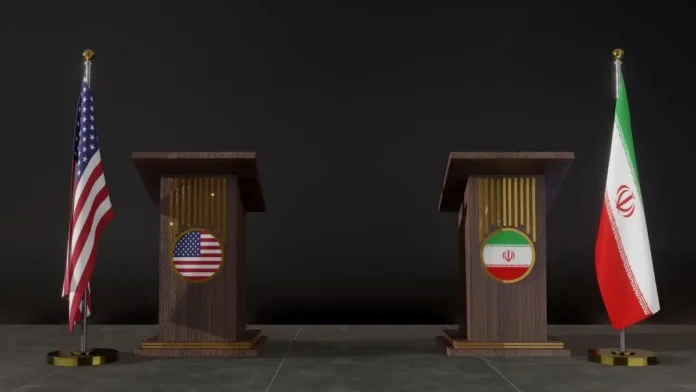

Iran’s semi-official Mehr News Agency published a 14-point draft of the memorandum of understanding between Iran and the United States on June 12 — a document whose existence has been confirmed by both governments, whose content is being disputed in its specifics, and whose provisions represent the most detailed publicly available account of what a peace agreement between the two countries would actually contain.
Iran’s semi-official news agency published a 14-point draft understanding on Friday, presenting the most detailed publicly available account of what the Iran-US peace agreement would contain. Both sides have acknowledged the MOU exists. Both sides have contested specific characterisations of its contents. Multiple versions are circulating — one seen by Bloomberg News, one reported by Reuters, one published by Iran’s Mehr News Agency.
Drawing on all available sources — the Axios reporting from May 6 that first described the MOU’s one-page framework, the Mehr News Agency’s 14-point list, the Bloomberg and Reuters versions, the CFR analysis of the six key issues, and statements by US officials and Iranian diplomats — here is the most accurate consolidated picture of what the agreement contains.
What Iran Commits To
Nuclear weapons commitment. Iran would commit in the MOU to never seek a nuclear weapon or conduct weaponization-related activities. This is a commitment Iran has made before — under the NPT and in the JCPOA — and has subsequently stepped back from. The new commitment would be incorporated into a bilateral MOU with the US, adding a direct US-Iran dimension to what was previously a multilateral framework.
Enrichment moratorium. Iran would agree to a moratorium on uranium enrichment. The duration is the central remaining dispute: Iran proposed a 5-year moratorium; the US demanded 20 years. Current reporting suggests a 12-15 year landing point. The US wants to insert a provision whereby any Iranian violation on enrichment would prolong the moratorium — a “snapback” mechanism for the enrichment pause.
Underground facilities. According to a US official, the parties are discussing a clause whereby Iran would commit not to operate underground nuclear facilities — a direct response to the deeply buried Fordow enrichment plant that has been a central concern for US and Israeli military planners.
Enhanced inspections. Iran would commit to an enhanced inspections regime, including snap inspections by UN inspectors, according to the US official. Snap inspections — which allow IAEA inspectors to visit declared and undeclared facilities without advance notice — go significantly further than Iran accepted under the original JCPOA.
Strait of Hormuz reopening. Iran’s restrictions on shipping through the strait and the US naval blockade would be gradually lifted during a 30-day period, according to a US official. The gradual lifting — not an immediate reopening — reflects the practical challenge of mine removal and the political challenge of sequencing mutual de-escalation.
What the US Commits To
Blockade lifting. The US naval blockade of Iranian ports — which has been costing Iran approximately $500 million per day in lost revenues since April 13 — would be gradually lifted over the 30-day period alongside the Hormuz reopening.
Sanctions relief. The US would commit as part of the MOU to a gradual lifting of the sanctions imposed on Iran and the gradual release of billions of dollars in Iranian funds that are frozen around the world. The scale of the sanctions relief is one of the most contested elements: Reuters reported $25 billion in frozen assets; the Bloomberg version described a $300 billion reconstruction fund if a final deal is reached. The US official confirmed “significant sanctions relief and unfreezing of Iranian assets” without specifying the amount.
Force withdrawal (disputed). Immediately after signing this MoU, the US will begin lifting its maritime blockade, and will bring shipping to full capacity within a maximum of 30 days. The US also commits to withdrawing its forces from the Persian Gulf region within 30 days — according to one version of the MOU. The US government has not publicly confirmed this provision.
What the MOU Defers
The most important diplomatic feature of the MOU is what it does not resolve — and what it explicitly defers to 60-day follow-on negotiations:
Nuclear programme details. The deal on the table, according to multiple news sources, is that Iran would agree to a fifteen- or twenty-year halt on enrichment, and the dismantling of its nuclear sites, but this is deferred to the sixty-day follow-on negotiations rather than up front.
Iran’s missile programme. No provision in any version of the MOU addresses Iran’s ballistic missile programme. Tehran has consistently refused to put its missile capability on any negotiating table. The US has not been able to change that position. The missile question is deferred indefinitely.
Lebanon. Iran’s insistence that any ceasefire include Lebanon has not been incorporated into the MOU as a binding provision. Whether Lebanon is addressed in the follow-on talks or remains a separate track is unclear from available reporting.
Reconstruction. The Bloomberg version of the MOU includes a provision for a “minimum $300 billion” reconstruction and economic development programme for Iran, contingent on a final deal. The Reuters version does not include this. The discrepancy between the two versions — $25 billion in frozen assets vs $300 billion in reconstruction funding — is significant enough to represent a fundamental difference in what was agreed.
The Multiple Versions Problem
Iran pushes differing versions of deal as US sticks to timeline.
The existence of multiple circulating versions of the MOU — with differences as fundamental as the size of the financial commitments involved — is one of the most significant complicating factors in the current diplomatic situation. It is possible that both versions are genuine documents reflecting negotiations at different stages. It is possible that Iran is distributing a more favourable version for domestic political purposes while a different version is the actual agreed text. It is possible that the gap between the versions is itself the remaining negotiating issue.
Trump wrote in an angry Truth Social post that the public reporting about the deal has “NOTHING to do with the terms that were agreed to, in writing” — a denial that, paradoxically, confirms that written agreed terms exist.
What the MOU Would and Would Not Achieve
If signed in its current form — or in a form close to current reporting — the MOU would achieve the following:
Immediately: End the war. Declare a ceasefire. Begin the gradual mutual lifting of blockade and strait restrictions over 30 days.
Within 30 days: Substantial commercial shipping resumption through the Strait of Hormuz. Oil prices begin to fall from their $115+ peak. US inflation starts to ease.
Within 60 days: Technical-level talks begin on detailed nuclear programme terms, sanctions architecture, and regional security arrangements.
Deferred indefinitely: Full resolution of Iran’s nuclear programme, its missile capability, the Lebanon front, and the reconstruction of Iran.
The MOU is not a peace treaty. It is a framework for stopping the fighting and creating the space within which a peace treaty might eventually be negotiated. That is what every meaningful ceasefire agreement is. And it is, after 108 days and enormous cost, more than nothing.
LoudFact.com is an independent global news and explainer platform. This report is based on reporting from Axios, Al Jazeera, CNBC, CryptoBriefing, the CFR, The Researchers, Fortune/Bloomberg, and US government official statements as of June 12-15, 2026.