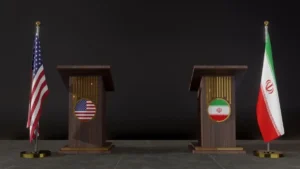

Pakistan’s Prime Minister Shehbaz Sharif announced on June 13 that an Iran-US peace deal could be finalised “within the next 24 hours” — with an electronic signing ceremony already being prepared — in the most definitive statement from a mediating country since the war began 108 days ago. Iran’s foreign minister said the MOU “has never been closer.” Iran’s foreign ministry said signing would not happen on Sunday but could come “in the coming days.” A senior US official said they were “very close” but “not quite at the finish line.”
Pakistani Prime Minister Shehbaz Sharif, whose country has been playing a central role in mediation negotiations, said in a post on X on Saturday that an Iran-US peace deal could be finalized “in the next 24 hours.” “Pakistan is preparing for the electronic signing of the peace deal immediately after, followed by technical level talks next week,” Sharif said.
“We are closer to a peace deal than ever before,” Sharif wrote. “We are confident that this historic peace deal will form a strong foundation for lasting peace.”
The language was the most unambiguous public statement from a mediator since the war began on February 28. Sharif did not hedge with the qualifications that have characterised every previous announcement of diplomatic progress. He described Pakistan as actively preparing for a signing ceremony. He named a specific timeframe. He conveyed confidence, not hope.
That specificity — and the diplomatic weight behind it — makes the statement one of the most significant of the entire 108-day conflict.
What the Iranian Side Said
Speaking in a televised interview on Friday, Iranian Foreign Minister Abbas Araghchi said diplomatic efforts aimed at reinforcing the Islamic Republic’s victory in the US-Israeli war of aggression were now in their final stages based on a 14-point memorandum of understanding that has been discussed in the media.
Araghchi described the 14 provisions as interconnected, saying they formed a single package. He stressed that the document was still subject to change until final approval and that its details would be announced after completion.
The Iranian foreign minister’s use of the phrase “final stages” — combined with his reference to a specific 14-point MOU document — confirmed that a concrete text exists and that both sides have been working from it. His insistence that the document “would be announced after completion” reflected Iran’s consistent posture of not confirming specific terms publicly until a deal is done.
However, hours after Sharif’s Saturday post, Iran’s Foreign Ministry spokesperson Esmaeil Baghaei said a US-Iran agreement would not be signed on Sunday, according to state media. “We will have to wait and see about the exact time of signing the memorandum [of understanding]; although it will not be tomorrow, the possibility of this happening in the coming days cannot be ruled out,” Baghaei said.
The Iranian foreign ministry’s clarification — not today, but soon — is not a rejection of Sharif’s timeline. It is a narrowing of it: the 24-hour window has passed without a signing, but the characterisation of it as imminent has not been withdrawn.
What the US Side Said
The U.S. could sign a deal soon but isn’t “100%” confident the agreement will be consummated, a senior Trump administration official said Friday.
A senior Trump administration official told reporters on Friday that a deal was “not quite at the finish line yet, but we are very close.” The official said the memorandum of understanding would involve “significant” sanctions relief and the unfreezing of Iranian assets, in exchange for Iran agreeing to dismantle its nuclear programme and hand over its nuclear material.
However, he said that Iran would not immediately receive anything upon the deal’s signing — sequencing the benefits to follow Iranian compliance rather than preceding it. That sequencing is one of the key remaining issues.
President Donald Trump said the prior day that the US had “just made a great settlement of the war with Iran,” subject to the “finalisation of documents.” Trump wrote in an angry Truth Social post later Friday morning that the public reporting about the deal has “NOTHING to do with the terms that were agreed to, in writing” — a characterisation that simultaneously denied the accuracy of leaked provisions and confirmed that written terms existed.
Why Pakistan Is Central to This Moment
Pakistan’s role in mediating the US-Iran war is one of the most significant diplomatic achievements in the country’s recent history. Islamabad brokered the original April 8 ceasefire. It hosted the Islamabad Talks. Its prime minister has served as the primary channel through which the US and Iran have communicated throughout the most sensitive periods of the conflict.
Sharif’s Saturday statement — naming a 24-hour window, describing active preparation of a signing ceremony, expressing confidence in a “historic peace deal” — goes beyond the careful diplomatic hedging that has characterised mediator communications throughout the conflict. It is the statement of a leader who has been told that a deal is imminent and who is choosing to say so publicly.
The decision to say so publicly serves several purposes: it creates accountability for both sides to follow through, it signals to financial markets and energy markets that relief may be coming, and it positions Pakistan — regardless of the deal’s outcome — as the country whose prime minister most clearly and publicly signalled the conflict’s resolution.
Prime Minister Sharif conveyed appreciation to his Qatari counterpart for supporting Pakistani peace efforts through the crisis. Qatar’s parallel role — hosting back-channel talks, facilitating communications — is acknowledged in Sharif’s gratitude, reflecting the genuinely collaborative nature of the mediation effort.
The Technical Gaps That Remain
Despite the extraordinary progress signalled by multiple officials simultaneously, several issues remain unresolved. The Council on Foreign Relations identified six key issues that could still shape the ceasefire: nuclear enrichment duration, inspections regime, Hormuz reopening timeline, sanctions sequencing, missile programme, and Lebanon’s inclusion.
The duration of the moratorium on uranium enrichment is being actively negotiated, with three sources saying it would be at least 12 years and one putting 15 as a likely landing spot. Iran proposed a 5-year moratorium on enrichment and the US demanded 20. The US wants to insert a provision whereby any Iranian violation on enrichment would prolong the moratorium.
Iran would commit in the MOU to never seek a nuclear weapon or conduct weaponization-related activities. According to a US official, the parties are discussing a clause whereby Iran would commit not to operate underground nuclear facilities. Iran would also commit to an enhanced inspections regime, including snap inspections by UN inspectors.
These are not small gaps. A 5-year Iranian proposal against a 20-year US demand with a 12-15 year current estimate reflects negotiating positions that are still being bridged. The decision to defer the most sensitive nuclear questions to 60-day follow-on negotiations — rather than resolving them in the MOU itself — is what makes the agreement possible but also what makes its durability uncertain.
What Happens Next
The 24-hour window Sharif named has passed. The deal has not been signed. Iran’s foreign ministry says it could come “in the coming days.” US officials say they are “very close.” Pakistan is prepared to host the electronic signing ceremony whenever both sides are ready.
What now stands between the world and the end of the Iran war’s most acute phase is a set of final negotiations on a small number of remaining issues — the enrichment moratorium duration, the sequencing of sanctions relief and blockade lifting, and the question of whether the Lebanon front can be incorporated or deferred. Those negotiations are happening in real time, in Islamabad and Geneva and through back channels, as LoudFact publishes this article.
The world is waiting. It has been waiting for 108 days.
LoudFact.com is an independent global news and explainer platform. This report is based on reporting from Al Jazeera, CNBC, NPR, PressTV, and the Council on Foreign Relations as of June 13-15, 2026.