
The UAE previously declared its airspace free of threats on April 9, coinciding with the start of the US-Iran ceasefire, but it has continued intercepting attacks. To date, three people were killed and 230 others were injured since the start of Iranian attacks on the UAE, according to the UAE Ministry of Defense.
Three people killed. Two hundred and thirty injured. In a country that is not a combatant in the Iran war — that did not participate in Operation Roaring Lion or Operation Epic Fury, that hosts US military assets it did not invite into the conflict, and that took an economic decision to quit OPEC and pump more oil that made it a strategic adversary of Iran’s interests.
Why Iran Is Targeting the UAE
Iran’s decision to attack the UAE repeatedly is not random. It is targeted at the specific actions that make the UAE Iran’s most consequential non-combatant adversary. The UAE quit OPEC on May 1 — specifically, as its energy minister said, to pump more oil and undercut Iran’s leverage from the Hormuz closure.
It hosts Al Dhafra Air Base — the largest US military installation in the Middle East. And it sits at the mouth of the Strait of Hormuz, with its deep-water ports at Fujairah, Duqm and Salalah serving as the primary alternative routing for commercial vessels trying to avoid the closed Iranian corridor.
By attacking the UAE, the IRGC is communicating to every Gulf state that there is a price for alignment with Washington and for taking economic actions that undermine Iranian leverage. Three killed and 230 injured is that price made visible.
The Market’s Verdict on the UAE Attacks
Despite three consecutive days of Iranian attacks on a major US ally and the most economically exposed Gulf state, Brent crude rose only 0.2% Friday morning. The market’s near-immovable response to the UAE casualties is the most precise indication available that traders have fully priced the UAE attacks as a contained element of the war — not an escalation that threatens the ceasefire framework or the MOU negotiations.
The UAE’s air defence systems — Patriot and THAAD batteries — have been intercepting the majority of incoming projectiles. The three deaths and 230 injuries, while tragic, are the result of the attacks that got through rather than evidence of an uncontrolled escalation. Markets are watching the MOU, not the UAE attack count, as their primary indicator of where oil prices are going.
Israel-Lebanon Second Round Announced
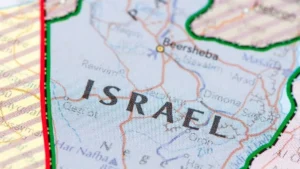
The State Department announced it was facilitating a second round of peace negotiations between Israel and Lebanon later this month, seeking to build a framework for “lasting peace,” the “full restoration of Lebanese sovereignty” and “the delineation of borders,” according to spokesperson Tommy Pigott. The talks are scheduled for May 14 and 15.
Israel-Lebanon talks scheduled for May 14 and 15 — the week after Trump’s China trip. The simultaneous scheduling of Iran MOU negotiations, Trump’s China summit, and Israel-Lebanon peace talks in a single two-week window is the most compressed diplomatic calendar of the entire war. Every pressure point is converging simultaneously.