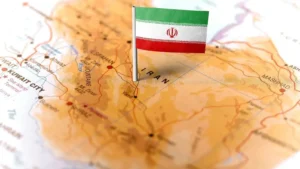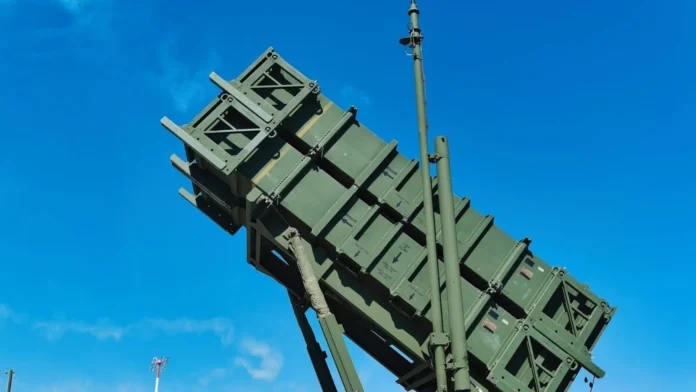

US Central Command struck Iranian missile launch sites and mine-laying vessels near the Strait of Hormuz on Monday, even as a senior Iranian delegation was in Doha, Qatar, for negotiations to end the war — a move that has raised serious questions about whether the fragile ceasefire can survive.
On Monday morning, an Iranian delegation led by Parliament Speaker Mohammad Bagher Qalibaf touched down in Doha, Qatar, for the latest round of talks aimed at ending the nearly three-month-old US-Iran war. By the time the day was over, US Central Command had announced it had launched a series of strikes in southern Iran, targeting missile launch sites and Iranian boats attempting to emplace sea mines near the Strait of Hormuz.
The near-simultaneous occurrence of military strikes and live diplomatic negotiations has crystallised what is arguably the most precarious moment of the ceasefire period — and has produced a flurry of conflicting statements from Washington, Tehran, and the region that leaves the path forward deeply unclear.
What Happened
Hours after Iran’s negotiators met in Doha with Qatari mediators for war talks, the US carried out what it called “self-defense strikes” targeting Iranian missile launch sites and boats around the Strait of Hormuz.
US Central Command stated: “U.S. forces conducted self-defense strikes in southern Iran today to protect our troops from threats posed by Iranian forces. Targets included missile launch sites and Iranian boats attempting to emplace mines. U.S. Central Command continues to defend our forces while using restraint during the ongoing ceasefire.”
Iranian media reported explosions in Bandar Abbas, some 70km from the Strait of Hormuz, in southern Iran. The IRGC subsequently issued a warning that it would respond to the strikes, though the nature and timing of any response had not been confirmed at the time of publication.
The Doha Talks: What Was on the Table
The Iranian delegation to Doha was led by Parliament Speaker Mohammad Bagher Qalibaf, who also led negotiations with Vice President Vance in Pakistan last month.
Qatari and Iranian diplomats chiefly discussed Iran’s “frozen funds” — crippling US sanctions and regional violence have exacerbated an economic crisis in Iran, with Tehran urging the immediate unfreezing of billions of dollars of assets stored in banks overseas.
The financial dimension of the talks reflects Iran’s acute economic vulnerability. The US naval blockade, in place since April 13, is estimated by US officials to be costing Iran $500 million per day in lost revenues. If Tehran and Washington agree to the proposed deal, $24 billion worth of Iranian assets could be released, according to the semi-official Iranian outlet Tasnim. However, a senior US administration official told CNN that the unfreezing of Iranian assets will occur only once the Strait of Hormuz has reopened.
The news agency Tasnim — close to Iran’s Revolutionary Guard Corps — said the agreement being negotiated called on Iran to restore the number of ships transiting through the vital waterway to pre-war levels within 30 days and for the US to completely lift its blockade within the same time.
Rubio and the “Days Away” Claim
Secretary of State Marco Rubio, speaking to journalists from New Delhi where he was on an official visit to India, said the agreement being discussed with Iran was “a pretty solid thing on the table in terms of their ability to open up the strait.”
Rubio also said the US intended to engage in “a very real, significant, time-limited negotiation on the nuclear matter” as part of any broader resolution.
His remarks — the most optimistic public statement yet from a senior US official on the state of the talks — were made even as US forces were conducting strikes on Iranian territory. That juxtaposition is not lost on observers trying to read the state of diplomatic play.
Trump, for his part, extended his deadline for Iran to reopen the crucial Strait of Hormuz to international shipping, saying Monday that the US would hold off on threatened strikes against Iranian power plants for five days.
Iran’s Position: Progress, But No Deal Is Imminent
Iran has consistently maintained a more cautious public posture about the state of the talks. Iranian officials said agreements on many issues were concluded between their negotiators and Washington, but a potential deal was not imminent. According to Tehran’s foreign policy spokesperson Esmail Baqei, there was no “timeframe or deadline” in finalising the deal with the US.
On Monday, Tasnim news agency accused the US of “obstructionism” over the release of some frozen Iranian funds in exchange for lifting restrictions over transit through the Strait of Hormuz.
The gap between Rubio’s “days away” framing and Iran’s “no timeframe” language reflects a broader pattern that has characterised this entire ceasefire period: both sides are negotiating, but they are doing so in public with messages calibrated for domestic audiences as much as for each other. Each side needs to be seen as the reasonable party while not appearing to capitulate.
The Mine-Laying Context
The US justification for Monday’s strikes rests on the assertion that Iranian boats were actively attempting to lay sea mines in the Strait of Hormuz — an act that, if successful, would have continued the physical obstruction of the waterway at the heart of the dispute.
Mine-laying in the strait has been an ongoing dimension of the crisis. The Iranian Revolutionary Guard has boarded and attacked merchant ships and has laid sea mines in the strait throughout the crisis. According to documented data, at least 17 merchant ships have been damaged, 7 abandoned, and 2 captured since the crisis began. Twelve seafarers have been killed or reported missing.
From the US perspective, allowing Iran to continue mine-laying during a ceasefire would permanently compromise the possibility of reopening the strait. From Iran’s perspective, the US strikes — regardless of their tactical justification — represent a violation of ceasefire terms and a provocation timed to coincide with active diplomacy.
Is the Ceasefire Still Intact?
Defense and security analysts have argued that the strikes, while significant, are unlikely to derail the formal diplomatic process entirely. One analyst told Al Jazeera that it is important to “separate operational tactical matters from the strategic” — and that formal negotiations are still progressing.
This framing — that tactical military exchanges and strategic diplomacy can coexist in an uneasy parallel — has characterised the entire ceasefire period. US and Iranian forces have exchanged fire on multiple occasions since April 8, and yet talks have continued. Monday’s events fit that pattern, even if the scale and timing are particularly striking.
The more serious risk is not that Monday’s strikes end the talks directly, but that they produce an Iranian retaliatory action of sufficient scale to make continued negotiations politically untenable on one or both sides.
What Happens Next
While restoring commercial traffic through the strait has been a top priority for US allies, Trump on Monday added an apparent demand that any peace deal should require more countries to extend full diplomatic recognition to the state of Israel — a condition that significantly complicates an already complex negotiation.
The five-day pause on threatened strikes against Iranian power plants buys a narrow window for the Doha talks to produce something concrete. Whether the window is used productively depends on whether the IRGC’s retaliatory threats translate into action, whether Iran’s delegation in Doha can maintain negotiating authority despite pressure from hardliners at home, and whether the US and Iran can agree on the sequencing of Hormuz reopening and sanction relief.
The world has been waiting for the strait to reopen for three months. The next five days may determine whether that wait ends — or continues indefinitely.
LoudFact.com is an independent global news and explainer platform. This report is based on reporting from CNN, Al Jazeera, NPR, Euronews, and PBS NewsHour as of May 26, 2026.