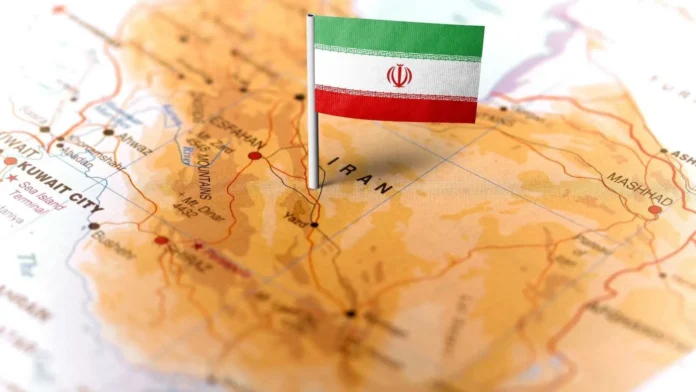

Iranian President Masoud Pezeshkian has ordered the restoration of global internet access for Iran’s population, ending a blackout that began on the first day of the US-Iran war and lasted 87 days — a decision that carries significant political and diplomatic meaning.
On the morning of February 28, 2026, as US and Israeli aircraft conducted the first strikes of what would become a sweeping military campaign, Iran’s authorities cut the country’s population off from the global internet. For 87 days, most of Iran’s 87 million people were unable to access international websites, social media platforms, messaging services, or global news through normal channels. The internet observatory NetBlocks documented the blackout in real time, tracking what it described as a near-total severance of Iran’s external internet connections.
On May 26, Iranian state media reported that President Masoud Pezeshkian had ordered the restrictions reversed. The restoration of global internet access to Iran — confirmed by internet monitoring sources — is among the most significant domestic actions taken by the Iranian government since the ceasefire was agreed on April 8, and carries meaning that extends well beyond telecommunications policy.
Why Iran Cut the Internet — and What It Achieved
Iran’s pattern of internet disruption during periods of political and military crisis is well documented. The country has repeatedly cut or severely restricted internet access during protests, elections, and military events — in 2019 during fuel price protests, in 2022 during the movement that followed Mahsa Amini’s death, and now during the 2026 war.
The logic of the blackout is straightforward: controlling information flow limits the ability of opposition groups to organise, prevents video evidence of military or civilian casualties from spreading internationally, and restricts the Iranian public’s access to foreign news coverage that might contradict the government’s narrative of events.
In the context of the February-March active conflict phase, the blackout served an additional purpose: preventing Iranians from accessing real-time information about the scale of damage to military infrastructure, the deaths of senior officials including the Supreme Leader, and the extent of Iran’s retaliatory attacks and their civilian consequences.
For Iranians, the 87 days of the blackout were a period of sharp informational isolation. Many turned to VPNs and other circumvention tools — usage of which surged dramatically after February 28, according to digital rights monitoring organisations. But VPN access, while widespread, requires technical knowledge, is unreliable, and carries legal risk in Iran. The majority of the population, particularly older people and those in rural areas, were effectively cut off from global information for nearly three months.
The Significance of the Restoration
The decision to restore internet access is not a purely technical one. In Iran’s political context, it is a message — and the message is directed at multiple audiences simultaneously.
To the Iranian public: The government is signalling that it considers the acute crisis phase to be over. Restoring internet access while the war is still technically ongoing, while ceasefire negotiations are continuing, and while US forces are still striking Iranian territory is a calculated communication that says: the worst is behind us. This matters for domestic morale and for the government’s own legitimacy, which was significantly tested during the active conflict.
To international negotiators: Restoring internet access removes a specific grievance that human rights organisations, Western governments, and even some regional partners had raised. It marginally improves Iran’s position in diplomatic discussions by demonstrating a degree of good faith on an issue that has been publicly criticised.
To the Iranian business community: The blackout imposed severe economic costs on Iran’s already-pressured private sector. Businesses relying on international communication, e-commerce, banking, and supply chain coordination were severely disrupted for nearly three months. Restoring access does not solve the broader economic damage of the war and blockade, but it removes one of the most operationally damaging constraints.
To the political opposition: The restoration is not an act of liberalisation. Iran’s domestic internet restrictions — blocking of social media platforms, monitoring of communications, criminalisation of certain speech — remain in place. What has been restored is access to the global internet in a general sense, not freedom of expression or a loosening of surveillance. The blackout’s lifting does not change Iran’s fundamental approach to internet governance; it reflects a specific crisis measure being unwound.
The 87 Days: What Iranians Endured
The scale and duration of the blackout are worth placing in human terms. Iran has a young, educated population with high rates of smartphone and internet use prior to the war. Social media — particularly Instagram, Telegram, and WhatsApp — were central to how Iranians communicated with family members abroad, accessed news, ran small businesses, and maintained connection with the wider world.
For the Iranian diaspora — one of the largest in the world, with significant populations in the US, UK, Canada, Germany, France, and across the Middle East — the blackout meant weeks of uncertain communication with family inside Iran. Simple messages confirming that loved ones were alive became difficult to transmit reliably. Video calls that had connected families separated by emigration, sanctions, and political geography fell silent.
For journalists trying to report from inside Iran, the blackout severely limited the flow of information. Much of what reached international audiences during the first weeks of the war came through proxy sources, satellite images, and official statements — a drastically impoverished information environment compared to what modern connectivity normally enables.
For businesses, particularly the country’s growing tech sector and the many small enterprises that had integrated international e-commerce platforms and payment systems into their operations, 87 days of global internet severance was an economic catastrophe layered atop the economic catastrophe of the war itself.
What It Signals About the Peace Process
The timing of the restoration — on the same day that US forces struck Iranian territory near Hormuz and Iranian negotiators were in Doha for talks — is politically complex. But analysts who track Iran’s domestic politics see the internet decision as a sign that the Pezeshkian administration is preparing the Iranian public for a negotiated resolution.
Governments in crisis mode, with active military operations underway and maximum control needed over domestic narratives, do not voluntarily restore internet access. They do so when they believe the narrative they need to tell is one that can withstand public scrutiny — or when the political cost of continued restriction outweighs the control benefits.
The Pezeshkian administration, which came to power in 2024 as a moderate reformist in a constrained political system, has a different domestic political profile from hardline predecessors. The decision to lift the blackout is consistent with a leader who knows that the war has inflicted genuine costs on ordinary Iranians and who is managing the political challenge of a negotiated settlement that will inevitably be criticised by hardliners as insufficient.
What Happens Next
The restoration of internet access does not resolve the fundamental issues on which the war began and on which peace talks are still stalled: the reopening of the Strait of Hormuz, the release of frozen Iranian assets, and the broader question of Iran’s nuclear programme and regional posture.
What it does is open a new channel of communication between the Iranian public and the world — at a moment when the nature of any eventual deal, and the terms Iran’s leadership is prepared to accept, will matter deeply to the Iranian people who have lived with the consequences of the past three months.
For 87 days, most of Iran was informationally isolated from the world. That isolation has ended. The war that caused it has not.
LoudFact.com is an independent global news and explainer platform. This report is based on reporting from AnewZ, NPR, BBC, NetBlocks, and geopolitical analysis sources as of May 26, 2026.