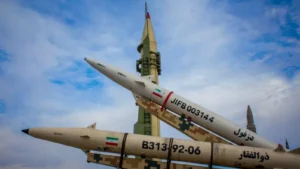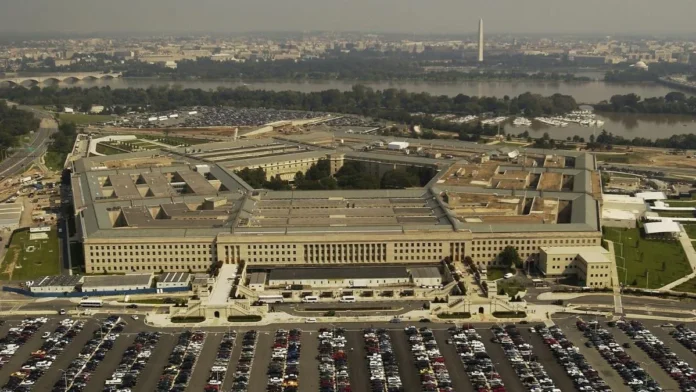

Three months of sustained military operations against Iran — including air strikes, a naval blockade, and continuous carrier group presence near the Strait of Hormuz — are placing the Pentagon under financial pressure that is cutting into routine training and maintenance, adding a quiet but real dimension to the urgency of reaching a negotiated settlement.
Most of the coverage of the US-Iran war has focused on the diplomatic drama: ceasefire negotiations, Trump’s social media posts, Iranian counter-offers, and the question of when — or whether — the Strait of Hormuz will reopen. Less attention has been paid to what sustained military operations actually cost, and what those costs mean for the institution conducting them.
The Pentagon is feeling the financial squeeze and is struggling in some cases to carry out routine training and maintenance amid its ongoing operations against Iran.
That sentence, buried in CNN’s live coverage of the Iran war on Wednesday, describes a reality that has significant implications both for US military readiness and for the political economy of the negotiations. Wars are expensive. And the longer a conflict continues, the more the financial and operational costs begin to intersect with the diplomatic calculations of the people trying to end it.
What Three Months of Operations Actually Cost
The US military’s operations against Iran since late February have been extensive and sustained. They have included:
The initial strikes. The February 28 air campaign that began the war involved coordinated strikes by the US Air Force and Navy, alongside Israeli assets, on Iranian military infrastructure, nuclear facilities, and government targets. Strikes of this scale involve the use of precision munitions — cruise missiles, precision-guided bombs, air-launched weapons — that cost hundreds of thousands to millions of dollars per unit.
The Strait of Hormuz campaign. Beginning on March 19, the US launched an ongoing aerial campaign against Iranian naval vessels and drones in and around the Strait of Hormuz, specifically targeting mine-laying boats and missile launch sites that were threatening commercial shipping. According to documented data from the Wikipedia page on the 2026 Strait of Hormuz campaign, the operation has been ongoing continuously for more than two months. Sustained operations of this type require continuous carrier presence, daily sortie schedules, and replenishment of munitions that are consumed in each strike.
The naval blockade. The US naval blockade of Iranian ports, established on April 13, requires persistent vessel presence in the Persian Gulf and Gulf of Oman — a deployment footprint involving multiple warships, replenishment vessels, and the logistical infrastructure to sustain them over an extended period.
Defensive operations. US forces have been in continuous engagement with Iranian drones, fast boats, and missile systems since February. Intercepting drones and missiles also has costs: the interceptors used by Patriot and other air defence systems are expensive, and high rates of engagement burn through stockpiles that take time and money to replenish.
The aggregate cost of three months of operations at this tempo runs into the tens of billions of dollars. While the US defence budget is the largest in the world at over $800 billion annually, it was not designed or sized to absorb the additional cost of a sustained regional war on top of all of the other operations, commitments, and programmes it funds.
Training and Maintenance: Why the Squeeze Matters
The financial pressure becomes most consequential when it begins to affect the things that are hardest to see from the outside: training and maintenance.
Military readiness — the ability of a force to fight effectively — is built and maintained through continuous training. Pilots need flying hours. Crews need operational drills. Units need exercises that test their systems and procedures under realistic conditions. When budgets are squeezed by operational costs, training is often among the first things that gets cut or deferred — because the effects are not immediately visible and the savings are real.
Maintenance operates similarly. Aircraft, ships, vehicles, and weapons systems require regular maintenance to function reliably. Maintenance backlogs build when operational tempo is high and maintenance budgets are constrained simultaneously — which is precisely the situation the US military is now navigating. An aircraft that misses a scheduled maintenance cycle does not immediately fail; it accumulates risk over time.
The US Navy in particular has faced ongoing challenges with maintenance backlogs for years before the Iran war began. Sustained operations in the Persian Gulf add to those pressures: the harsh environment, the operational tempo, and the demands of continuous readiness all accelerate wear on systems that need regular attention.
The Political Economy of Military Costs
There is a dimension to the Pentagon’s financial squeeze that goes beyond operational readiness and connects directly to the diplomatic negotiations underway in Doha, Washington, and back channels across the region.
Wars impose costs on the side conducting them as well as the side being targeted. The US military’s financial constraints are not yet decisive — the United States retains overwhelming conventional military superiority over Iran, and the Iranian navy and air force have been substantially degraded since February. But the accumulation of costs creates a quiet political pressure: the longer the conflict continues, the more it costs, and the more that cost competes with other defence priorities.
The $800 billion defence budget that was planned and appropriated before the Iran war did not include the cost of three months of combat operations. The additional costs must be absorbed within existing budget authorities, supplemental appropriations, or both. Supplemental appropriations require congressional action — and Congress, where Republican majorities are looking ahead to November’s midterm elections, is not uniformly enthusiastic about open-ended military commitment.
Trump’s own statement at Wednesday’s Cabinet meeting — that he does not care about the midterms — can be read as a signal to Iran that domestic political pressure will not force him to accept a bad deal. But it can equally be read as an acknowledgment that the political environment around the conflict is not frictionless, and that the administration is navigating real constraints.
Comparative Costs: What Both Sides Are Paying
The financial pressure is not symmetrical. Iran is under significantly greater economic strain than the United States.
The US naval blockade has been estimated to be costing Iran $500 million per day in lost export revenues. Iranian oil exports — which generate the foreign currency on which the government depends for public sector wages, subsidies, and debt service — have fallen sharply. Inflation inside Iran has accelerated. The restoration of internet access this week, while carrying symbolic meaning, does not address the structural economic damage of three months of war and blockade.
But the fact that Iran is under greater financial pressure than the US does not mean the US is under no pressure. Both sides have economic incentives to reach a resolution: Iran to end the blockade and recover its export revenues; the US to reduce the operational costs of sustained military presence and redirect defence resources to other priorities, including the Indo-Pacific.
That shared economic logic — different in scale but real on both sides — is part of what gives the current round of negotiations its urgency.
What Happens Next
The five-day pause on threatened strikes against Iranian power plants, announced by Trump on Monday, is running out. Saturday has been identified as the next planned round of formal talks. The Pentagon’s financial constraints are one of the quieter factors shaping the timeline.
A deal that reopens the Strait of Hormuz within 30 days — the framework reportedly under discussion — would allow the US to begin drawing down the operational posture that is driving current costs. A carrier group that can be redeployed from the Persian Gulf is a carrier group whose costs shift back to routine rather than combat deployment budgets. A naval blockade that ends is a blockade that stops consuming the munitions, fuel, and maintenance hours it requires every day it continues.
The Iran war is often discussed in terms of its diplomatic, strategic, and humanitarian dimensions. Its financial dimensions — on both sides — are less visible but no less real. And they are a quiet but persistent factor in every calculation being made in Washington, Tehran, and the capitals trying to mediate between them.
LoudFact.com is an independent global news and explainer platform. This report is based on reporting from CNN, NPR, the Washington Post, Wikipedia’s documented 2026 Strait of Hormuz crisis data, and publicly available US defence budget information as of May 27, 2026.