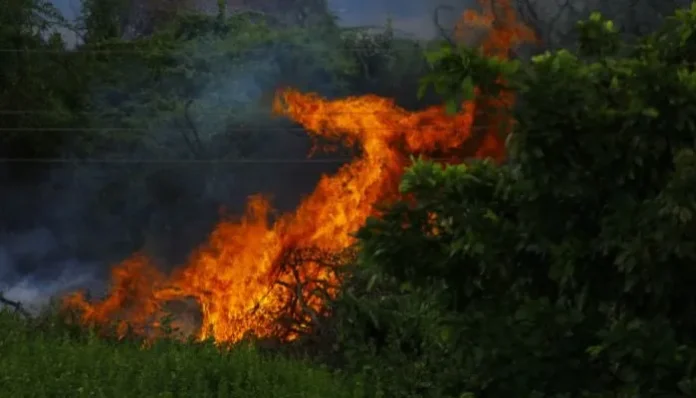

French authorities ordered nearly 4,000 more people evacuated from tourist areas on the Atlantic coast on Tuesday, as a returning heat wave threatened to undo firefighters’ hard-won progress against a wildfire that has already forced one of the largest evacuations in the country’s modern history.
What Happened
The new evacuation order covers tourist sites near Lège-Cap-Ferret on France’s Atlantic coast, part of a broader wildfire emergency that has swept across southwestern Europe in recent days. Authorities say roughly 79,000 people have been evacuated in total, with another 30,000 ordered to remain sheltered in place, as fires continue to burn in the Gironde region west of Bordeaux.
The French government has declared a national emergency for wildfires for the first time, an unprecedented step reflecting the scale of the crisis. Ninety-three firefighters have been injured battling the blaze, and a major highway linking the region remains partially closed, along with disrupted rail service.
In Spain, authorities are simultaneously battling the country’s largest wildfire on record in hilly terrain roughly an hour’s drive west of Madrid, where two large fires have at times come close to merging into a single, larger blaze. Spain is bracing for its fourth heat wave of the summer, with no significant rainfall forecast for the affected regions.
Why It Matters
Fires in France and Spain have together forced roughly 330,000 people to evacuate, described by officials as France’s largest peacetime evacuation since World War II. The scale of displacement, combined with the direct threat to homes, infrastructure, and in some cases critical industrial and defense facilities near Bordeaux, marks one of the most serious wildfire crises Europe has faced in years.
Beyond the immediate human toll, the fires carry broader significance for how European governments plan for increasingly severe wildfire seasons. France has already experienced 3.4 times its annual average number of fires so far in 2026, while Spain has seen 1.7 times its typical rate, according to data from Copernicus, Europe’s climate monitoring service.
The crisis also illustrates the compounding risks climate change poses to regions not traditionally associated with extreme heat and fire danger, as unusually wet winter conditions earlier this year left abundant vegetation that has since dried into fuel for the current blazes.
Context and Background
The fires follow what scientists have already confirmed was Western Europe’s hottest June on record, part of a broader pattern of record-breaking heat waves that a recent scientific analysis found would have been “virtually impossible” without the influence of human-caused climate change. This week’s heat wave marks the fourth to hit the region this summer alone.
Intense heat dried out vegetation across the Gironde region, transforming the landscape into what officials have described as a tinderbox. Several sites tied to France’s defense industry, including facilities linked to the production of submarine-launched ballistic missiles, were pre-emptively evacuated as fires approached, though the companies involved say all necessary security measures have been taken.
French President Emmanuel Macron has praised the coordinated national response, thanking firefighters and international partners for their assistance, while officials have mobilized an extensive mix of military and civilian firefighting resources, including water-bombing aircraft and a large military cargo plane, to support the effort.
Expert Analysis
Climate scientists monitoring the fires say the pattern seen this summer — record heat, minimal rainfall, and vegetation primed to burn after a wet winter — is consistent with the kind of compounding conditions researchers have long warned would become more frequent as global temperatures rise. Analysts tracking the fires describe the current outbreak as falling within the range of scenarios climate models had anticipated for the region.
Public health researchers note that wildfire smoke poses risks well beyond the immediate fire zones, with air quality concerns prompting some residents in Bordeaux to leave the city voluntarily even without a formal evacuation order in place. Respiratory health impacts from prolonged smoke exposure are an increasing concern for cities located near large, sustained wildfires.
Emergency planning experts point to the unprecedented scale of this year’s evacuations as a signal that current wildfire response infrastructure, built around historical fire patterns, may need significant reinforcement to keep pace with the frequency and intensity of fires now occurring across southern Europe.
What Happens Next
Firefighters in both France and Spain are racing to consolidate progress before temperatures rise further later this week, with no rain forecast for the hardest-hit areas. French officials have warned that a shift in wind conditions could quickly reignite fire activity near the Bordeaux metropolitan area, as has already happened once during the current crisis.
Authorities are expected to assess whether further evacuation orders are needed as the new heat wave intensifies. Longer term, the scale of this summer’s fires is likely to intensify pressure on European governments to expand wildfire prevention funding and reassess emergency response capacity ahead of future summers.