
Iran fired multiple ballistic missiles at American forces stationed in the Middle East on Tuesday evening in what the US military called an attempted “surprise attack,” breaking a four-day pause in fighting and raising new questions about how long the fragile calm between Washington and Tehran can hold.
What Happened
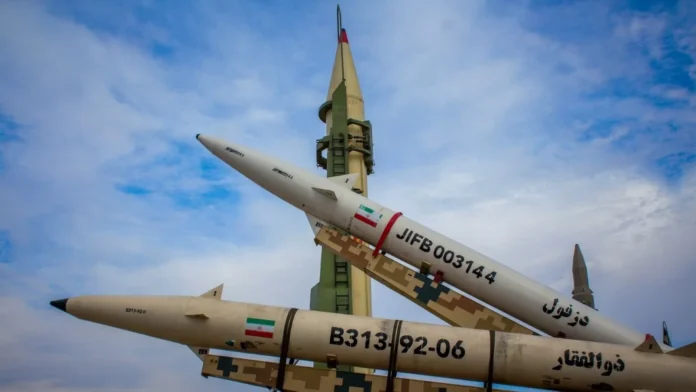
US Central Command said the attack occurred at 5:45 p.m. Eastern time, with Iran’s Islamic Revolutionary Guard Corps launching several ballistic missiles at American forces based in the region. CENTCOM said all of the missiles were successfully intercepted and that US forces remained at a high state of readiness, though it did not disclose the specific locations targeted. Iran’s Revolutionary Guard said separately, through state media, that it had struck US military targets in Jordan.
The strike came roughly a day after President Trump said the United States had paused its own strikes on Iran to allow room for diplomacy. It marked the first Iranian ballistic missile attack on a US base in the region since that pause began, according to reporting on the exchange.
In response, US Central Command said American and Saudi Arabian forces conducted joint strikes against Iran-aligned militia targets in eastern Iraq, hitting logistics and weapons sites tied to more than 30 drone attacks the Revolutionary Guard had reportedly directed against US forces and Saudi energy infrastructure over the prior three days. CENTCOM said the joint operation was a direct response to that pattern of attacks.
Why It Matters
The exchange threatens to unravel the diplomatic track that had appeared, just hours earlier, to be gaining momentum. Trump met separately with Israeli Prime Minister Benjamin Netanyahu at the White House on Tuesday, a meeting Netanyahu described afterward as one of the most productive conversations the two leaders have had on Iran and broader regional security.
Saudi Arabia’s direct involvement in the retaliatory strikes is a notable shift. The kingdom has largely avoided being pulled fully into the conflict since it began, and its participation signals a potential broadening of the coalition operating against Iran-aligned militia networks in Iraq.
The renewed exchange also carries economic consequences. Oil prices, which had fallen for three consecutive sessions on optimism about a diplomatic resolution, jumped immediately following news of the Iranian attack, reflecting how sensitive global energy markets remain to any sign of escalation around Gulf shipping routes.
Context and Background
The confrontation between the US and Iran began in late February and has moved through several phases of direct fighting and pauses in the months since. From February through April alone, US officials say Iran-aligned militias in Iraq attempted more than 600 attacks on American citizens and facilities in the country, part of a broader campaign that has continued intermittently even during periods when direct US-Iran fighting has quieted.
Iran’s government has continued to face internal pressure throughout the conflict. Human rights monitors have reported public executions in Iran tied to a wave of street protests earlier this year, adding a domestic dimension to the pressure facing Tehran’s leadership even as it manages the external conflict with the US.
Regional dynamics remain fluid elsewhere as well. Iraq’s Kurdistan region has faced drone attacks in recent days, Jordan has reported intercepting drones entering its airspace, and separate talks on Lebanon-Israel security issues have been expected to take place in Rome, illustrating how the Iran conflict continues to intersect with a wider set of regional flashpoints.
Analysis
Regional security analysts note that Tuesday’s attack, coming so soon after the pause began, suggests factions within Iran’s security establishment may be seeking to demonstrate continued capability even as diplomatic channels remain open through Qatari and Pakistani mediators. Whether the strike reflects an official Tehran decision or a more decentralized action by IRGC commanders is likely to shape how Washington calibrates its response in the coming days.
Saudi Arabia’s willingness to join US strikes in Iraq is being read by regional watchers as a sign that Gulf states, which have generally sought to avoid direct entanglement in the conflict, may now see continued militia attacks on their own infrastructure as a threat serious enough to warrant a more active military role.
For the White House, the episode complicates the political case for continued restraint. Trump has said repeatedly that he is prepared to resume broader strikes on Iran if diplomacy fails, and Tuesday’s attack — however unsuccessful — gives proponents of a harder line inside the administration a clear justification to push for exactly that.
What Happens Next
The immediate question is whether the US and Saudi strikes in Iraq mark a contained, proportional response or the opening of a broader new phase of fighting. Officials have not said whether further retaliation against Iranian targets directly is under consideration.
Qatari and Pakistani mediators, who had been working to convert the four-day pause into a lasting arrangement, now face a more difficult task. Markets, regional governments, and Washington will be watching closely over the coming days for signals on whether both sides choose to step back from further escalation or whether Tuesday’s exchange becomes the start of a renewed cycle of strikes.