
Iran launched a ballistic missile at Kuwait overnight in retaliation for new US strikes on Iranian drone operations near the Strait of Hormuz — a tit-for-tat exchange that the US military has called an “egregious ceasefire violation” and that has placed peace negotiations under severe strain.
The fragile ceasefire between the United States and Iran was tested more seriously overnight than at any point since it was agreed on April 8, in a sequence of military exchanges that moved from the Strait of Hormuz to Kuwaiti territory and prompted the US military to issue its strongest condemnation of Iranian actions since the ceasefire began.
The US military on Thursday slammed Iran for violating the fragile ceasefire after Kuwait reported coming under attack. US Central Command said that Kuwait had intercepted missiles launched by Iran late Wednesday night, calling the Iranian attack on one of America’s top allies in the Persian Gulf an “egregious ceasefire violation.”
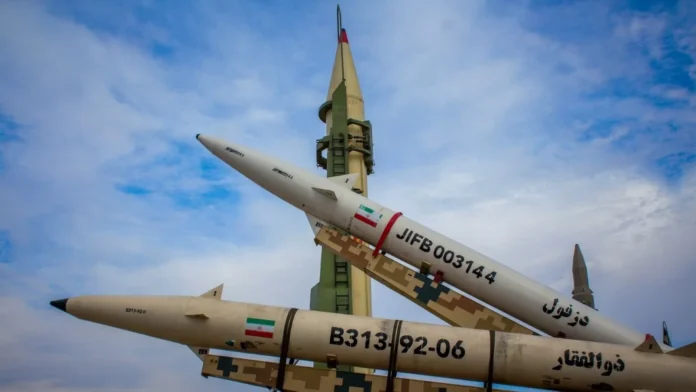
Iran fired a missile at an American air base in Kuwait on Thursday just hours after the United States attacked the Islamic Republic, with both sides accusing the other of violating their shaky ceasefire and further imperilling diplomatic efforts to end the war. Kuwait shot down the ballistic missile, the American and Kuwaiti militaries said. No damage or casualties were reported.
The Sequence That Led Here
The overnight exchange did not emerge without provocation on either side. The sequence is important to understand.
On Monday, the US said it conducted what the Pentagon called “defensive” strikes on missile launch sites and mine-laying boats in southern Iran. US officials said late Wednesday in Washington that forces launched more strikes on Iran, shooting down four one-way attack drones that posed a threat around the strait and hitting an Iranian ground control station in Bandar Abbas that was about to launch a fifth drone.
Iran interpreted those strikes as offensive acts in violation of the ceasefire terms. The IRGC responded by launching a ballistic missile toward Kuwait — a country that has hosted US forces throughout the conflict and that has itself been targeted by Iranian strikes and drone attacks since the war began on February 28.
Iran accused the US of another ceasefire violation and said it retaliated by targeting an American base. CENTCOM said Kuwait intercepted an incoming Iranian missile, and there were no reports of a US base being hit.
The US position is that its strikes are defensive — responding to active Iranian drone and mine-laying operations that threaten freedom of navigation in the strait and pose direct threats to US forces. Iran’s position is that any strike on Iranian territory during a ceasefire period is itself a violation, regardless of what operational activity preceded it. Both arguments have internal logic. Both are also strategically convenient for the side making them.
What the Ceasefire Has and Has Not Prohibited
The April 8 ceasefire agreement, brokered by Pakistan, halted the large-scale air campaign that characterised the first six weeks of the war. What it did not produce — and what has become increasingly clear in the weeks since — is a full operational cessation of military activity.
US forces have continued to conduct what they describe as defensive strikes on Iranian naval and missile assets in and around the Strait of Hormuz throughout the ceasefire period. Iranian forces have continued mine-laying operations, drone launches, and now — overnight — a ballistic missile strike on a third country. Neither side has accepted the other’s characterisation of what the ceasefire permits.
The result is a ceasefire that exists primarily as a diplomatic category — a framework within which both sides continue to conduct military operations while simultaneously pursuing a negotiated settlement. That is not unprecedented in the history of armed conflict: ceasefires often coexist with ongoing tactical activity. But the intensity of the recent exchanges — a second set of US strikes in three days, now answered by a ballistic missile fired at a US ally — suggests the framework is under more stress than it has been at any point since April 8.
The United States and Iran attacked each other’s military facilities overnight in tit-for-tat strikes that tested the countries’ fragile truce and their ongoing negotiations over a broader peace deal.
Kuwait: A Country Caught in the Middle
Kuwait’s position throughout the US-Iran war has been among the most difficult of any country in the region. It hosts significant US military forces, making it a target for Iranian retaliation from the first day of the conflict. At the same time, Kuwait maintains historically careful relationships with its Gulf neighbours and has no direct stake in the original dispute between the US, Israel, and Iran.
Kuwait has absorbed Iranian missile and drone attacks since February 28. Earlier in the conflict, Iran struck Kuwait International Airport — damaging terminals and halting commercial aviation — and targeted US military facilities at Ali Al Salem Air Base and Camp Buehring. Seven soldiers were killed and dozens wounded in earlier strikes.
The latest missile, intercepted overnight, struck no target. But its significance is not only operational. It is a demonstration that Iran retains both the willingness and capability to strike US-allied territory even during a ceasefire — and that Kuwait, which has no say in the US decisions that trigger Iranian retaliation, continues to bear consequences for decisions made in Washington and Tehran.
The Peace Talks: Still Ongoing, Under Increasing Pressure
President Trump said Iran was “negotiating on fumes” and left open the possibility of ordering US forces to “go back and finish it,” as diplomatic efforts toward an agreement to extend the current ceasefire and reopen the Strait of Hormuz were challenged by the latest exchange of fire.
That phrase — “go back and finish it” — has featured in Trump’s public statements with increasing regularity in recent days. It serves a dual purpose: it signals to Iran that the military option remains fully available, and it signals to domestic critics of the emerging deal framework that Trump is not capitulating to Iranian demands.
The White House dismissed Iranian state media reports that “an initial, unofficial document” outlining the framework for an agreement would lift the US blockade of Iranian ports in exchange for reopening the Strait of Hormuz while leaving it under joint Iranian-Omani control. The dismissal of the document’s existence is itself revealing: both sides are managing domestic audiences while conducting negotiations that neither wants to be seen as desperate to complete.
Iran’s Foreign Ministry had said that Washington and Tehran were making progress in their talks but downplayed the prospect of an impending breakthrough. “To say that we have reached a conclusion on a large portion of the issues under discussion would be correct. However, to say that this means an agreement is on the verge of being signed is not something anyone can claim,” said ministry spokesperson Baghaei.
Saturday remains the target date for the next formal round of talks. Whether the overnight escalation derails that schedule, delays it, or — as has been the pattern throughout this ceasefire — simply becomes another data point in a process that both sides have incentives to continue, will be clearer within hours.
What a Collapse Would Mean
The worst-case scenario — a full breakdown of the ceasefire and resumption of large-scale military operations — would have consequences that go well beyond the immediate military exchange.
Oil prices, already above $100 per barrel due to the Hormuz closure, would likely surge further on a ceasefire collapse. The five-day pause on threatened US strikes against Iranian power plants would end immediately. Iranian retaliatory capacity — degraded but not eliminated — would be directed at US forces and US-allied infrastructure across the Gulf. And the diplomatic track that has produced whatever progress exists would be set back by weeks or months.
For the global economy already operating under the weight of three months of energy disruption, a return to full-scale conflict would be a shock it is poorly positioned to absorb.
What Happens Next
The next 24 to 48 hours are the most consequential since the ceasefire was agreed. US Central Command’s characterisation of the Kuwaiti missile strike as an “egregious” violation creates a political obligation to respond — failing to do so would undermine US credibility with Gulf allies. But responding with a significant strike risks triggering a further escalation cycle that neither the diplomatic process nor the fragile ceasefire architecture can absorb.
Saturday’s planned talks are now uncertain. The five-day pause on power plant strikes is running out. Trump has repeatedly signalled he is prepared to resume full operations. Iran has demonstrated it will retaliate.
The ceasefire that paused the most significant regional war in a generation is still technically in place. It has never been more fragile.
LoudFact.com is an independent global news and explainer platform. This report is based on reporting from the Washington Post, NBC News, CBS News, Associated Press, Al Jazeera, and the Washington Times as of May 28, 2026.