
The 70-day Iran war arrives at its most consequential single Friday. Secretary of State Marco Rubio, speaking from Rome where he has been meeting Italian Prime Minister Meloni and visiting the Vatican, told reporters that the United States expects to receive Iran’s formal response to the peace proposal today — the response that has been anticipated, postponed, and teased by successive Iranian officials since Tuesday.
What Rubio Said
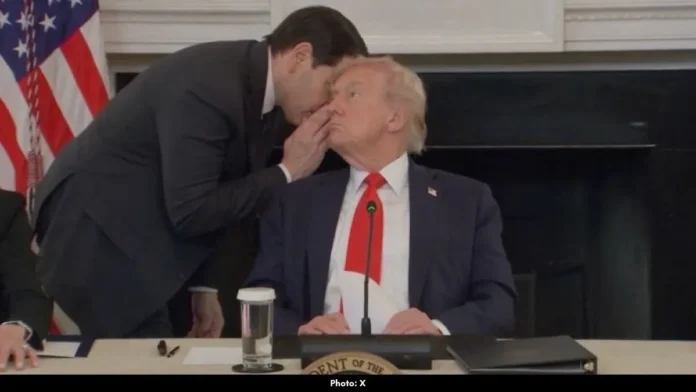
Iran is expected to respond today to the United States’ proposal to end the war, Secretary of State Marco Rubio told reporters this morning while visiting Italian Prime Minister Giorgia Meloni in Rome.
The United States is expecting a response today from Iran on a proposal on the war, US Secretary of State Marco Rubio said, adding that he hopes “it’s a serious offer.” “We should know something today,” Rubio said at a press gaggle in Rome this morning. “We have not received that yet, as of the last hour,” he said.
“Their system is still highly fractured, and it’s dysfunctional as well, so that may be serving as an impediment.” The top US diplomat noted that the hope is the Iranian response is “something that can put us into a serious process of negotiation.”
Three elements deserve attention. First: “We should know something today” — this is Rubio’s most specific public timeline statement of the entire war. Not “soon,” not “we hope for progress,” but an expectation of a specific response on a specific day. Second: “We have not received that yet as of the last hour” — as of Friday morning Rome time, no response. The clock is running.
Third: “Their system is still highly fractured and dysfunctional” — Rubio is managing expectations for the possibility that the response doesn’t come today, attributing any delay to Iran’s internal divisions rather than a breakdown in the diplomatic track.
The CENTCOM Strikes This Morning
U.S. Central Command said its forces struck two Iranian-flagged oil tankers near the Strait of Hormuz after the vessels tried to dock at a port in the Gulf of Oman.
Two Iranian tankers struck Friday morning — within hours of Rubio saying Iran’s response is expected today. The tanker strikes are blockade enforcement: vessels attempting to bypass the naval interdiction by routing through Omani waters rather than through the US-controlled maritime exclusion zone. CENTCOM’s strike on those tankers is a simultaneous message to Tehran: the blockade continues to tighten even while the diplomatic clock runs toward a response deadline.
Iran’s Araghchi Condemns the Strikes
Iranian Foreign Minister Abbas Araghchi said his country will “never bow to pressure” as he condemned US strikes on Iran after the two sides traded fire yesterday amid a strained ceasefire. “Every time a diplomatic solution is on the table, the U.S. opts for a reckless military adventure,” he said in a post on X. “Whatever the causes, the outcome is the same: Iranians never bow to pressure and diplomacy is always the victim.”
Araghchi’s post is the language Iran uses when it needs to express defiance domestically while keeping the diplomatic door open. “Diplomacy is always the victim” is not a statement that diplomacy has ended — it is a statement that the military exchanges are harming the diplomatic process, while implicitly acknowledging that the process still exists.
What a “Serious Offer” Looks Like
Rubio’s specific phrase — “a serious offer that puts us into a serious process of negotiation” — describes the minimum he needs from Iran’s response. Not a final acceptance of the MOU’s nuclear terms. Not an agreement to surrender HEU. Just a response that is constructive enough to justify continued negotiations rather than triggering the CENTCOM “short and powerful” strike plan.
Iranian officials are saying that several US demands are unreasonable, unrealistic and maximalist. Despite some optimism, both sides are still interested in diplomatically engaging with each other.
Iran calling US demands “maximalist” while both sides engage is the negotiating position that produces deals. Maximalist positions are the opening of negotiations, not the end of them. If Iran’s response today characterises specific US demands as excessive while proposing modifications — rather than rejecting the framework entirely — that constitutes the “serious offer” Rubio is waiting for.