The United Arab Emirates’ decision to leave OPEC on May 1 is the most significant rupture in the cartel’s history, driven by quota frustrations, a deepening Saudi-UAE rivalry, and the economic pressures of the Iran war.
When the United Arab Emirates joined the Organisation of the Petroleum Exporting Countries in 1967, it was a minor oil producer with limited infrastructure. By 2026, it had become OPEC’s second-largest holder of spare production capacity and one of the most sophisticated energy exporters in the world. On May 1, 2026, it walked out.
The UAE’s departure — announced on April 28 and effective May 1 — is the biggest single schism in OPEC’s history since the organisation was founded in 1960. It removes a country that produces close to 4 million barrels per day from the cartel’s framework and signals a fracturing of the energy governance structure that has shaped global oil markets for more than half a century.
What Happened
UAE Energy Minister Suhail Mohamed Al Mazrouei framed the decision in terms of national interest and long-term strategy, describing the country’s ambition to become “an agile, nimble and independent energy actor — balancing its investments across oil, gas, and renewables.”
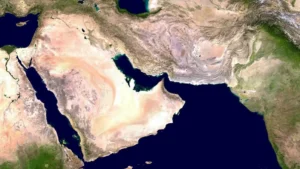
The announcement came as the UAE was grappling with a severe constraint on its exports: the Strait of Hormuz, through which UAE oil is shipped, has been effectively closed since Iran’s counter-strikes following the US-Israel military campaign that began in late February. With close to 2 million barrels per day of UAE offshore production currently shut in due to the Hormuz closure, the country was bearing the costs of OPEC membership — quota limitations, political alignment with Saudi positions — without being able to benefit from higher prices.
Officials in Abu Dhabi had reportedly grown frustrated with OPEC’s governance model for years. The UAE has long chafed at quota allocations it considered too restrictive relative to its actual production capacity. Analysts at Wood Mackenzie, writing after the departure, described it as “the biggest schism in the organisation since it was founded in 1960.”
The Saudi-UAE Fracture
The departure did not emerge in isolation. Behind the formal announcement lies a deteriorating relationship between the UAE and Saudi Arabia — two countries that have long presented a unified front in Gulf geopolitics but have been diverging on multiple tracks.
The two nations have increasingly found themselves on opposite sides of regional disputes. Quota policy has been another flashpoint: the UAE has felt constrained by ceilings that it believes do not reflect its actual production investments or capacity. According to OPEC+ sources cited by CNBC, the UAE was “one of the countries irked by the Saudi-Russia formulated decisions driving OPEC+ policy.”
The UAE has committed $145 billion in its domestic upstream oil sector over ten years to 2030, targeting production capacity of 5 million barrels per day by 2027. OPEC membership, with its system of shared quotas and production ceilings, was structurally incompatible with that expansion plan.
What the Markets Did
Oil price reaction to the UAE’s exit was immediate and split in two directions. Prices initially fell on fears of a future supply glut — the logic being that a UAE freed from quota constraints would eventually pump more, pushing prices down. Then they rebounded sharply, with WTI crude rising above $105 and Brent above $112 per barrel, as traders refocused on the more immediate factor: the Strait of Hormuz remains closed, and the Iran-related risk premium is not going away.
The divergence illustrates the fundamental complexity of the current oil market. Short-term, the UAE’s exit changes nothing: its exports are constrained by geography, not policy. But looking ahead to 2027 and beyond, the implications could be significant.
Why It Matters: The Bigger Picture for OPEC
Analysts have begun asking whether the UAE’s departure could trigger further exits and accelerate OPEC’s decline as an effective price-setting mechanism.
Andy Lipow, president of Lipow Oil Associates, put the risk directly: “Countries that are tired of seeing their fellow OPEC and OPEC+ members consistently cheat on their quotas are candidates to leave these groups. If countries that are abiding by their quota get disgusted with those that don’t, we could see additional exits that could eventually make OPEC irrelevant as a cartel.”
OPEC is already navigating significant internal incoherence. Iran, Libya, and Venezuela have been exempt from quota obligations due to sanctions or conflict, creating a system where some members bear production constraints while others do not.
The UAE’s departure, according to observers at the Observer Research Foundation Middle East, “reflects a deeper cleavage in the global energy governance architecture that for so long relied on geopolitical stability, shared incentives, and equitable risk sharing among producer countries.”
Context: OPEC’s History of Fragmentation
The UAE is not the first country to leave OPEC. Ecuador left and rejoined on multiple occasions. Indonesia suspended its membership. Gabon and Qatar also departed. But none of these exits carried the weight of the UAE’s — both in terms of production capacity and in terms of political signalling.
Qatar’s 2019 exit, while noted at the time, involved a country producing roughly 600,000 barrels per day with a strategic pivot to gas. The UAE produces nearly seven times that volume and holds substantial spare capacity. Its departure removes a meaningful lever from OPEC’s ability to influence global supply.
For the broader OPEC+ alliance — which includes Russia and other non-OPEC producers — the implications are also uncertain. Russia’s own relationship with the alliance has been tested repeatedly by its war-era fiscal needs, which often push it toward producing beyond agreed limits.
Expert Insight
Energy analysts at the Observer Research Foundation Middle East argue the UAE’s move carries strong geopolitical signalling toward Washington and key Asian markets. By positioning itself as an independent energy actor, Abu Dhabi is effectively communicating to major oil importers — particularly in Asia — that it intends to be a reliable, flexible supplier unconstrained by cartel politics.
The UAE’s diversified economy, which has invested heavily in non-oil sectors over the past decade, is seen as better positioned than most OPEC members to absorb the volatility that may accompany competitive production strategies. For oil-dependent economies like Nigeria or Iraq that remain inside OPEC, any subsequent price war triggered by increased UAE production would place considerable strain on government budgets.
What Happens Next
The immediate constraint on UAE oil exports — the Hormuz closure — means the practical effects of OPEC exit will not be felt in markets until shipping routes reopen, a process that analysts estimate could take up to six months even after a resolution is reached.
Longer term, the UAE’s departure raises three key questions for the global energy order:
- Will other members follow? Analysts are watching countries like Iraq and Kuwait, which have also expressed frustration with quota enforcement.
- Can OPEC remain cohesive? Saudi Arabia now faces the challenge of maintaining production discipline among remaining members without the UAE as a stabilising partner.
- What does this mean for energy prices in 2027? If the Hormuz crisis resolves and the UAE begins expanding output freely, the combination of increased UAE supply, normalised Iranian exports, and OPEC fragmentation could push prices sharply lower — a significant shift from today’s elevated levels.
For now, the most consequential fact remains: the UAE has gone independent. Whether OPEC can absorb the departure without further unravelling will define global energy politics for years to come.
LoudFact.com is an independent global news and explainer platform. This report is based on publicly available information from Wood Mackenzie, CNBC, Al Jazeera, Observer Research Foundation Middle East, and other cited sources as of May 24, 2026.