
The Revolutionary Guard told Ayatollah Khamenei it regarded his message as “a binding command,” as Iran’s foreign ministry said diplomacy remained open and mediators sought a 10-day ceasefire to revive the framework deal. The sequence — a military force publicly declaring itself bound by a supreme leader’s revenge call, while the same country’s foreign ministry simultaneously pursues peace talks — is the most explicit illustration yet of the structural duality in Iranian decision-making that has caused every previous ceasefire agreement to collapse within days of being signed.
What the IRGC Said — and Why It Said It Publicly
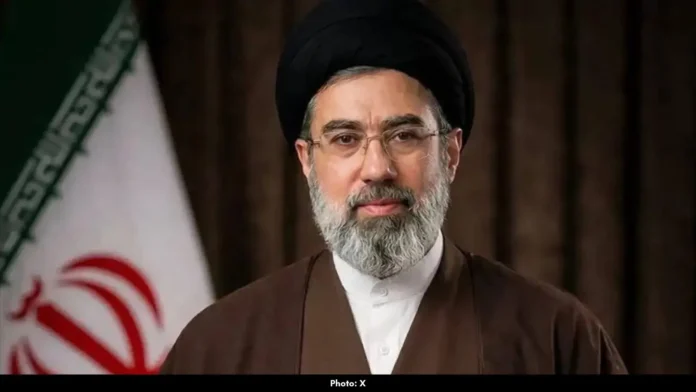
Mojtaba Khamenei’s first public communication since the war began — a written statement vowing that Iranians would avenge his father’s killing — was addressed to the Iranian people. The IRGC’s response transformed it into something different: a military order.
By publicly declaring that it regards Mojtaba’s message as a “binding command,” the Revolutionary Guard Corps accomplished several things simultaneously. It publicly aligned itself with the new supreme leader’s authority — signalling to domestic and international observers that it recognises Mojtaba’s leadership and will act on his directives.
It provided theological and constitutional cover for continued military operations — framing the ongoing strikes on Gulf states and commercial shipping not as IRGC unilateralism but as fulfilment of a supreme leader’s directive. And it made any diplomatic de-escalation that Mojtaba might privately endorse more politically costly for him to pursue, since the IRGC has publicly committed to treating his public statement as the basis for ongoing military action.
What Iran’s Foreign Ministry Said
Against this military posture, Iran’s foreign ministry maintained a parallel track. Iran’s foreign minister Araghchi communicated to Qatari and Pakistani mediators that Iran’s diplomatic engagement remained active and that Tehran was willing to discuss the terms of a ceasefire that could revive the Versailles framework.
Mediators from Qatar and Pakistan subsequently proposed a 10-day ceasefire window — a period during which both sides would halt military operations, allowing the indirect talks in Doha to resume and the technical working groups on Hormuz governance, nuclear verification and sanctions relief to begin their work. Trump responded with measured interest — saying he was open to a ceasefire if Iran made concrete commitments on the Strait of Hormuz — without formally agreeing to the proposal.
The Structural Gap Between the IRGC and the Foreign Ministry
The coexistence of the IRGC’s “binding command” declaration and the foreign ministry’s diplomatic overreach reflects a structural feature of Iranian political organisation that has existed since the Islamic Revolution in 1979 but that has become particularly acute since the death of Ayatollah Ali Khamenei on February 28.
The IRGC is constitutionally distinct from the Iranian government. It reports directly to the supreme leader — not to the president or the foreign ministry. Its commanders are appointed by the supreme leader, its funding comes through separate channels, and its operational decisions are made within its own chain of command rather than through the cabinet. The IRGC’s operations in Yemen — including its direction of the Houthi maritime campaign — are managed by IRGC representatives on the ground who have operational authority independent of the foreign ministry’s diplomatic track.
This means that when Iran’s foreign ministry tells Qatar that diplomacy is open, it is communicating the intentions of the Iranian government as represented by President Pezeshkian and Foreign Minister Araghchi. When the IRGC declares that it will act on Mojtaba’s revenge message as a binding command, it is communicating the intentions of the military force that actually controls Iran’s maritime operations in the Strait of Hormuz and its proxy operations through the Houthis in the Red Sea.
Why the 10-Day Ceasefire Proposal May Still Matter
The mediators’ proposal for a 10-day ceasefire — even against this backdrop of IRGC public commitment to continued conflict — has some logic to it. Ten days is enough time for the technical working groups that have never properly convened to begin addressing the core issues: Hormuz governance, nuclear verification, sanctions sequencing. A 10-day window, if respected by both sides, could produce enough diplomatic momentum to extend the pause and negotiate the actual content of a permanent agreement before the energy market consequences of simultaneous Hormuz and Red Sea disruption become so severe that the political cost of continued fighting exceeds the political cost of compromise for both parties.
Whether the IRGC will actually treat a ceasefire — if agreed — as a constraint on its operations, or whether it will use the diplomatic pause as a resupply window before resuming operations, is the central question that every previous ceasefire has failed to answer satisfactorily. The public declaration that Mojtaba’s revenge message is a “binding command” makes that question harder, not easier, to answer in favour of diplomatic resolution.