
Three months after US and Israeli strikes on Iran triggered a sweeping regional conflict, the Strait of Hormuz — the most critical oil transit chokepoint on earth — remains effectively closed to international shipping. Diplomatic efforts to reopen the waterway have produced no breakthrough, and the economic consequences are rippling across Asia, Europe, and global commodity markets.
The conflict began on February 28, 2026, when the United States and Israel launched coordinated strikes on Iranian military infrastructure, targeting the country’s nuclear and ballistic missile programmes. Among those killed was Iran’s Supreme Leader, Ali Khamenei. Iran responded with missile and drone strikes across the region and, critically, moved to shut the Strait of Hormuz to all foreign shipping.
What Is the Strait of Hormuz and Why Does It Matter?
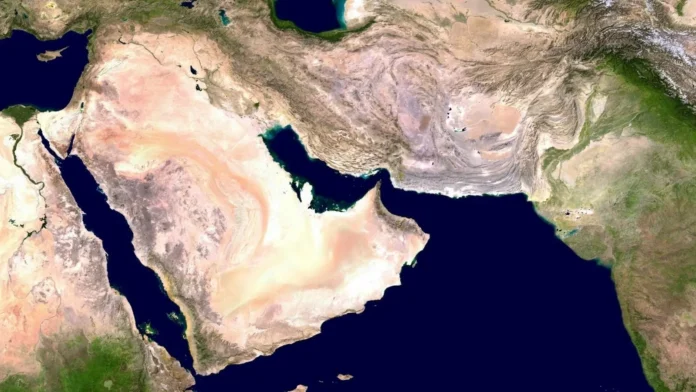
The Strait of Hormuz is a narrow waterway — just 34 kilometres wide at its narrowest point — forming a passage between Iran and Oman that connects the Persian Gulf to the Gulf of Oman and the broader Indian Ocean. It is the world’s most strategically important maritime chokepoint.
Before the conflict, the strait handled roughly:
- 20% of global petroleum trade passing through each year
- 20% of global liquefied natural gas (LNG) shipments
- Approximately 3,000 vessels per month in normal conditions
Today, shipping traffic through the strait stands at approximately 5% of pre-war levels, according to figures from the UK Parliament’s House of Commons Library. The corridor that once kept Asian refineries, European heating systems, and global aviation fuel flowing has been reduced to a trickle.
What Happened
On March 4, 2026, Iran’s Islamic Revolutionary Guard Corps (IRGC) officially confirmed the strait was closed to what it described as “unfriendly nations.” Iranian naval forces began boarding and attacking merchant ships attempting transit. US forces responded by destroying Iranian vessels reportedly engaged in mining the waterway.
By April 13, the United States launched a naval blockade of Iranian ports, creating what analysts have described as a “dual blockade” — Iran blocking outward passage through Hormuz, the US blocking Iranian access to its own coastline.
A conditional ceasefire is now in place, but it has not translated into meaningful restoration of commercial shipping. The IRGC has warned that conditions in the strait “will never return to its former status, especially for the US and Israel.”
Several Arab states were forced to cut or suspend oil production following Iranian attacks on regional oil infrastructure. The disruption has pushed crude oil prices above $100 per barrel, where they have remained for weeks.
Why It Matters
The economic consequences of the closure are not theoretical. They are already visible in the data and in daily life across multiple regions.
Energy markets: Crude oil surged above $100 per barrel in mid-March and has not returned to pre-conflict levels. Brent crude has at times traded above $112 per barrel, driven by both supply disruption and risk premiums. Global LNG spot prices have also spiked, placing pressure on households and industries across Europe and Asia.
Shipping reroutes: Ocean carriers unable to use the Strait of Hormuz are diverting vessels around the Cape of Good Hope at the southern tip of Africa — a detour that adds days or weeks to transit times and sharply increases freight costs. War risk insurance premiums have risen to four or five times pre-conflict levels.
Fuel shortages in Asia: Countries east of the Persian Gulf that depend heavily on oil supplied through Hormuz — including parts of South and Southeast Asia — have experienced fuel shortages and rationing.
Inflation risk: Economists have warned that a prolonged period of elevated energy prices could reignite inflation in economies that had spent the past two years bringing it under control. That in turn could constrain central banks from cutting interest rates, slowing economic recovery and potentially tipping growth projections downward.
Context: A Crisis Built Over Decades
The Strait of Hormuz has long been identified as a single point of catastrophic vulnerability in global energy supply chains. Analysts and governments have warned for years that any sustained closure would have consequences far beyond the Middle East.
What makes the 2026 crisis different from previous threats is the actual execution of closure rather than the threat of it. Iran had periodically warned it could shut the strait during periods of US sanctions pressure. This time, it followed through.
The US blockade of Iranian ports, imposed in April, has further complicated the picture. While intended to pressure Tehran into negotiations, it has also hardened Iranian positions and made a quick diplomatic resolution more difficult. Iran has rejected ultimatums, stating it will not negotiate under pressure, even as US officials have signalled ongoing back-channel discussions.
Expert Insight
Analysts tracking the crisis have noted that the closure has also, paradoxically, benefited certain economies. Russia — already cut off from much of Western energy trade — has seen windfall revenues from elevated global oil prices. Iran itself received a temporary financial cushion from higher prices before the US blockade began constraining its own exports.
Economists at Enterprise Bank & Trust, in an assessment published in May, noted that economic estimates for 2026 have not changed materially so far, but cautioned that “sentiment could change swiftly in the days and weeks ahead if energy shipping routes are not opened soon.” A prolonged closure raising energy prices could begin to subtract from GDP growth rates globally.
A survey of economists cited in recent market analysis suggested the probability of recession in the United States alone would exceed 50% if the disruption persists without resolution.
What Happens Next
Several tracks are running simultaneously, though none has yet produced a breakthrough.
Diplomacy: US officials have indicated there is a reasonable chance of a deal being reached. Iran has rejected negotiating under pressure but has not closed the door entirely. Informal contacts between parties continue.
Military pressure: The United States has continued aerial operations targeting Iranian positions along the strait and has urged allied nations — including China, France, Japan, South Korea, and the United Kingdom — to send naval assets to help secure the waterway. The UK and other countries are reportedly discussing defensive initiatives to reopen the strait to civilian vessels.
OPEC response: The OPEC+ group, still intact as an organisation at the time of the closure, agreed in early April to gradually ease production cuts, adding roughly 206,000 barrels per day to global supply in May to partially offset disruption. However, the scale of the loss — with supply disruptions of roughly 10 to 12 million barrels per day — is far larger than what OPEC+ can compensate for.
For now, the narrow strip of water between Iran and Oman remains the most consequential piece of geography on the planet. And the world is waiting to see who blinks first.
LoudFact.com is an independent global news and explainer platform. This report is based on publicly available information from government sources, parliamentary briefings, and financial analysis as of May 24, 2026.