
The World Health Organization has declared the Bundibugyo Ebola virus outbreak in the Democratic Republic of the Congo and Uganda a Public Health Emergency of International Concern, as case numbers exceed 1,000 and the virus spreads across multiple provinces with no licensed treatment available.
When health officials in the Democratic Republic of the Congo publicly confirmed a new Ebola outbreak on May 15, 2026, alarm spread quickly through the global public health community. By the time the announcement was made, the outbreak had already reached hundreds of suspected cases — a sign that it had been spreading undetected for a period before formal confirmation. Two days later, on May 17, the World Health Organization declared it a Public Health Emergency of International Concern, the most serious classification available under international health law.
As of May 24, the outbreak has produced at least 1,010 suspected and confirmed cases and at least 231 deaths in DRC. Five cases have been confirmed in Uganda’s capital, Kampala. Cases have been reported across three provinces of DRC: Ituri, where the outbreak began; North Kivu; and South Kivu.
This is the 17th recorded Ebola outbreak in DRC since the virus was first identified in 1976. It began just five months after the end of the previous outbreak in the country.
The Bundibugyo Strain: Why It Complicates the Response
Not all Ebola outbreaks are the same. The virus has multiple species, and the specific strain involved in the 2026 outbreak — the Bundibugyo ebolavirus — creates a particular challenge for responders.
The medical tools developed and deployed most extensively against Ebola in recent outbreaks — including the approved vaccines and antiviral treatments — were developed primarily against the Zaire ebolavirus, the most deadly and most frequently studied species. The Bundibugyo virus is a different species, and existing treatments developed for Zaire are now being tested against it, but as of this outbreak, no licensed vaccine or treatment specific to Bundibugyo exists.
The WHO has stated clearly: “Response strategies will rely heavily on comprehensive public health measures” — including surveillance, contact tracing, isolation, and community engagement — rather than pharmaceutical intervention. That is a slower and more resource-intensive approach than vaccine-led containment.
The case fatality rate among confirmed cases has been reported at approximately 12%, though the full picture remains uncertain given limited testing capacity in the affected areas.
How the Outbreak Began and Spread
The outbreak was first detected in Ituri Province, in northeastern DRC — a region already marked by ongoing insecurity, humanitarian crisis, and high population mobility across borders. These conditions are precisely those that make outbreak containment most difficult.
Laboratory analysis at the Institut National de Recherche Biomédicale of DRC identified the Bundibugyo virus as the causative agent. By May 16, three health zones in Ituri Province — Bunia, Rwampara, and Mongwalu — had confirmed or suspected cases.
The speed of geographic spread alarmed health officials. Within days of the first confirmed cases in Ituri, a case was confirmed in Goma in North Kivu Province — a major city with transport connections across the region. A case was also confirmed in Kinshasa, DRC’s capital. Cases reached South Kivu, imported from Tshopo Province.
Most critically for international containment efforts, two confirmed cases with no apparent connection to each other appeared in Kampala, Uganda — the country’s capital and a major transport hub — within 24 hours of each other on May 15 and 16. As of May 24, five cases linked to the DRC outbreak have been confirmed in Uganda.
Over 1,000 contacts are currently being followed up in Ituri Province alone.
International Response
The US Centers for Disease Control and Prevention issued a Level 3 Travel Health Notice for DRC — its highest alert, advising travellers to avoid non-essential travel — and a Level 1 Notice for Uganda on May 15. By May 18, the CDC and the Department of Homeland Security announced enhanced travel screening, entry restrictions, and public health measures at US borders to prevent the virus from entering the United States.
An American citizen was exposed to the virus in a healthcare setting in DRC. That individual and six high-risk contacts were medically evacuated to a specialised isolation facility in Germany.
The European Centre for Disease Prevention and Control has assessed the likelihood of infection for people in EU and EEA countries as very low, but is monitoring the situation closely and publishing weekly updates.
Africa CDC declared a Public Health Emergency of Continental Security on May 18, mobilising additional resources across the continent.
WHO is scaling up support to the governments of both DRC and Uganda, with a focus on:
- Strengthening surveillance networks and contact tracing
- Clinical preparedness and patient management
- Delivery of medical supplies to affected health zones
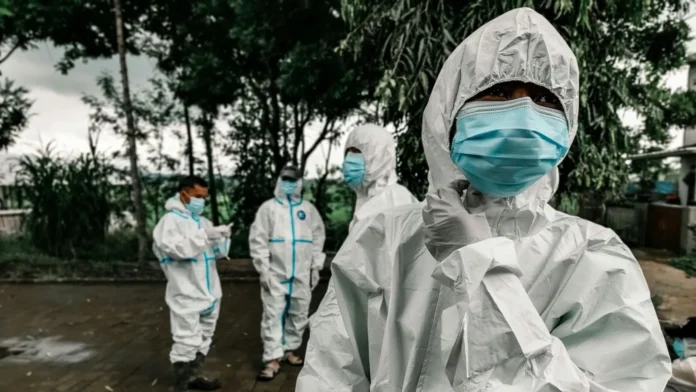
- Community engagement to build trust and cooperation with the response
Why Community Engagement Is Central
Public health officials have repeatedly emphasised that the most important factor in bringing this kind of outbreak under control is not pharmaceutical intervention alone — it is community trust.
Ebola spreads through direct contact with the bodily fluids of infected individuals, including the deceased. Cultural practices around care of the sick and burial of the dead can amplify transmission if communities do not understand and accept the medical guidance being offered. In eastern DRC, where decades of conflict have created deep mistrust of government and external institutions, building that trust is a significant undertaking.
WHO’s own guidance on the 2026 response is explicit on this point: “It is only when communities are engaged in the response that such outbreaks are brought under control.” Field teams from WHO and partner organisations have been deployed specifically to engage community leaders, religious authorities, and local health workers as trusted intermediaries.
The Context: DRC as Outbreak Ground Zero
The DRC’s status as the location of 17 of the world’s recorded Ebola outbreaks is not coincidental. The country carries a combination of factors that create persistent outbreak risk: vast forested territory where humans regularly come into contact with wildlife populations that can carry the virus; ongoing armed conflict that displaces populations, disrupts health systems, and limits access for response teams; and limited healthcare infrastructure, particularly in remote areas where outbreaks tend to begin.
The previous Ebola outbreak in DRC ended in December 2025. The fact that a new outbreak of a different strain — Bundibugyo rather than Zaire — emerged just five months later underlines both the country’s specific vulnerability and the persistent global risk.
Health experts noted at the time of the WHO emergency declaration that the scale of the outbreak at the point of first public confirmation suggested it had been spreading for longer than initially apparent. Early detection remains a fundamental gap in DRC’s outbreak response capacity.
Expert Insight
Public health researchers tracking the outbreak have flagged the convergence of several risk factors that make this outbreak particularly complex. The Bundibugyo strain complicates the pharmaceutical response. Geographic expansion into major urban centres — Bunia, Goma, Kinshasa, and now Kampala — raises the probability of broader spread. And the insecurity in Ituri Province continues to limit access for response teams in the area where transmission is most intense.
The WHO emergency declaration triggers international obligations for member states to provide resources and technical support. It also enables the organisation to issue temporary recommendations to countries — covering travel, border health measures, and reporting requirements — that are legally binding under International Health Regulations.
What Happens Next
The WHO’s first IHR Emergency Committee meeting took place on May 19, producing temporary recommendations for states. The organisation held a ministerial briefing on May 25, seeking to coordinate the international response and secure commitments from donor governments.
The path to containment runs through contact tracing, isolation of confirmed cases, community engagement, and research into whether any existing therapeutic approaches can be adapted or repurposed for the Bundibugyo strain. Scientists are testing candidates that have shown activity against other Ebola species.
How quickly this outbreak can be contained depends heavily on three factors: whether the chain of transmission in Ituri can be broken; whether urban cases in Goma, Kinshasa, and Kampala are successfully isolated before further spread; and whether the international community mobilises the resources and access needed to support DRC’s own health response in an active conflict zone.
The global public health community is watching closely. The last major Ebola outbreak to reach urban centres — the 2014-2016 West Africa epidemic — killed more than 11,000 people before it was contained.
LoudFact.com is an independent global news and explainer platform. This report is based on WHO Disease Outbreak News, ECDC threat assessments, CDC Health Alert Network notices, and Africa CDC announcements as of May 24-25, 2026.