
Four days after President Trump and Iran announced a historic peace deal at the G7, the first scheduled follow-on talks have already collapsed — over the exact Lebanon dispute that nearly prevented the original agreement. Meanwhile, the rest of the world’s crises did not pause to mark the moment: Ukraine launched its largest drone attack of the war on Moscow, the UK’s governing party entered open leadership crisis, US domestic surveillance expanded, and a deadly outbreak in central Africa grew more alarming. This is the honest accounting of what the first week of “peace” actually looked like.
There is a particular kind of news cycle whiplash that occurs after a genuinely historic diplomatic achievement. For roughly 48 hours, the world’s attention narrows almost entirely to one story. Then, gradually and then all at once, every other crisis that was quietly continuing in the background reasserts itself — not because those crises grew larger, but because the temporary narrowing of attention always ends.
June 19, 2026 — four days after Trump’s “Ships of the World, start your engines” declaration — is that reassertion in full.
The Iran Deal: The First Crack
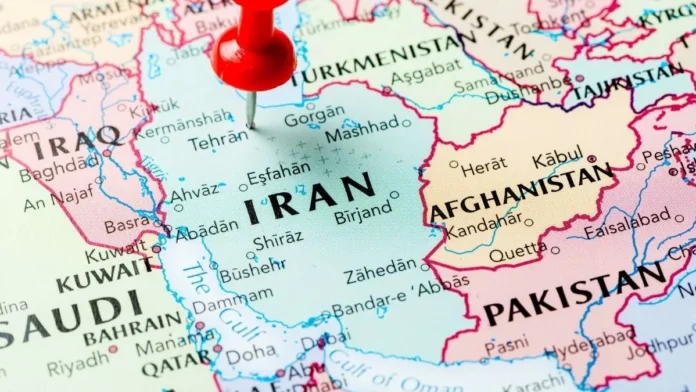
The first round of technical talks under the new US-Iran memorandum of understanding will not take place on Friday, the Swiss Foreign Ministry said, as Iran reportedly sought a guarantee that Israel would cease its fight in Lebanon against the Hezbollah terror group.
LoudFact’s analysis on the day of the deal’s announcement explicitly named Lebanon as one of the issues most likely to determine whether the post-deal period would proceed smoothly or immediately encounter friction. Four days later, that prediction has been borne out in the most direct way possible: the very first scheduled meeting of the 60-day follow-on process did not happen, and the reported reason is precisely the Lebanon dispute.
The deal sees both sides commit to further talks to reach a final agreement over the next 60 days and includes a $300 billion plan for Iran’s reconstruction as well as the removal of “all types” of U.S. sanctions against the Islamic Republic. The agreement has prompted some to conclude that the terms appear to have strengthened Tehran’s hand.
The confirmation of the $300 billion figure as genuine, signed text — resolving the ambiguity between competing media reports that LoudFact covered in detail before the deal was finalised — has not calmed the domestic American criticism of the agreement. If anything, the confirmation has intensified it, giving critics a concrete number to point to as evidence that the deal disproportionately rewards Tehran.
This is the texture of a real diplomatic process, as opposed to the clean narrative of a single announcement: gains are confirmed, disputes resurface, and the deal’s durability is tested not in grand pronouncements but in whether a Friday meeting in a Swiss mountain town actually happens.
Ukraine Did Not Wait
Ukraine launched hundreds of drones on Thursday targeting more than a dozen Russian regions, including Moscow, where they struck an oil refinery, sending plumes of black smoke into the air over the Russian capital.
The largest Ukrainian drone attack on Moscow since the war began occurred on the same general timeframe as the Iran deal’s first stumbling block — a reminder that the diplomatic attention freed up by the end of the Iran war, which Trump explicitly pledged to redirect toward Ukraine at the G7, has not yet translated into any visible change in the trajectory of Russia’s war. If anything, Ukraine appears to be escalating its own capabilities independently of, rather than because of, any new diplomatic momentum from Washington.
Britain’s Government Entered Crisis
Labour’s Andy Burnham, the current mayor of Greater Manchester, has won a special election for a seat in Parliament that puts him in a position to challenge embattled Prime Minister Keir Starmer for leadership of the country.
A G7 host nation’s own governing party entering open leadership crisis, days after that same nation hosted the summit at which the Iran deal’s aftermath was being managed, is the kind of juxtaposition that rarely makes it into a single day’s news coverage but that captures something true about how international diplomacy and domestic politics run on entirely separate, often colliding, timelines. France hosted history. Days later, Britain’s government is fighting for its own survival.
The Surveillance State Expanded Quietly
A newly revealed Department of Homeland Security document outlines plans to issue local police facial recognition technology, a move that will expand the scope of ICE surveillance.
This story received a fraction of the attention that the Iran deal generated — appropriately, in terms of relative global stakes, but worth noting as an example of how significant domestic policy shifts can move forward largely unnoticed during weeks when international diplomacy dominates the news cycle. The expansion of facial recognition access to local police, with its explicit acknowledgment that US citizens will be captured by the system, is the kind of development that, in a different news week, might have generated sustained scrutiny. This week, it was one story among many.
Ebola Did Not Pause Either
A month after the World Health Organization declared an international emergency, the outbreak of the rare Bundibugyo strain has grown to 875 confirmed cases, including 202 deaths, with warnings mounting that it could become the worst Ebola outbreak on record.
Perhaps the starkest illustration of the principle this article is built around: an outbreak that international health officials are warning could become the deadliest in the history of the disease did not stop growing because the world was focused on a peace deal in the Middle East. The funding gap — less than 10% of pledged international support actually delivered — reflects a chronic feature of global health response that exists independently of whatever else is dominating the news cycle in any given week.
What This Week Actually Teaches
The lesson of June 19, 2026 is not that the Iran deal was unimportant, or that its achievement should be diminished by the difficulties that have already emerged. The lesson is the opposite: genuinely historic diplomatic achievements are singular events, occurring at a specific moment, while the world’s accumulated crises — military, political, technological, medical — operate on their own continuous timelines that do not pause for any single announcement, however significant.
The Iran deal’s durability will be tested not by how it was received in the 48 hours after its announcement, but by whether the Lebanon dispute that stalled its first follow-on meeting gets resolved in the days ahead, or whether it becomes the first domino in a longer unraveling. Ukraine’s war will be shaped not by Trump’s G7 declaration of renewed focus, but by what concrete actions follow it. Britain’s political crisis will resolve according to its own internal Labour Party mechanics, regardless of what else is happening in Geneva or Bürgenstock. And the Ebola outbreak in central Africa will be determined by whether the funding gap closes before the case count climbs further — a question that has nothing to do with any peace deal anywhere.
This is what the world actually looks like, four days after history: still complicated, still demanding attention across a dozen fronts simultaneously, and entirely unwilling to simplify itself for the sake of a single good headline.
LoudFact.com is an independent global news and explainer platform. This Day 26 analysis draws on the full body of LoudFact’s documented coverage from May 24 through June 19, 2026, and all primary sources cited throughout that coverage.