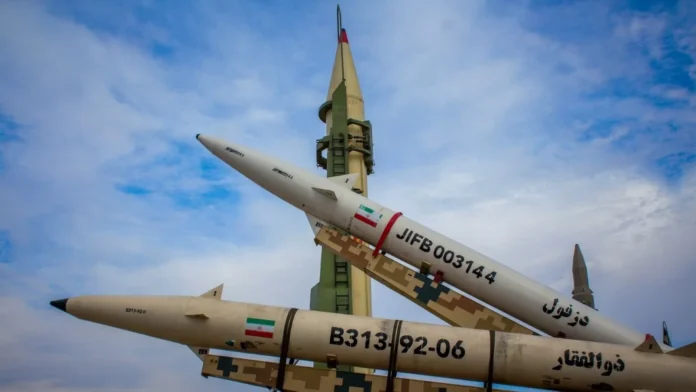

A senior Iranian official said Tehran will shift to a “fully offensive” military posture after efforts to negotiate a permanent end to the US-Iran war stalled, hours after a vessel was struck by an unknown projectile in the Strait of Hormuz and President Trump ruled out extending the ceasefire that expired Monday.
What Happened
The UK Maritime Trade Operations said it received a report Tuesday that a vessel was struck by an unknown projectile while transiting the Strait of Hormuz, causing engine room damage and a crew casualty. The incident came as Monday marked 60 days since the US and Iran signed a memorandum of understanding calling for a wider peace deal to be negotiated within that timeframe, a deadline that passed without any concrete agreement in place.
Trump told reporters Monday that Iran is unlikely to agree to the deal he wants and called for Iran’s “surrender,” ruling out an extension of the temporary ceasefire that had governed the conflict. He also repeated his threat to “bomb the shit out of” Oman if the Gulf nation obstructed US efforts to reopen the Strait of Hormuz, even as reports indicated Iran and Oman were close to reaching a separate agreement on managing shipping through the waterway.
A senior Iranian official told Reuters that Iran would shift to a “fully offensive” military posture because efforts to negotiate a permanent end to the war have stalled, adding that Tehran would conduct a “timely and precise” military attack intended to break the US naval blockade of the strait if diplomacy continued to fail. Iran’s Foreign Ministry spokesman separately said Tehran had reached an agreement with Oman regarding future shipping routes, even as the broader US-Iran framework collapsed.
Why It Matters
The combination of Trump’s call for Iran’s “surrender,” his renewed threat against Oman, and Iran’s explicit warning of a shift to offensive operations marks one of the sharpest escalations in rhetoric from both sides since the conflict’s most intense phases earlier this year, raising the risk of renewed direct fighting after weeks of on-again, off-again diplomatic signals.
The attack on a vessel transiting Hormuz, resulting in a crew casualty, underscores that the physical danger to commercial shipping has not eased even as negotiators discuss narrower agreements on managing the strait. That gap between diplomatic statements and ongoing attacks has been a defining and frustrating feature of the conflict for global shipping companies and energy markets throughout 2026.
Trump’s call for Iran’s outright “surrender” represents a notable rhetorical shift from earlier, more transactional framing of the conflict around specific deal terms, potentially signaling reduced near-term appetite within the administration for further negotiation and a greater willingness to tolerate, or pursue, continued military confrontation.
Context and Background
The June memorandum of understanding was reached following an earlier phase of direct fighting, establishing the 60-day window that expired Monday. That framework began unraveling in July when hostilities resumed, and has continued to deteriorate through subsequent months even as narrower, Oman-mediated talks focused specifically on a shipping corridor have shown intermittent signs of progress.
Iran’s threatened shift to “fully offensive” operations follows months of a naval blockade the US has maintained against Iranian ports, which CENTCOM says has redirected dozens of commercial vessels, disabled several outright, and cost Iran hundreds of millions of dollars daily in lost trade revenue, according to Pentagon estimates cited throughout the conflict.
Separately, a Russian oil tanker ran aground and spilled oil, fouling beaches in Oman, according to reporting from Democracy Now, adding an environmental dimension to the broader instability surrounding Gulf shipping lanes at a moment already defined by elevated maritime risk.
Analysis
Regional security analysts note the striking contradiction embedded in Tuesday’s developments: Iran’s foreign ministry describing progress on a specific Oman-mediated shipping agreement even as a separate senior Iranian official threatens a shift to full offensive operations, illustrating how fragmented and potentially uncoordinated Iran’s messaging around the conflict has become as internal decision-making authority remains uncertain following the assassination of its former Supreme Leader in February.
Some analysts point to Trump’s call for “surrender” as effectively closing off, at least rhetorically, the incremental, transactional negotiating track that has characterized much of the conflict’s diplomatic history, potentially removing an off-ramp Iranian negotiators had been working toward through the Oman channel.
Maritime security analysts caution that Iran’s threatened “timely and precise” attack on the naval blockade, if carried out, would represent a direct military confrontation with US forces rather than the proxy and indirect actions that have characterized much of the conflict’s recent phases, a escalation that could trigger a significant and rapid American response.
What Happens Next
Markets and regional governments will be watching closely for signs of the threatened Iranian offensive against the naval blockade, given the potential for a significant and rapid escalation if such an attack materializes. The fate of the narrower Oman-mediated shipping agreement remains genuinely uncertain given the broader collapse of the June framework.
Continued attacks on commercial shipping in the strait remain a significant risk in the near term, with markets likely to see continued volatility in oil prices as traders weigh the competing signals of diplomatic progress on narrow issues against the broader rhetorical escalation between Washington and Tehran.