
The death toll from catastrophic flooding in Nepal has climbed past 900, officials confirmed Monday, with the number of missing nearly doubling overnight to more than 4,200 as rescuers race to reach hundreds of workers believed trapped in flooded hydropower tunnels.
What Happened
Nepal’s National Disaster Risk Reduction and Management Authority reported 903 confirmed deaths as of Monday morning, up from roughly 500 just days earlier, with 4,247 people listed as missing, including 592 foreign nationals. Chinese authorities separately reported 16 deaths and 546 missing on the Tibetan side of the border. Unidentified bodies were being held at 21 hospitals in the disaster region.
Nepal’s Independent Power Producers’ Association said approximately 933 workers remained missing at 11 hydropower project sites along the Trishuli and Bhotekoshi river systems in the hard-hit Rasuwa and Nuwakot districts, with many believed trapped in tunnels filled with mud following the initial flooding. “We have not been able to carry out a rescue. The tunnel is filled with mud and it is impossible to enter,” said Baburaj Maharjan, an official involved in one tunnel rescue effort. More than 20,500 security personnel have been mobilized, rescuing over 10,400 people so far, including 252 non-citizens.
US State Department spokesperson Tommy Pigott said 85 Americans remained unaccounted for as of Sunday, with nine safely evacuated and no confirmed US citizen deaths reported. The International Federation of Red Cross said preliminary information indicates at least 18,000 households have been affected, while UNICEF reported 18 schools completely destroyed and 20 more damaged.
Why It Matters
The scale of the disaster, now confirmed as one of the deadliest in Nepal’s modern history, continues to grow rapidly as communication and access improve to the most remote parts of the affected mountain valleys, suggesting the confirmed toll still significantly understates the disaster’s true human cost days after the initial glacier collapse.
The concentration of missing workers in hydropower tunnel sites represents a particularly difficult rescue challenge, given that mud-filled tunnels cannot be safely entered using standard search methods, meaning the fate of hundreds of workers may remain unknown for an extended period even as broader search operations continue in surface areas.
The disaster’s international dimension, with nearly 600 foreign nationals among the missing and dozens of countries with citizens affected, has drawn sustained diplomatic attention alongside the domestic humanitarian response, even as Nepal continues to manage the bulk of search and rescue operations with its own security forces.
Context and Background
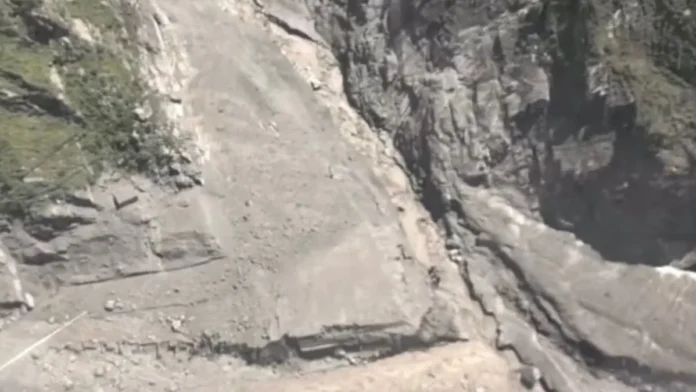
The disaster began Wednesday when a massive glacier collapse combined with a landslide near the Nepal-China border to send a debris flow traveling at roughly 50 meters per second through the Lhende River valley, an event so powerful it registered as a magnitude 5.2 seismic signal despite not originating from tectonic activity.
Nepal remains on high alert for additional flooding, with authorities warning residents in affected districts to stay vigilant as river levels have shown signs of rising again in the days following the initial disaster, complicating both ongoing rescue operations and efforts to reopen the major highway connecting Kathmandu to some of the worst-hit areas.
The missing workers at hydropower sites include citizens of Nepal, India, South Korea, and China, reflecting the international workforce typically involved in the country’s hydroelectric infrastructure projects, with the army having rescued 254 workers from various sites as of the most recent tally.
Analysis
Disaster response experts note that the dramatic near-doubling of the missing persons count between successive daily updates reflects improving information flow from remote areas rather than a new wave of casualties, a common pattern in disasters affecting difficult-to-access mountainous terrain where initial reports significantly undercount the true scope.
Engineering specialists note that mud-filled tunnel rescues present among the most technically challenging scenarios in disaster response, often requiring specialized excavation equipment and extended timelines that can stretch rescue operations for weeks, raising the prospect that some of the 933 missing hydropower workers may not be recovered for an extended period.
What Happens Next
Search and rescue operations are expected to continue intensively in the coming days, with particular focus on the hydropower tunnel sites where hundreds of workers remain unaccounted for. Nepal’s disaster agency is likely to continue issuing daily updated tolls as rescue teams reach additional remote areas.
Given the continued flood risk from rising river levels, authorities are likely to maintain heightened alerts in affected districts, while international assistance and diplomatic engagement around the hundreds of missing foreign nationals will likely remain a significant ongoing story in the days ahead.