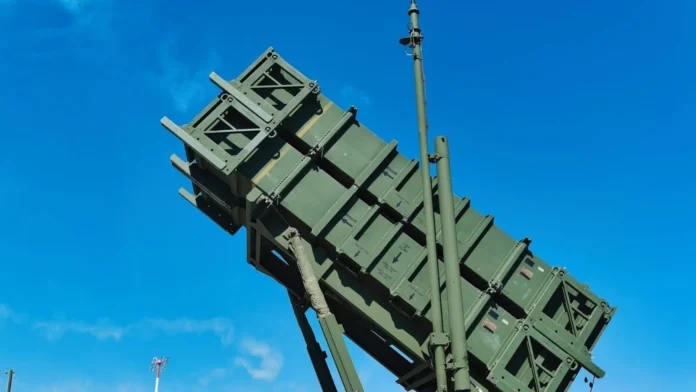

The US military is experiencing a “beyond critical” shortage of Patriot missile interceptors in Europe, driven largely by President Trump’s war with Iran, according to a US defense official and a NATO official, raising fresh concerns about NATO’s vulnerability to a potential Russian attack as the Iran conflict reaches its six-month mark.
What Happened
A US defense official in Europe and a NATO official, both speaking to the Associated Press on condition of anonymity given the sensitivity of the matter, said the most concerning shortfall involves Patriot interceptors capable of shooting down Russia’s high-speed ballistic missiles. The NATO official confirmed low inventories among both American and NATO forces stationed across the continent, warning that in the event of a Russian ballistic missile strike on a target like a military headquarters or power plant, NATO could find itself in a position similar to Patriot-starved Ukraine, forced “to take punch after punch in the mouth.”
Chief Pentagon spokesman Sean Parnell disputed the characterization Thursday, stating claims of US munition shortages “are false” and that the military has “everything required to strike at the time and place of the President’s choosing.” Ed Arnold, a senior associate fellow tracking the issue, said the Iran war marked “the tipping point for shrinking inventories” after the US had already supplied hundreds of Patriot missiles to Ukraine over the course of its four-and-a-half-year war with Russia.
The shortage stems directly from US missile stocks originally based in Europe being redeployed to the Middle East, where American and Gulf allied forces have fired significant numbers of interceptors, including Patriots, to counter Iranian drone and missile attacks throughout the conflict, some of which have killed and wounded American troops. Separately, the Center for Strategic and International Studies estimated the Patriot inventory fell from roughly 2,330 before the war to between 759 and 827 following recent fighting, a decrease of at least 65%.
Why It Matters
The disclosure represents one of the starkest public illustrations yet of how the six-month war with Iran has directly weakened US and allied defensive capacity in an entirely separate theater, raising the prospect that European NATO members could face genuine vulnerability to Russian ballistic missile attacks precisely because American munitions have been diverted to the Middle East conflict.
For Ukraine specifically, the shortage compounds an already severe crisis: Kyiv has repeatedly emphasized that only US-made Patriots can reliably stop Russia’s advanced ballistic missiles, which have increasingly penetrated Ukrainian air defenses in recent weeks, including during a barrage that struck the country overnight Thursday, even as previous US transfers to Ukraine have themselves already drawn down the broader American Patriot supply.
The gap between the Pentagon’s public denials and the specific, detailed concerns raised by defense and NATO officials speaking anonymously reflects a now-recurring pattern throughout the Iran conflict, in which official statements minimizing munitions shortages have repeatedly been contradicted by more detailed reporting from officials with direct knowledge of stockpile levels.
Context and Background
The Iran war reaches its six-month mark on Friday, having begun with US and Israeli strikes on February 28. Deputy Defense Secretary Steve Feinberg wrote to defense industry leaders earlier this month giving them no more than 21 days to submit plans for dramatically accelerated production of critical weapons systems, warning that “years-long development cycles are not acceptable.”
CNN reported earlier this month that the US had depleted nearly 80% of its THAAD interceptors and about half its Patriot interceptors since the war began, figures Defense Secretary Pete Hegseth publicly disputed, posting “not true” on social media. A defense spending bill remains stalled in Congress amid lawmaker frustration over Trump’s military action against Iran and resistance to a White House request to substantially increase Pentagon spending.
Experts cited by CSIS estimate it will take at least three years to restore Patriot and THAAD interceptor stockpiles to pre-war levels even with a significant funding increase, given current production rates of roughly 15 new Tomahawks and 20 new Patriot missiles per month.
Analysis
Defense analysts note that the specific tension between the Pentagon’s public reassurances and the more alarming private assessments from officials with direct operational knowledge reflects the genuinely difficult political position facing the administration: acknowledging a critical shortage risks emboldening adversaries, while denying it risks leaving allies and the public unprepared for the practical consequences.
Some military analysts caution that the shortage’s implications extend well beyond any single potential conflict scenario, given that Patriot and THAAD systems represent essentially irreplaceable defensive capability against ballistic missile threats, with “no good substitutes,” according to retired Marine Corps colonel Mark Cancian, a co-author of the CSIS stockpile analysis.
Regional security analysts point to the compounding nature of the crisis, with Ukraine, US Gulf allies, and now broader NATO members in Europe all simultaneously competing for access to the same severely constrained interceptor supply, as illustrating a structural strategic problem that funding alone cannot resolve quickly given the multi-year timelines required to rebuild production capacity.
What Happens Next
Deputy Defense Secretary Feinberg’s 21-day deadline for defense contractors to submit accelerated production plans will provide an early signal of how quickly the industrial base can respond to the shortage, though experts have cautioned that meaningful stockpile recovery is likely to take years regardless of near-term production increases.
Continued congressional negotiation over defense spending, complicated by lawmaker frustration over the Iran war itself, will shape how quickly additional funding becomes available to address the shortage, while NATO allies are likely to face growing pressure to assess and potentially bolster their own independent air defense capabilities given the demonstrated strain on US supply.