
The death toll from this week’s catastrophic glacier collapse and flash flooding on the Nepal-Tibet border has surpassed 500 people, officials confirmed Friday, as rescue crews continued searching mountainous terrain for hundreds of people still unaccounted for.
What Happened
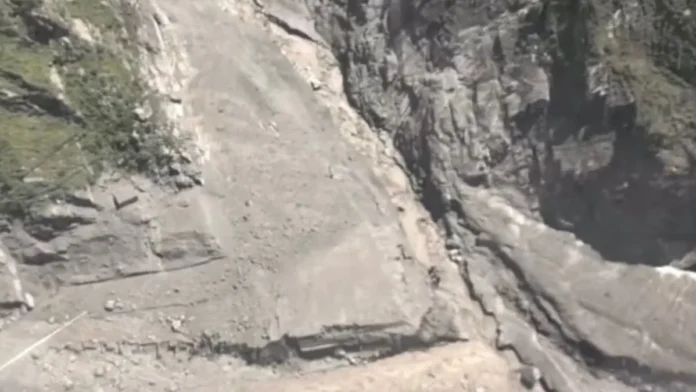
Nepali authorities confirmed the death toll from Wednesday’s disaster had climbed past 500 as of Friday, three days after a massive ice avalanche combined with a landslide to send a wall of mud, rock, and water crashing through the Lhende River valley on the Nepal-China border. The debris flow, which geologists say traveled at roughly 50 meters per second, swept through mountain communities and the Gyirong border crossing in Tibet before tearing downstream through Nepali towns including Bidur on the Trishuli River.
Rescue operations have continued to be complicated by damaged roads, downed communications infrastructure, and the ongoing threat posed by a barrier lake that formed when debris temporarily dammed the river. Chinese state media has warned that continued rain and unstable debris dams in the hard-hit Gyirong county of Tibet raise the risk of further landslides and secondary flash flooding even as search efforts continue.
Nepal’s government has continued to decline offers of foreign rescue teams, maintaining that its own security agencies, working alongside police and military personnel, can manage the operation. More than 650 foreign nationals from over two dozen countries remained unaccounted for as of the most recent tallies, including significant numbers of Indian, American, and Malaysian citizens caught in the disaster zone.
Terrifying footage shows a flash flood sweeping through the Nepal–Tibet border, trapping people on rooftops and balconies. At least 469 have been killed, with hundreds still missing. pic.twitter.com/xRgRWmwut7
— Weather Monitor (@WeatherMonitors) August 28, 2026
Why It Matters
With the confirmed toll now exceeding 500, the disaster ranks among the deadliest natural catastrophes in Nepal’s modern history, striking a mountainous border region where limited infrastructure has significantly complicated both the initial emergency response and ongoing recovery efforts more than 72 hours after the event.
The continued threat from the barrier lake underscores that the disaster’s full scope may not yet be fully realized, with officials warning that a secondary flood, should the unstable debris dam give way, could compound the damage already inflicted on the region’s roads, power infrastructure, and communities.
The scale of destruction to Nepal’s hydropower infrastructure, with more than 430 megawatts of generating capacity affected, representing over 12% of the country’s total hydroelectric capacity, carries significant implications for Nepal’s broader energy supply and economic recovery in the weeks and months ahead.
Context and Background
Scientists have determined the disaster was triggered by a high-altitude ice avalanche rather than a tectonic earthquake, despite initial reports suggesting seismic activity was the cause; the US Geological Survey later clarified that the recorded seismic signal was generated by the landslide and debris flow itself. Researchers continue working to understand the precise combination of factors, including the source of the disaster’s substantial water volume, that produced such a devastating and fast-moving flow.
Chinese President Xi Jinping has called for “all-out” search efforts alongside stronger monitoring and early-warning systems to prevent secondary disasters, while Nepal’s Prime Minister Balendra Shah has ordered continued relocation of residents from lower-lying areas near the affected river systems.
The disaster follows a pattern of significant flooding and landslide events across the Himalayan region in recent years, part of what researchers describe as an intensifying combination of glacial instability and extreme rainfall affecting mountain communities across Nepal, Tibet, and neighboring regions.
Analysis
Disaster response specialists note that the persistent risk from the barrier lake represents one of the most operationally challenging aspects of the ongoing response, since draining or stabilizing such formations typically requires specialized engineering assessment that can be difficult to conduct quickly in a damaged, remote, and now partially cross-border disaster zone.
Glaciologists continue to caution that fully understanding the disaster’s precise triggering mechanism will require sustained international research collaboration, given the complexity of reconstructing how ice, rock, and water combined to produce a debris flow of this scale and speed.
What Happens Next
Search and rescue operations are expected to continue in the coming days, with the death toll likely to rise further given the large number of people still listed as missing across both Nepal and Tibet. Continued monitoring of the barrier lake will remain a priority given the risk of secondary flooding.
Longer term, the disaster is likely to prompt renewed international attention to early-warning systems and glacial hazard monitoring across the Himalayan region, given the scale of casualties and the compound nature of the hazards involved.