
A glacier collapse on the Nepal-Tibet border triggered catastrophic flash flooding this week that has killed at least 469 people in Nepal alone, with more than 1,300 people still missing and rescuers racing against mountainous terrain, unstable debris dams, and continued rain to reach survivors.
What Happened
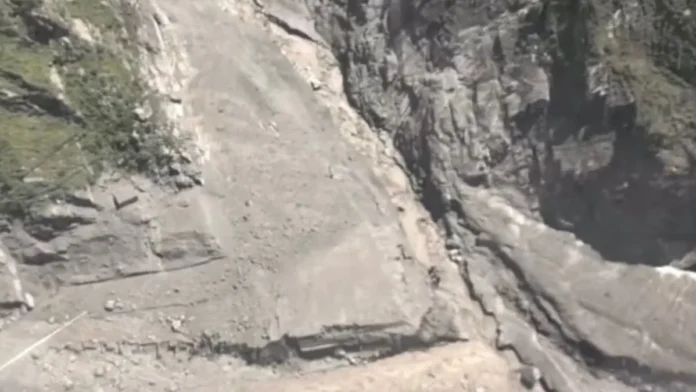
A massive chunk of glacier fell thousands of feet near the Nepal-China border on Wednesday, combining with a landslide below it to send a torrent of ice, water, mud, and rock crashing through the steep Lhende River valley, according to scientists studying satellite imagery of the event. Chinese government geologist Guo Zhaocheng said the debris flow traveled at roughly 50 meters per second, extending more than 20 kilometers and giving residents little time to react. Videos verified by news organizations showed people trapped on balconies as a wall of mud and water swept through the town of Bidur on Nepal’s Trishuli River, and dozens of people being carried away at the Gyirong border crossing in Tibet.
Nepali police said Friday the death toll had climbed to 469, with three additional deaths confirmed on the Chinese side. More than 1,300 people remain missing in Nepal, and Chinese authorities separately reported 265 people unaccounted for in Tibet. More than 650 foreigners from over two dozen countries remain unaccounted for, including 288 Indians, 63 Americans, and 51 Malaysians, according to figures cited by regional officials.
Homes, roads, and hydroelectric power stations were swept away across the disaster zone, with Nepal’s energy ministry reporting 430 megawatts of electricity capacity affected, more than 12% of the country’s total hydropower output. A barrier lake has formed where debris dammed the river, with an estimated three million additional cubic meters of water expected to accumulate, complicating rescue operations and raising fears of a secondary flood if the natural dam gives way. Nepal’s government has declined offers of foreign rescue teams, saying its own security agencies can handle the operation.
New footage of this week’s flooding in Nepal. pic.twitter.com/MAgr4u2w74
— Open Source Intel (@Osint613) August 28, 2026
Why It Matters
The scale of the disaster, with a death toll already exceeding 460 and still climbing, represents one of the deadliest natural disasters in Nepal’s recent history, striking a mountainous border region with limited infrastructure and where rescue access is inherently difficult even without the compounding effects of destroyed roads and communications links.
The large number of foreign tourists among the missing, spanning more than two dozen nationalities, reflects the region’s popularity as a trekking and border-crossing destination, adding an international dimension to what is primarily a Nepali and Tibetan humanitarian crisis and drawing consular attention from multiple governments.
The continued risk of secondary flooding from the barrier lake, combined with forecasts of additional rain over the coming days, means the disaster’s full toll remains genuinely uncertain, with Chinese state media warning that the hard-hit Gyirong county faces ongoing risk of further landslides and flash floods even as rescue operations continue.
Context and Background
Initial reports suggested a magnitude 4.4 earthquake had triggered the collapse, but the US Geological Survey later revised its assessment, determining the seismic signal was generated by the landslide and debris flow itself rather than a tectonic earthquake, with the landslide ultimately registering as a magnitude 5.2 seismic event. Independent researchers analyzing Planet Labs satellite imagery have been working to reconstruct the precise sequence of the initiating ice-rock avalanche.
Chinese President Xi Jinping urged “all-out” search efforts for the missing and called for stronger monitoring and early-warning systems to prevent secondary disasters, while Nepal’s Prime Minister Balendra Shah ordered residents in lower-lying areas moved to safety as police and military personnel joined the rescue effort.
The Himalayan region has experienced a series of significant flooding and landslide disasters in recent years, including major flooding across Nepal in 2024 that killed more than 300 people, a pattern researchers link to a combination of intensifying monsoon rainfall, glacial instability, and continued development in flood-prone valleys.
Analysis
Glaciologists studying the disaster note that while there is no confirmed evidence the event was a glacial lake outburst flood, a distinct and separate hazard from what appears to have occurred here, the combination of a high-altitude ice avalanche and downstream debris flow reflects the kind of compound, cascading hazard increasingly documented in glaciated mountain regions as rising temperatures destabilize ice and permafrost at high elevations.
Disaster response experts note that Nepal’s decision to decline foreign rescue teams, relying instead on its own security agencies, reflects both confidence in domestic capacity built through prior disaster responses and the genuine logistical difficulty of coordinating international teams across a damaged, mountainous, and now partially cross-border disaster zone.
Some scientists caution that understanding the precise combination of factors that produced the flood, including the source of the water volume involved, whether from converted glacial ice, entrained sediment moisture, or river water, will require a dedicated international research effort, work that has reportedly already begun given the disaster’s scale and significance.
What Happens Next
Search and rescue operations are expected to continue in the coming days, hampered by mountainous terrain, damaged infrastructure, and the ongoing risk posed by the unstable barrier lake. The death toll is widely expected to rise further given the large number of people still listed as missing across both Nepal and Tibet.
Longer term, the disaster is likely to prompt renewed scrutiny of early-warning systems and development restrictions in Himalayan valleys vulnerable to glacial and landslide hazards, with international researchers expected to study the event closely given its scale and the compound nature of the triggering hazards involved.