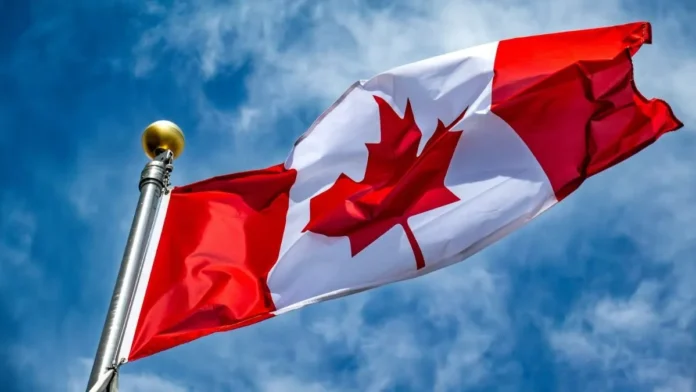

Canada announced retaliatory tariffs Tuesday on more than 700 American goods worth roughly $20 billion, matching US measures “dollar for dollar, rate for rate,” as the two countries’ trade relationship deteriorated further following last week’s collapse of negotiations.
What Happened
Canadian Finance Minister François-Philippe Champagne announced the countermeasures will impose tariffs of 15%, 25%, and 50% on a range of US exports, effective September 8. The 50% tariffs target major sectors including steel, aluminum, furniture, and clothing; 25% tariffs apply to cheese, appliances, and some seafood categories; and 15% tariffs cover electronics and tools. The full list spans steel, dairy, appliances, agricultural equipment, pulp and paper, and electronics, according to Champagne.
“When the United States asked too much and offered too little, we chose to stand up for Canadians,” Champagne said. Alongside the tariffs, Ottawa unveiled a C$7.5 billion support package for Canadian businesses and workers affected by the escalating dispute, including funding for small and medium-sized businesses, a cash-flow support stream for companies, and assistance for workers at risk due to the new tariffs.
Prime Minister Mark Carney acknowledged in a speech following the failed trade talks that the retaliatory decision “will raise costs and reduce choice for Canadians,” a candid admission of the domestic economic cost of the response. Trump responded on Truth Social, writing “I deal with many countries, and Canada is easily the most difficult and unreasonable,” and separately suggested on social media that the US could rename Lake Ontario to “Lake America.”
Why It Matters
The scale of Canada’s response, covering more than 700 products and matching the US tariffs precisely in structure, confirms that the trade dispute has moved beyond a temporary standoff into a sustained, reciprocal trade war between two of the world’s most economically integrated countries, with both governments now committed to tariff regimes that will remain in place absent further negotiation.
The $7.5 billion domestic support package signals that Ottawa anticipates real economic pain for Canadian businesses and workers from the dispute, an unusually direct acknowledgment that retaliatory tariffs, while politically necessary from Carney’s perspective, carry genuine costs for the same Canadian economy the measures are meant to protect.
Because tariffs are typically paid by importers and passed along to consumers, the mutual escalation is likely to raise costs for consumers and businesses in both countries, with American buyers of Canadian steel, aluminum, cement, and other goods facing higher prices alongside Canadian buyers of the roughly 700 newly tariffed US products.
Context and Background
The current standoff traces back to February 2025, when Trump first imposed tariffs on Canadian goods citing insufficient action on fentanyl trafficking, triggering a sustained cycle of tariff and counter-tariff measures. Canada had actually removed many of its earlier retaliatory tariffs on US goods in September 2025 as relations temporarily improved, making Tuesday’s announcement a significant reversal of that prior de-escalation.
Auto tariffs remained the central unresolved issue in last week’s failed negotiations, with Canadian officials seeking to reduce existing 25% vehicle tariffs to 15%, while the two sides disagreed over whether reductions should be calculated using American-specific or broader North American vehicle content, a dispute that ultimately contributed to the talks’ collapse.
Carney, who became prime minister after previously leading the Bank of Canada, has expressed a broader ambition to diversify Canada’s economy and reduce dependence on the United States, arguing the relationship has “changed” under Trump, a strategic reorientation that Tuesday’s countermeasures and support package appear designed to reinforce.
Analysis
Trade policy analysts note that Canada’s decision to precisely mirror the size and structure of the US tariffs, rather than pursuing a different retaliatory strategy, reflects a calculated approach designed to demonstrate proportionality while maximizing pressure on politically sensitive US export sectors like dairy and agricultural equipment.
Some economists caution that the mutual 50% tariffs on steel and aluminum specifically risk significant disruption to deeply integrated North American metal supply chains, given how extensively manufacturers on both sides of the border rely on cross-border steel and aluminum trade for downstream production.
Analysts tracking Carney’s domestic political positioning note that pairing the retaliatory tariffs with a substantial support package allows his government to demonstrate both resolve toward Washington and concern for affected Canadian workers and businesses simultaneously, a dual message likely aimed at sustaining public support through what could be a prolonged dispute.
What Happens Next
Both the remaining US tariffs and Canada’s new retaliatory measures are set to take full effect September 8, with no indication of renewed negotiations in the immediate aftermath of Tuesday’s announcement. Businesses on both sides of the border are expected to begin adjusting sourcing and pricing strategies ahead of that date.
The broader trajectory of US-Canada relations, and whether either side signals renewed willingness to negotiate before the September 8 implementation date, will be closely watched given the significant economic stakes for both countries’ export-dependent industries.