
Ukraine has launched its most sustained and systematic campaign against Russian-occupied Crimea since the war began, executing a 40-day military operation designed to sever the peninsula’s supply routes, disable its energy infrastructure, and degrade its air defence systems. The campaign — approved by President Volodymyr Zelensky and executed primarily by Ukraine’s Security Service — has already produced power outages across half the peninsula, severe fuel shortages, and a formal state of emergency declared by Russian-installed authorities.
What Is Happening
Ukrainian President Volodymyr Zelensky said he approved a plan for Ukraine’s State Security Service to launch a 40-day operation aimed at pressuring Russia to end the war. Zelensky’s announcement came after his meeting with SBU chief Major General Yevhenii Khmara, who reported on Kyiv’s plan for long-range, medium-range and short-range strikes on Russian assets.
Russian-installed authorities in Crimea declared a state of emergency on Friday, following days of intense Ukrainian attacks that have knocked out power in parts of the peninsula and compounded ongoing challenges for residents, including fuel shortages and restrictions on public transit. “This state of emergency will remain in effect until the situation improves,” Sevastopol Governor Mikhail Razvozhayev said. Sergei Aksyonov, the Russian-appointed governor of Crimea, posted his own video declaring a region-wide state of emergency.
Russian Defence Ministry officials said their air defences had intercepted 660 Ukrainian drones overnight in several cities, including the Crimean peninsula. It is believed to be the largest Ukrainian drone attack of the year, according to Russian state media.
What Ukraine Is Targeting — and Why
The campaign is built on a coherent strategic logic: if Crimea can be cut off from mainland Russia, Russian forces on the peninsula — and in the broader occupied south — become unsustainable.
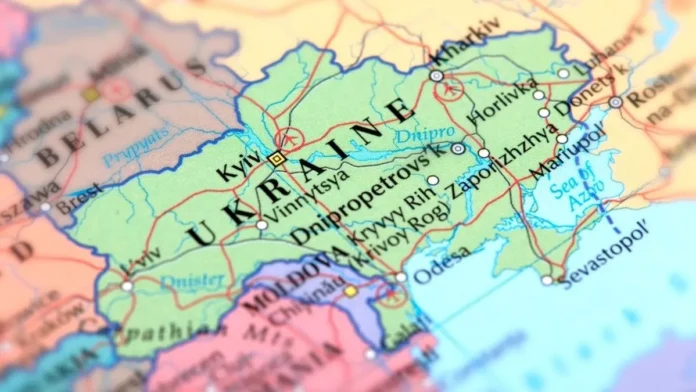
Ukrainian forces have used drones to establish what amounts to de facto control over traffic on the federal highway R-280 “Novorossiya,” which connects Russia’s Rostov region with Crimea through occupied Ukrainian territories. Ukrainian forces have significantly increased strikes on the peninsula’s military, energy and transport infrastructure, as well as strategic bridges, resulting in power outages, fuel rationing, transport restrictions and heightened security measures.
For weeks, Ukraine has ratcheted up its mid-range drone attacks against military trucks and fuel tankers that supply Crimea from the north, which has led to local gasoline shortages. While the peninsula is linked directly to mainland Russia via the Kerch Bridge in the east, Ukrainian attacks in recent years have prompted Moscow to restrict its use for hazardous cargo like fuel. Instead, supply lines have relied on northern land corridors — now under systematic attack.
On June 23, Ukraine reportedly destroyed a key railway bridge over the North Crimean Canal near Rozdolne. The bridge served as a strategic military-logistical artery that transports cargo, resources and military equipment from Russia through Crimea to southern Ukraine, according to Ukraine’s Special Operations Forces.
Ukrainian drones also struck components of the S-400 air defence missile system covering the Kerch Strait area. The SBU emphasised that the destruction of air defence systems opens up opportunities for new high-precision strikes, while the disabling of ships and port infrastructure weakens logistical support for Russian troop formations.
The Human Impact on the Peninsula
Blackouts have plagued Sevastopol, the largest city in Russian-controlled Crimea, for days. The Kremlin-installed governor of the city said Friday that restrictions on electricity supply would continue because repair work to the power grid had been suspended following air raid alerts prompted by Ukrainian drone activity. Ukraine’s drone forces commander Robert Brovdi said Kyiv had attacked Sevastopol’s main power substation seven times in the early hours of Wednesday alone.
One resident of Sevastopol told CNN the city’s air raid alerts had become more regular in recent weeks, with several daily. She described drones flying in and around the city and intercepts often now taking place above the city rather than above the Black Sea as was previously the case. The city has become “more dangerous,” she said.
The economic consequences are mounting. The Russian-installed regional government said fuel would only be available to government agencies, and not to ordinary people or businesses. Kommersant reported that Crimea has seen a sharp drop-off in hotel bookings, with cancellations up around 88% year-on-year. Sea passenger transport in Sevastopol Bay was also suspended, and more than 2,000 vehicles were reported waiting to cross the Kerch Bridge amid wait times of around five hours.
What Ukraine Says It Is Trying to Achieve
Zelensky said Ukraine is trying to “create the conditions that will force Russia to choose peace.” He said the operation in Crimea is “carefully calculated.” Ukrainian internal documents obtained by Ukraine’s intelligence services, Zelensky said, show that “our pressure campaign is being felt painfully by the Russian leadership.
“The Russian leadership is now pulling more air defence assets to Moscow, Valdai, and Putin’s bridge across the Kerch Strait — at the expense of air defence elsewhere,” Zelensky said, suggesting that the Crimea campaign is degrading Russia’s defensive posture more broadly.
Ukrainian Defence Minister Mykhailo Fedorov said on June 17: “Hell is beginning. Logistics are being cut off. Crimea is being isolated.”
What Russia Is Doing — and What It Has Left
Ukrainian forces have significantly increased their mid-range drone attacks in recent weeks against military trucks and fuel tankers, as part of their broader strategy to target Russian supply lines and energy infrastructure. Russia has introduced temporary restrictions on electricity supply across the peninsula.
The strategic question for Moscow is whether it can sustain its position in Crimea if the isolation campaign continues for the full 40 days and beyond. The peninsula has been Russia’s most politically significant territorial acquisition since 2014, and losing it — or being forced into a position where it cannot be resupplied — would represent a fundamental shift in the war’s dynamics.
What Happens Next
The 40-day window runs through late July. If Ukraine can sustain the operational tempo — and if the West continues to supply the mid-range strike systems that make the campaign possible — Crimea’s connectivity with mainland Russia could deteriorate significantly before any diplomatic resolution is reached.
Zelensky has framed the operation explicitly as a tool to force Russia to the negotiating table. Whether that calculus holds depends on whether the pressure on Crimea translates into pressure in Moscow — a question that remains unanswered.