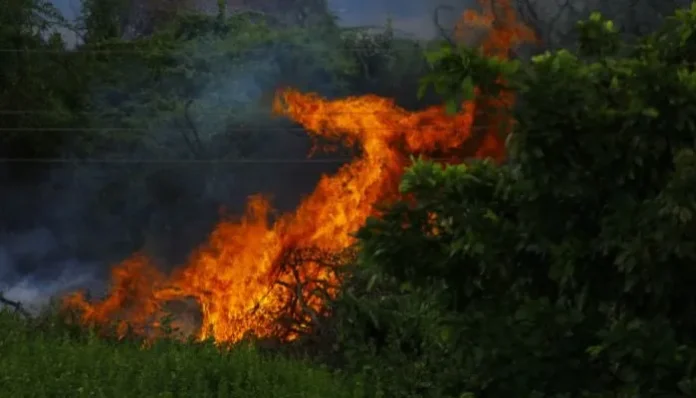

Firefighters in southwestern France were working Friday to extinguish the last hot spots of the country’s largest wildfire in decades, a blaze that scorched an area four times the size of Paris and forced tens of thousands of evacuations, as new data underscores the broader human toll of the heatwaves driving this summer’s extreme fire season across Europe.
What Happened
The wildfire in France’s Gironde region, near Bordeaux, burned approximately 42,000 hectares, or about 162 square miles, of pine forest and tourist areas along the Atlantic coast before firefighters managed to hold its spread in check for several consecutive days. French officials said lower overnight temperatures and higher humidity have helped ease pressure on fire crews, who have shifted focus to controlling remaining hot spots in forests and dune undergrowth near Lège-Cap-Ferret.
The fire has been officially described as “stabilized” since Monday, though French Interior Minister Laurent Nunez cautioned at the time that stabilization did not mean full containment, noting the blaze had displayed unusually erratic behavior, generating its own localized weather patterns, including pyrocumulonimbus “fire thunderstorm” effects that produced lightning and ignited additional fires, a phenomenon rarely documented in France before this summer.
At the peak of the crisis, roughly 330,000 people were evacuated across fires in France and Spain combined, with French officials describing it as the country’s largest peacetime evacuation since World War II. At least 126 firefighters were injured battling the Gironde blaze specifically, according to local authorities, while a separate wildfire in Spain’s Ávila province became the largest in Spanish recorded history, and a related fire in Spain caused at least one death.
Why It Matters
The scale and unusual behavior of this summer’s fires, particularly the emergence of fire-generated thunderstorms in France for what officials say is the first documented instance in the country’s history, point to a wildfire season that has moved beyond historical precedent. That shift carries direct implications for how European governments plan wildfire response and prevention going forward, given that existing infrastructure and firefighting resources were built around less extreme historical fire patterns.
Beyond the immediate fire damage, newly reported mortality data reveals a far larger public health toll tied to the heatwaves driving this summer’s fires. Officials disclosed that between June 17 and July 2 alone, Europe recorded 5,764 more deaths than would typically be expected during that period, a figure attributed to the extreme heat that has gripped the continent for much of the summer. That toll underscores how wildfire coverage, while visually dramatic, can obscure the larger and less visible human cost of sustained extreme heat itself.
The fires have also disrupted daily life and infrastructure well beyond the immediate burn areas, with highway and rail closures near Bordeaux, evacuated defense-linked industrial sites, and significant economic costs to the tourism-dependent Atlantic coast region during peak summer season.
Context and Background
This summer’s European heatwave has been extensively documented as part of a broader pattern of increasingly frequent and intense heat events linked to climate change. The European Union recorded its hottest day since measurements began in 1947 on June 23, according to Wikipedia’s tracking of the 2026 France wildfires, a milestone that preceded the wildfire season’s most severe outbreaks.
France mobilized extensive international firefighting support throughout the crisis, with countries including Romania, Croatia, the Czech Republic, Germany, Portugal, Slovakia, and Sweden contributing personnel and equipment. Beyond the Gironde fire, France has faced multiple simultaneous fire fronts this summer, including blazes in the Var region, a flare-up near the Fontainebleau forest, and earlier fires that forced evacuations from around 900 homes in mid-July.
Spain’s parallel crisis included its largest wildfire on record in the Ávila province, west of Madrid, which burned more than 111,000 acres amid similarly extreme heat and dry conditions, illustrating how the wildfire crisis extended well beyond France’s borders across the Iberian Peninsula and southern Europe more broadly.
Expert Analysis
Fire behavior specialists point to the Gironde fire’s self-sustaining, erratic spread pattern, including its generation of its own weather systems, as a warning sign that climate-driven changes to vegetation dryness and heat intensity are creating fire conditions that exceed historical modeling assumptions used by European fire agencies. Nunez’s description of the fire as “autonomous” and “self-sustaining” reflects a level of fire behavior more commonly associated with historically extreme fire events in regions like North America and Australia.
Public health researchers tracking the excess mortality data emphasize that heat-related deaths are frequently underrepresented in immediate public attention compared with visually dramatic events like wildfires, even though the underlying heat driving both phenomena often causes a far larger cumulative death toll through indirect health impacts such as cardiovascular and respiratory strain.
Climate scientists note that the combination of an unusually wet winter, which produced abundant vegetation growth, followed by an exceptionally hot and dry summer, created near-ideal conditions for the kind of large-scale, fast-moving fires seen across France and Spain this year, a pattern researchers expect to recur with increasing frequency as regional climate patterns continue shifting.
What Happens Next
Firefighters are expected to continue working through remaining hot spots in the Gironde region in the coming days, with officials cautioning that the fire, while stabilized, is not yet fully extinguished and could still be vulnerable to renewed spread if hot, dry, and windy conditions return. Displaced residents in some previously evacuated areas have already been allowed to return home as conditions have improved.
Longer term, both the scale of this summer’s fires and the newly disclosed heat-related mortality figures are likely to intensify pressure on French and broader European authorities to expand wildfire prevention funding, improve early warning systems for extreme heat, and reassess emergency planning for a climate in which both wildfires and heatwaves are becoming more severe and less predictable.