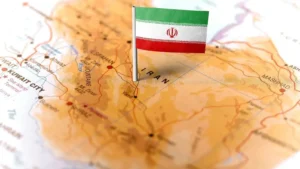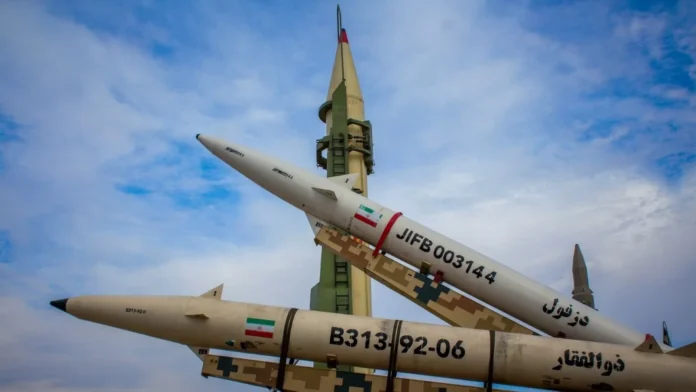

The week of June 9-13, 2026 effectively ended the April 8 ceasefire as a functioning diplomatic framework — through three consecutive nights of US bombing campaigns against Iranian military infrastructure, an Iranian two-wave retaliatory strike against four US-allied countries, Iran’s public presentation of maximalist demands including quadrillion-rial reparations, and Trump’s Truth Social declaration that the Iranian regime is “pathetic.” Here is the complete account of what happened and what comes next.
The April 8 ceasefire was always fragile. LoudFact documented its fragility in detail across days of coverage: the mutual strikes that continued throughout the ceasefire period, the MOU that was drafted but never signed, the Lebanon front that Iran insisted must be included, the nuclear enrichment dispute that neither side had resolved.
What the week of June 9-13 did was not create the ceasefire’s fragility. It revealed that the ceasefire had been, for some time, a diplomatic category rather than an operational reality — and then it removed even the diplomatic category.
The sequence deserves to be stated clearly:
Monday, June 9: US forces struck Iranian radar installations at Goruk and on Qeshm Island. Iran fired seven ballistic missiles at Kuwait and Bahrain in retaliation — the largest single Iranian ballistic missile salvo of the conflict period. Kuwait’s airport received strike damage. Jordan also came under fire.
Tuesday, June 10: The US House of Representatives voted 215-208 to end the war using the War Powers Act. The Senate did not act. The significance of the vote was political, not operational.
Wednesday, June 11 (Night 1): The United States launched another round of airstrikes on Iran, after President Trump said Iran was taking “too long to negotiate.” The strikes targeted several sites along Iran’s coast, including military facilities in and around the Strait of Hormuz.
Thursday, June 12 (Night 2): US military forces carried out a series of precision strikes against Iranian military infrastructure late on June 10 and into the early hours of June 11, launching 49 Tomahawk Land Attack Missiles and conducting fighter jet operations targeting facilities linked to Iran’s Islamic Revolutionary Guard Corps. The operation began shortly after midnight and lasted approximately four hours. Iran shot down a US Apache helicopter — the first US military helicopter lost in the conflict. Three Indian sailors were killed on a struck tanker. Iran responded quickly. The IRGC announced that its aerospace force and navy had launched a two-wave retaliatory strike against 18 US military targets, including bases hosting American troops in Kuwait, Bahrain, and Jordan.
Friday, June 13 (Night 3): President Donald Trump on Thursday said the US will hit Iran “very hard tonight” and later take over its oil and gas sectors. Iran demanded IRR 12.6 Quadrillion to end conflict, rejects Strait of Hormuz concessions as Trump calls regime “pathetic.”
Why the Ceasefire Cannot Be Restored in Its Previous Form
The April 8 ceasefire was built on a specific architecture: a mutual understanding that the active air campaign would pause while diplomacy pursued a framework for a more durable resolution. That architecture has been destroyed.
Three nights of US bombing of Iranian military infrastructure — including command centres near Tehran — are not consistent with a ceasefire in any operational sense. Iran’s retaliatory strikes across four countries, its declaration that Hormuz is “closed to all vessels,” and its presentation of reparations demands rather than a return to the MOU framework are not consistent with a diplomatic process in any meaningful sense.
What both sides say publicly about ongoing talks cannot be taken at face value in this context. The statement that “talks are continuing” has been a consistent feature of the ceasefire period regardless of what has been happening militarily. Its continued assertion tells us nothing about whether the talks have substantive content.
What the Three Scenarios Are
Three broad scenarios are now plausible for the Iran war’s next phase.
Scenario 1: Rapid Deal Under Escalation Pressure. Iran, facing a third night of intensive bombing and the prospect of Trump’s threatened oil infrastructure seizure, concludes that its maximalist demands (reparations, Hormuz control) are not achievable and returns to the MOU framework — mines removed in 30 days, blockade lifted, nuclear talks begin. Trump declares victory and signs. This scenario has become less likely with each night of bombing and each maximalist Iranian statement — but it remains possible if Iranian leadership decides the costs of continued escalation exceed any remaining leverage.
Scenario 2: Protracted Conflict Without Resolution. The bombing continues. Iran retaliates against Gulf states, at escalating scale. The oil price stays above $100. US inflation continues to climb. Neither side accepts the other’s terms. The conflict grinds on without a deal, without a ceasefire, and without either side having achieved its fundamental objectives. This scenario imposes enormous costs on both sides and on the global economy — but it also represents the status quo of the past three nights.
Scenario 3: Major Escalation. Trump executes the oil infrastructure seizure threat. Iranian forces conduct a large-scale missile and drone attack on US military facilities. The conflict escalates to a scale that more closely resembles full-scale war, requiring either a rapid diplomatic resolution or a military outcome that fundamentally changes the balance of power in the Persian Gulf.
What Would Need to Change
A return to meaningful diplomacy would require at least one side to make a significant de-escalatory move. For the US, that could mean pausing the bombing campaign to demonstrate good faith, at the cost of appearing to reward Iran’s maximalist demands. For Iran, it could mean abandoning the reparations demand and returning to the MOU framework, at the cost of appearing to capitulate under military pressure.
Neither move is politically easy. Both moves are politically possible. The question is whether the accumulated costs — for the US, the 4.2% inflation and political pressure; for Iran, the $500 million per day blockade loss and ongoing infrastructure destruction — are sufficient to produce the political will for compromise.
History suggests that conflicts of this type — where both sides have suffered significant costs, where neither can achieve a complete victory, and where a negotiated framework exists — tend to end when both sides simultaneously conclude that the costs of continuation exceed the costs of compromise. That moment has not arrived yet.
When it arrives, whatever is left of the diplomatic infrastructure will need to be mobilised quickly. Pakistan’s mediator role. Qatar’s back-channel. Oman’s quiet facilitation. The MOU framework that negotiators spent weeks building.
All of it is still there. Waiting for the political will to use it.
LoudFact.com is an independent global news and explainer platform. This report draws on CENTCOM statements, NPR, Radio Free Europe/Radio Liberty, Reuters, the Jerusalem Post, and the full body of LoudFact’s documented Iran war coverage from February 28 through June 13, 2026.