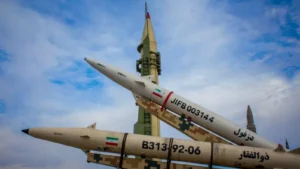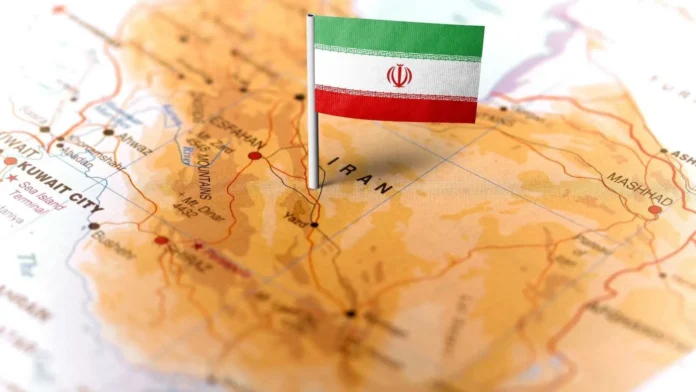

Iran’s negotiating team presented demands including 12.6 quadrillion Iranian rials — approximately $30 billion — in war reparations and rejected the US framework for Strait of Hormuz concessions, as the United States bombed Iranian military sites for a third consecutive night and Trump responded to Iran’s demands by calling the regime “pathetic” on Truth Social.
Iran demands IRR 12.6 Quadrillion deal to end conflict, rejects Strait of Hormuz concessions as Trump calls regime “pathetic.”
The figure — 12.6 quadrillion Iranian rials — requires immediate unit translation to be comprehensible. The Iranian rial has been severely depreciated by years of sanctions and economic mismanagement. At current exchange rates, 12.6 quadrillion rials is approximately $30 billion. That number — while significant — is not completely removed from the range that negotiators have been discussing: the earlier MOU framework referenced $24 billion in frozen Iranian assets that could be released as part of a deal.
What is significant is not the number itself but what Iran is calling it: war reparations. Reparations are not the return of frozen assets. Reparations are payments for damages caused — an acknowledgment of wrongdoing. Demanding reparations rather than asset releases reflects Iran’s framing of the conflict as US aggression against Iran, and demands that the US accept that framing as a condition of peace.
That framing is one the Trump administration will not accept. The US position throughout the conflict has been that its actions were legally justified responses to Iranian provocations, both historical (Iran’s nuclear programme, its support for terrorist proxies) and immediate (the specific military actions that triggered each US strike). Accepting a “reparations” framing would be to acknowledge legal liability for the war’s initiation and conduct — something no US administration would agree to.
The Hormuz Rejection
Iran’s simultaneous rejection of the current US framework for the Strait of Hormuz is, if anything, more significant than the reparations demand for the immediate diplomatic track.
The Hormuz framework in the drafted MOU — which Iran was described as having broadly accepted in preliminary negotiations — required Iran to remove mines from the strait within 30 days and allow commercial shipping to resume, in exchange for the lifting of the US naval blockade and the unfreezing of Iranian assets.
Iran’s new public position — that it will not make concessions on its ability to control transit through the strait — walks back from whatever private understanding had been reached during the MOU negotiations. If Iran has changed its position on Hormuz, the MOU that negotiators drafted is no longer the agreed framework; it is a document that one party has publicly disavowed.
Trump’s Response
Trump’s Truth Social reaction — calling the Iranian regime “pathetic” — reflects his standard rhetorical approach to adversaries who present conditions he considers unacceptable. It is also a signal to the Iranian government about what he thinks of their negotiating posture.
The word “pathetic” in Trump’s usage implies weakness — a regime making maximalist demands from a position of military defeat and economic desperation. From Trump’s perspective, a country whose navy has been largely destroyed, whose air force is degraded, whose supreme leader has been killed, whose economy is haemorrhaging $500 million per day from a blockade, and which is absorbing 49-Tomahawk-missile strikes for three consecutive nights is not in a strong position to demand war reparations.
From Iran’s perspective, the same country has closed the world’s most important oil chokepoint, driven global oil prices above $100 for 100+ days, fired ballistic missiles at four US-allied countries, shot down a US Apache helicopter, and is extracting an enormous political and economic cost from the war’s continuation — despite having absorbed the most powerful military strike campaign any US adversary has faced in decades.
Both readings have validity. The gap between them is the gap that diplomacy needs to close.
The Third Night of Bombing
The US strikes entered their third consecutive night as Iran’s demands were being reported. The pattern of the past three nights — US precision strikes on IRGC command centres, missile facilities, and air defence installations, followed by Iranian retaliatory missile launches against Gulf states — has pushed the conflict to its most intensive phase since the initial February 28 strikes.
CENTCOM has not yet announced the specific targets of the third night’s operation. Trump’s Truth Social post — “hitting Iran very hard TONIGHT” — and Secretary Hegseth’s statements at the security cabinet meeting provide the public framework: the strikes will continue until Iran agrees to a deal that Trump considers acceptable.
What a deal Trump considers acceptable looks like — after three nights of bombing, after Iran presented reparations demands and rejected the Hormuz framework, after Trump called the regime pathetic — is harder to determine than at any point since the war began.
What the Week Has Changed
The week of June 9-13 has transformed the Iran war’s dynamics in ways that will define its next phase.
The April 8 ceasefire — which nominally held through weeks of mutual strikes — has been effectively superseded by three nights of intensive US air operations against Iran proper. The MOU that negotiators drafted — the tentative framework that seemed close to resolution as recently as early June — has been publicly disavowed by Iran through its new demands and Hormuz rejection. The diplomatic track that Trump, Vance, Rubio, and multiple mediators spent seven weeks building has been significantly damaged by the escalation.
Whether what follows is a rapid breakthrough — Iran backing down from maximalist demands as US bombing continues, producing a deal quickly — or a prolonged and deepening conflict, is the question that the next 72 hours will begin to answer.
LoudFact.com is an independent global news and explainer platform. This report is based on the Sunday Guardian India, NPR, Radio Free Europe, and Reuters as of June 12-13, 2026.