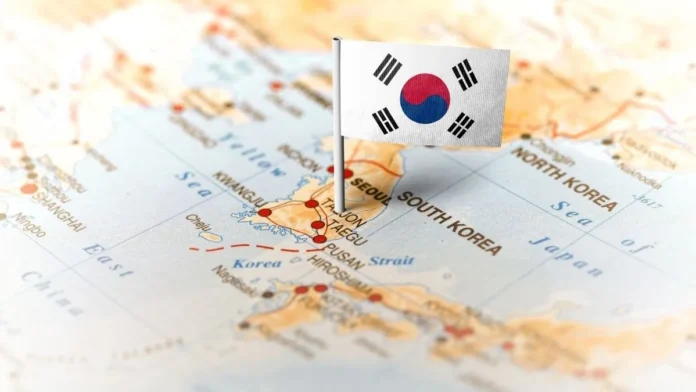

The Seoul Central District Court sentenced former South Korean President Yoon Suk Yeol to 30 years in prison on June 12, finding him guilty of ordering military drone flights over North Korea’s capital Pyongyang in October 2024 to heighten tensions and manufacture a national security crisis that could be used to justify his subsequent declaration of martial law — a verdict that adds to the life sentence he is already serving for leading an insurrection.
South Korea’s ousted President Yoon Suk Yeol and his former defense minister were sentenced to 30 years in prison Friday in a case alleging Yoon ordered drone flights over Pyongyang in 2024 to heighten tensions with North Korea and justify declaring martial law at home.
A Seoul court sentenced former President Yoon Suk Yeol to 30 years in prison on Friday after finding him guilty of ordering military drones to infiltrate North Korea in a bid to provoke tensions ahead of his short-lived martial law declaration in December 2024. The verdict by the Seoul Central District Court matched the sentencing recommendation sought by the special prosecutor’s team on charges including aiding an enemy state and abusing his authority by using the military to advance his political aims.
The Seoul Central District Court found Yoon guilty of abuse of power and aiding the enemy, saying he had conspired in the October 2024 drone incursion from the outset.
What Yoon Did — and Why the Court Ruled It Was Criminal
The drone operation that produced Friday’s verdict is one of the most extraordinary episodes of political manipulation in the democratic world in recent memory.
The Seoul Central District Court stated that Yoon’s actions compromised the national security of South Korea. Yoon approved the deployment of military drones into North Korean territory with the intention of provoking a hostile response from Pyongyang. Judges ruled that the operation was designed to heighten military tensions between the two Koreas and manufacture a national emergency that could be used to defend the controversial declaration of martial law announced in December 2024.
North Korea accused Seoul in October 2024 of flying drones carrying propaganda leaflets over Pyongyang on three occasions, calling the incursions a “serious provocation.” Yoon denied wrongdoing. His lawyers said he neither ordered nor later approved the operation, which they said was unrelated to martial law and instead a response to months of North Korean launches across the border of balloons stuffed with rubbish.
“Defendant Yoon Suk Yeol approved the operation in this case to create conditions that would justify declaring emergency martial law, believing that he could use such authority at will for his own political interests,” the court wrote in its decision. The court also found that the operation “harmed the military interests of South Korea” by placing citizens and soldiers at risk, using military resources for private purposes and exposing the South’s military capabilities to North Korea.
The court’s reasoning is striking in its directness: a sitting president ordered a covert military operation against a nuclear-armed neighbour not for national security reasons but to generate a diplomatic and security crisis he could then exploit to declare emergency powers. The operation risked triggering the very conflict it was designed to simulate.
The Full Legal Picture: Multiple Convictions
Friday’s 30-year sentence is the third major verdict against Yoon in 2026, adding to a legal history that has no precedent in South Korean democracy.
In February, a South Korean court sentenced Yoon to life in prison after finding him guilty of leading an insurrection linked to the martial law attempt.
The February life sentence was for the insurrection charge — the finding that Yoon’s December 2024 martial law declaration, in which he sent troops to parliament, constituted an attempt to overturn the constitutional order. That is the most serious charge in South Korean law, carrying a potential death penalty, for which the court imposed life imprisonment.
The June 12 sentence — 30 years for the drone operation — runs alongside the life sentence. In practical terms, the accumulated sentences mean Yoon will spend the remainder of his life in prison unless a court accepts his appeals.
Yoon’s legal team appealed the ruling later on Friday.
The appeals process will work through South Korea’s court hierarchy over months and potentially years. But the sheer number of convictions — three separate verdicts on different charges, across eight ongoing criminal proceedings — makes the total reversal of his legal situation extremely unlikely.
South Korea’s Democracy: The Institutional Response
The outcome of Yoon’s trials — convictions, appeals, transparency — demonstrates several things about South Korean democracy that are worth noting explicitly.
South Korea impeached its president. Its Constitutional Court unanimously upheld the impeachment. Its criminal courts prosecuted the former president on multiple charges and produced verdicts with specific legal reasoning. The special prosecutor’s office pursued charges that the courts accepted as proven beyond reasonable doubt.
He was removed from office last year after the Constitutional Court upheld his impeachment, triggering a snap presidential election that was won by liberal President Lee Jae Myung.
South Korea held a snap election. A new president took office. The criminal proceedings continued with the new government in place. Every institution that was supposed to respond to a constitutional crisis responded in the way a democracy requires.
This is not a small thing. The successful institutional response to an attempted autogolpe — a president who tried to use emergency powers to circumvent democratic constraints — is precisely the capability that democratic theory says institutions must have. South Korea has demonstrated that it has it.
The North Korea Dimension
The drone operation’s specific targeting — Pyongyang, not a military installation near the border but the capital of a nuclear-armed state — is a dimension of the case that carries implications beyond South Korea’s domestic politics.
Judges said military secrets were likely exposed after one of the drones crashed near Pyongyang.
A South Korean military drone crashing in North Korean territory — revealing technical specifications, materials, and potentially intelligence collection capabilities — is a national security loss that Yoon’s defence team argued should be weighed against the prosecution’s narrative. The court’s response was that this loss was a consequence of Yoon’s own decision to use military assets for political rather than defence purposes.
The North Korean government’s public response to the October 2024 drone incursions was sharp. The three incidents described by Pyongyang as “serious provocations” raised peninsula tensions at a moment — just weeks before the martial law declaration — when the domestic political situation in Seoul was already at a critical point. The temporal proximity of the drone operations and the martial law declaration is what the special prosecutor argued, and the court accepted, as evidence of intent.
LoudFact.com is an independent global news and explainer platform. This report is based on reporting from NPR, CNN, UPI, AP, Blueprint Newspapers, and Anadolu Agency as of June 12, 2026.