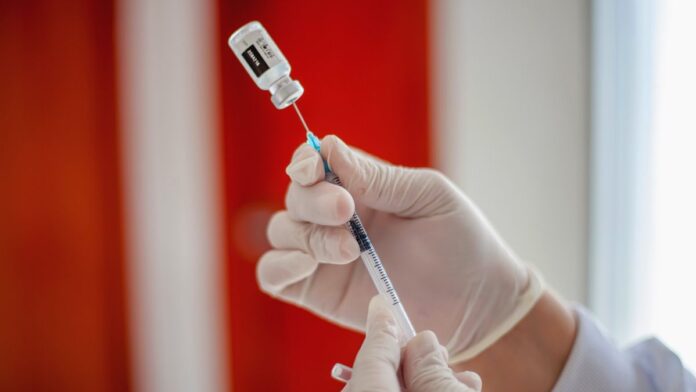

A personalized mRNA cancer vaccine, developed by Moderna and Merck, showed success in slowing the return and spread of melanoma in a late-stage clinical trial involving more than 1,100 patients, the companies announced Wednesday, results researchers say could mark a landmark advance for cancer immunotherapy.
What Happened
The Phase 3 trial tested a personalized vaccine called intismeran, combined with Merck’s existing immunotherapy Keytruda, in patients with stage IIB to stage IV melanoma who had already undergone surgery to remove their detectable cancer. The combination met its primary goal of significantly extending the time before melanoma returned, compared with Keytruda alone, and also met its secondary goal of reducing the cancer’s spread to other parts of the body, according to the companies’ news release.
The vaccine is built individually for each patient by sequencing the DNA from their specific tumor, then designing an mRNA shot that trains the immune system to recognize and attack the unique genetic signature, or neoantigens, of that person’s cancer, a process the companies say takes about six weeks per patient. The full underlying data has not yet been published in a peer-reviewed journal; the companies said results would be presented at an upcoming medical meeting and shared with regulators, with the news described only as “statistically significant and clinically meaningful.”
The announcement builds on earlier Phase 2 data from the same combination, which had shown a 49% reduction in the risk of recurrence or death and a 59% reduction in the risk of distant metastasis or death compared with Keytruda alone. Following Wednesday’s announcement, Merck shares climbed more than 12% while Moderna’s stock surged roughly 177%, reflecting the smaller biotech company’s greater relative exposure to the trial’s outcome.
Why It Matters
Melanoma accounts for only about 1% of all skin cancers but causes the large majority of skin cancer deaths, with more than 330,000 new cases diagnosed worldwide in 2022. Most recurrences develop within the first two to three years after initial surgical treatment, making a therapy capable of meaningfully extending recurrence-free survival a significant potential advance for patients facing a diagnosis that Merck’s head of oncology early development, Dr. Jane Healy, described as leaving people “worried about their cancer coming back” even after successful surgery.
The trial marks the first randomized Phase 3 study to definitively test the long-theorized potential of personalized “neoantigen” cancer vaccines, a concept researchers have pursued for years without previously proving its clinical benefit at this scale. Dr. Robert Vonderheide, a cancer immunologist at Penn Medicine’s Abramson Cancer Center, called the technology’s demonstrated ability to be adapted for other cancer types “highly significant” beyond melanoma specifically.
The results also arrive as mRNA technology faces significant political headwinds domestically. Health Secretary Robert F. Kennedy Jr. has repeatedly criticized mRNA vaccine technology and slashed $500 million in federal contracts for mRNA vaccine research last year, creating a notable contrast between the technology’s continued scientific momentum in oncology and its diminished government support for infectious disease applications.
Context and Background
Cancer vaccines using enhanced cellular immunity have long been considered a promising research direction, but had a “relatively unsuccessful track record until now,” according to the director of the Meyer Cancer Center at Weill Cornell Medicine. The intismeran trial builds directly on the earlier randomized Phase 2b KEYNOTE-942 study, which first demonstrated the combination’s potential benefit in a smaller patient population before this larger, confirmatory Phase 3 trial.
Moderna CEO Stéphane Bancel described the results as “a pivotal moment for the field of cancer research,” noting the company is now studying intismeran in combination with Keytruda and other therapies across multiple additional tumor types, including lung, bladder, and kidney cancers, reflecting the platform’s potential applicability well beyond melanoma.
Cost and accessibility remain open questions given the technology’s complexity: Keytruda alone already costs more than $200,000 annually for some cancer indications, and the added cost of manufacturing an individually personalized vaccine for each patient raises additional questions about how broadly the combination therapy could ultimately be deployed if approved.
Expert Analysis
Dr. Sarah Arron, a dermatologist and skin cancer surgeon not involved in the research, called the results “a landmark advance in how we treat these very advanced, high-risk melanomas,” distinguishing the therapy’s approach from the uniform mRNA vaccines used against COVID-19. “The COVID vaccine was the same RNA fragment given to everybody,” she explained, “whereas in this case, the antigen itself is not one virus, it’s each patient’s tumor.”
Dr. Marcus Butler, a medical oncologist at Toronto’s Princess Margaret Cancer Centre, cautioned that while the announcement is an exciting development, the full data has not yet been released for independent review, and he emphasized the field remains “hopeful that the magnitude of benefit will be substantial, but it’s still early.” Dr. Ramy Saleh, an oncology researcher, estimated that even with confirmed positive full data, regulatory approval and availability for patients would likely be more than eight months away.
Karen Knudsen, CEO of the Parker Institute for Cancer Immunotherapy, framed the results in dramatic terms, suggesting they could signal a new era for treating solid-tumor cancers broadly: “The positive hit here leads us into truly this next phase in immunotherapy. This is an auspicious start.”
What Happens Next
Moderna and Merck are expected to present the full trial data at an upcoming medical conference and submit results to regulatory authorities including the FDA in the coming months, a process that will allow independent experts to more fully evaluate the strength and durability of the reported benefit. Regulatory approval, if granted, would likely take at least several months to a year given the standard review timeline for oncology therapies of this complexity.
Given Moderna and Merck’s stated plans to expand testing of the intismeran platform across other cancer types, including lung, bladder, and kidney cancers, further trial results in those indications are likely to follow in the coming years, potentially extending the personalized mRNA cancer vaccine approach well beyond its initial application in melanoma.