
US forces struck approximately 90 military targets on Kharg Island — Iran’s primary oil export hub — on June 13, in what President Trump called “one of the most powerful bombing raids in the History of the Middle East.” The oil and gas infrastructure itself was deliberately spared, but Trump warned it could be struck if Iran continues to interfere with Strait of Hormuz shipping. Oil prices surged past $115 per barrel.
President Donald Trump on Friday night announced that the United States had bombed Kharg Island, targeting Iran’s most critical oil terminal in an attack that Tehran has warned would escalate the conflict.
The US said it struck military targets on the key Iranian oil export hub of Kharg Island, although the strikes did not target oil facilities, according to one US official.
In a Truth Social post that landed at approximately 10:30 p.m. Eastern Time on Friday, Trump declared that US forces had carried out strikes on Iran’s most strategically sensitive territory since the war began. The announcement came after days of escalating rhetoric — Trump’s public threat to seize Iranian oil infrastructure, his declaration that Iran’s regime was “pathetic,” and three consecutive nights of US bombing of IRGC command centres, radar sites, and missile storage facilities across southern Iran.
The Kharg Island strikes represent a qualitative escalation beyond what had gone before. Every previous US strike in this conflict — even the 49-Tomahawk salvo of June 10-11 — had targeted military infrastructure at locations that were primarily military in character. Kharg Island is different. It is simultaneously a military installation and the commercial and economic heart of Iran’s petroleum export industry.
What the Strikes Hit — and What They Didn’t
Announcing the strike in a post on Truth Social late Friday, President Donald Trump said that US forces had “totally obliterated every MILITARY target in Iran’s crown jewel, Kharg Island.” The island’s oil terminal has so far been unscathed in the war, according to oil market research firm Energy Intelligence, and the president said the island’s oil infrastructure was spared in Friday’s attack, but could be struck down the road.
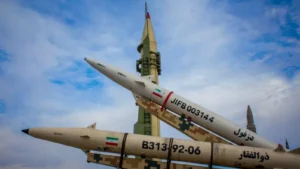
CENTCOM said naval mine storage facilities and missile storage bunkers were among targets destroyed in the “precision strike” on the island, hitting “90 Iranian military targets” while “preserving” the oil infrastructure.
The decision to hit military targets while preserving oil infrastructure is strategic rather than humanitarian. Oil infrastructure is the most powerful economic lever available to US forces — and destroying it now, before a deal is reached, would eliminate the threat that gives the US its most potent negotiating card.
“Should Iran, or anyone else, do anything to interfere with the Free and Safe Passage of Ships through the Strait of Hormuz, I will immediately reconsider this decision,” Trump said, as Iran has actively interfered with shipping in the strait for several days.
The conditional — “if Iran interferes with shipping, I will reconsider” — makes the preservation of oil infrastructure explicitly contingent on Iranian behaviour. It is a coercive threat with a specific trigger and a specific consequence. Iran’s government heard it precisely.
What Kharg Island Is
The small coral island about 21 miles off Iran’s coast is the primary terminal through which nearly all of Iran’s oil exports pass.
Kharg Island, a small coral island in the northern Persian Gulf responsible for handling approximately 90 percent of Iran’s crude oil exports, has become a flash point in the United States and Israel’s widening conflict in Iran.
Kharg Island has been a target of military action before. During the Iran-Iraq War of the 1980s, Iraq struck the island repeatedly, attempting to cut off Iran’s oil revenues. Iran rebuilt its export infrastructure each time. The island’s resilience during the Iraq war — and the political and economic costs that its disruption imposed on global oil markets even then — is part of why it has been treated with such strategic caution in the current conflict.
If Iran were to lose control of Kharg, it would be difficult for the country to function, even though the island isn’t a military or nuclear target. “It doesn’t matter which regime is in power — new or old. A takeover would give the US leverage over negotiations with Iran because the island is the main node of its economy.”
The Oil Price Response
The market response to the Kharg Island strikes was immediate and severe. Brent crude surged past $115 per barrel following Trump’s announcement — the highest level since the war began in February and well above the $100+ range that has been the war’s baseline.
The surge reflects a specific fear: that if the oil infrastructure on Kharg Island — currently intact — is struck in a subsequent round, Iran’s ability to export oil will be physically eliminated, removing whatever supply has been reaching markets through special arrangements with China and India. An Iran that cannot export oil at all is an Iran that has no economic lifeline — and a global energy market that is even more severely short of supply than it currently is.
Iran’s Response: UAE Threat, Hormuz Declaration
Iran on Saturday threatened retaliatory attacks on cities in the United Arab Emirates, where Iranian military officials claimed is where the strikes on Kharg Island originated from.
Iran’s threat to strike UAE cities represents the broadest geographic extension of its retaliation threats since the war began. Previous retaliatory strikes have targeted Kuwait and Bahrain — both of which host US military facilities. The UAE, while also a US partner, has not been a direct target to the same degree. A strike on UAE cities — particularly Abu Dhabi or Dubai — would be qualitatively different in its economic and diplomatic consequences from the Gulf states that have already absorbed Iranian fire.
Iran’s new supreme leader, Mojtaba Khamenei, announced on Thursday that the Strait of Hormuz will remain closed as long as the conflict continues.
The new Supreme Leader’s direct statement — that Hormuz closure is tied to conflict continuation — is the clearest articulation yet of Iran’s position. It is not a negotiating position; it is a statement of policy. The strait will not reopen until the conflict ends. The conflict ends when Iran agrees to terms the US accepts, or when the US agrees to terms Iran accepts. Neither has happened.
Trump’s Declarations: “Totally Defeated”
“Iran’s Military is a complete and total mess. Much of it, like their Navy and Air Force, doesn’t even exist anymore — They have been completely defeated. Iran is all talk and no action. The Bully of the Middle East is DEAD!!!” Trump wrote on Truth Social.
Trump’s declaration that Iran is “completely defeated” and that the “Bully of the Middle East is DEAD” represents the strongest victory-claiming language he has used since the war began. It is partly accurate — Iran’s conventional military capacity has been severely degraded — and partly misleading, given that Iran continues to fire ballistic missiles at four US-allied countries, has retained the ability to close the world’s most critical oil chokepoint, and has a new Supreme Leader making public declarations about continued defiance.
Trump said on Truth Social that Iran “would be wise to lay down their arms, and save what’s left of their country, which isn’t much!”
The escalation of rhetoric — from “pathetic” to “DEAD” to “save what’s left” — tracks a president who is either approaching a negotiating endgame in which maximum pressure precedes a deal, or who is genuinely committed to military resolution regardless of the diplomatic costs. The next 48 hours will provide the clearest signal yet of which description is accurate.
What Happens Next
Trump has offered differing views on how long the military offensive will go on and how it will end. “It’ll be as long as it’s necessary,” Trump told reporters, saying beforehand that he has his “own idea” how long the conflict could last. He noted that US attacks on Iran are “way ahead of schedule.”
“Way ahead of schedule” — a phrase with no publicly known reference point — suggests that Trump has an internal timeline for the conflict that has not been disclosed. Whether that timeline leads to a deal or to further military escalation, and whether the Kharg Island strikes represent the ceiling of the current escalation cycle or a step toward oil infrastructure destruction, will determine whether the next chapter of this war is its last or its most destructive.
LoudFact.com is an independent global news and explainer platform. This report is based on reporting from the Washington Post, NBC News, CNN, Council on Foreign Relations, PBS NewsHour, AOL News, and Trump’s official Truth Social statements as of June 13-14, 2026.