Melanin is the natural pigment responsible for the colour of your skin, hair and eyes. It also plays an essential role in protecting the skin from ultraviolet (UV) radiation. While melanin itself is not harmful, excess melanin production in certain areas can lead to hyperpigmentation, dark spots or uneven skin tone.
Many people search for ways to “reduce melanin,” but in most cases the goal is actually to reduce unwanted pigmentation rather than decreasing the skin’s natural protective pigment overall.
In this guide, we’ll explain what melanin is, why hyperpigmentation develops, and the evidence-based options available to help improve skin tone safely.
Quick Answer
You cannot safely eliminate melanin from healthy skin, nor should you try. If your concern is dark spots or uneven pigmentation, proven approaches include consistent sunscreen use, topical ingredients such as vitamin C, niacinamide, azelaic acid and retinoids, along with dermatologist-supervised treatments when appropriate.
What Is Melanin?
Melanin is a pigment produced by specialised skin cells called melanocytes.
Its main functions include:
- Protecting the skin from UV damage
- Helping determine skin colour
- Protecting hair and eye pigmentation
Melanin is essential for healthy skin and should not be viewed as something that needs to be removed.
What Causes Excess Pigmentation?
Dark patches may develop because of:
- Sun exposure
- Acne marks
- Hormonal changes (such as melasma)
- Skin inflammation
- Certain medications
- Skin injuries
- Natural ageing
Different causes require different treatments, making an accurate diagnosis important.
Safe Ways to Reduce Hyperpigmentation
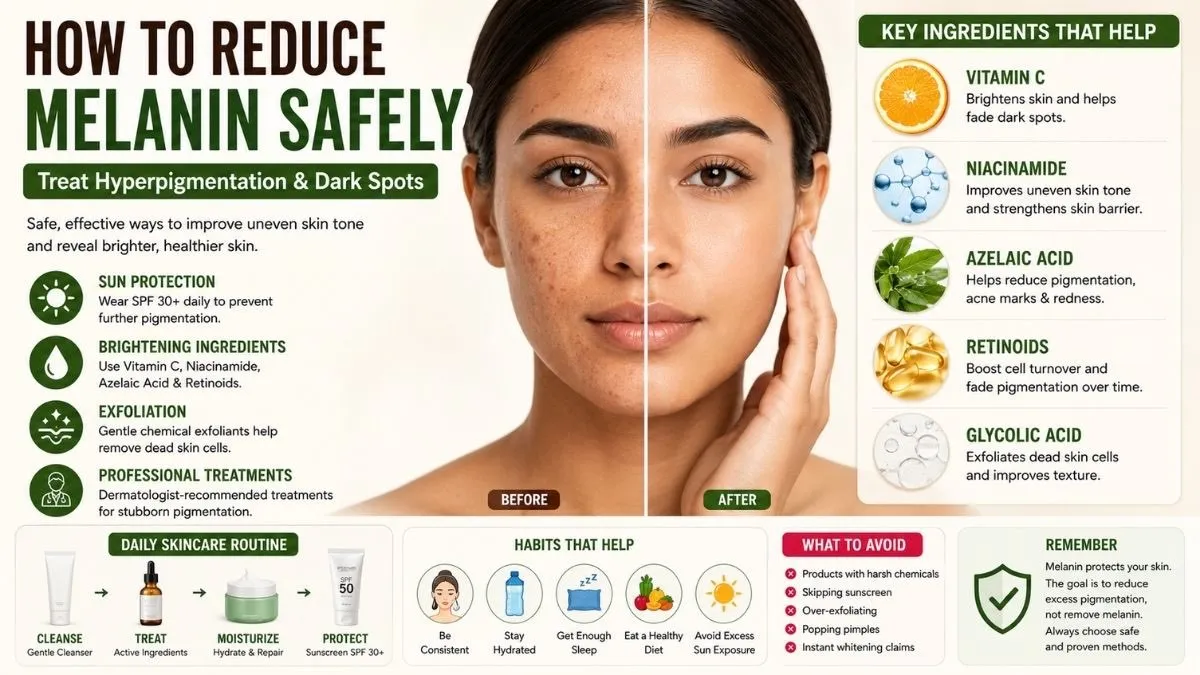
1. Wear Sunscreen Every Day
Daily broad-spectrum SPF 30 or higher is one of the most effective ways to prevent existing pigmentation from becoming darker and to reduce the risk of new spots forming.
2. Vitamin C
Vitamin C may help brighten the appearance of skin and reduce visible pigmentation over time while also providing antioxidant protection.
3. Niacinamide
Niacinamide may help reduce uneven skin tone and improve the appearance of dark spots when used consistently.
4. Azelaic Acid
Azelaic acid is commonly used for acne-related pigmentation and melasma under appropriate guidance.
5. Retinoids
Topical retinoids encourage skin cell turnover and may gradually improve pigmentation, though they can cause irritation and should be used as directed.
6. Chemical Exfoliants
Products containing glycolic acid or lactic acid may help remove surface skin cells, supporting a more even complexion. Avoid excessive exfoliation, which can worsen irritation.
7. Professional Treatments
Depending on the cause of pigmentation, a dermatologist may recommend:
- Chemical peels
- Laser treatments
- Prescription creams
- Microneedling (in selected cases)
Professional evaluation is especially important for persistent or changing pigmentation.
Melanin Facts & Its Importance
Melanin is a term often discussed as a part of whitening treatments in the world of cosmetic dermatology. However, most of us knew this to be responsible for our skin tone.
Here are some of the best facts about melanin:
- Melanin is important for UV protection.
- It blocks harmful ultraviolet radiation from the sun and minimizes our risk for DNA damage and skin cancer.
- Lighter skin may make you more vulnerable to skin cancer. (According to a study authored by a cancer research training fellow from the National Cancer Institute, skin cancer incidence is significantly lower among people of color than Caucasians.)
With the above melanin facts, it’s crucial to approach skin lightening with proper information and guidance. Often, natural home remedies are safe enough to do on your own. But if you want to go with professional help then it’s always best to consult a licensed dermatologist.
Tips To Reduce Melanin
Here, I will be showing you how to reduce melanin in the skin using natural ways which will help you reduce the amount of melanin in your skin.
1. Avoid UV Exposure
Most people like you and me love to go outside, however, if you are planning to reduce melanin then try to avoid direct sunlight. Direct UV exposure leads to an increase in the production of melanin, so wear full covering clothes that will cover your neck, legs, and your arms.
Additionally, wear shoes that protect and cover your feet. If you want you can use other accessories to cover your hands, face, and eyes.
2. Increase Vitamin A Intake
Try to add Vitamin A rich foods like carrots, sweet potatoes, apricots, turnip greens, squash, and pumpkin to your diet. Further foods like milk, butter, cheese, and whole eggs are also ideal sources for Vitamin A.
The synthetic form of Vitamin A, Retin-A is utilized in the exfoliation of dead skins and helps promote new cells. As cooking destroys the natural nutrients it’s always better to go with raw foods.
3. Increase Vitamin C Intake
Eat more foods that contain Vitamin C as this will help reducing melanin inside your body. Add fruits like any citrus fruit (oranges, limes, lemons, tangerines), strawberries, black currants, mangos, along with a whole list of vegetables including peppers, broccoli, tomatoes, cabbage, and collard greens. The more you eat, the more Vitamin C you will intake, especially if you eat the fruits and vegetables raw.
4. Increase Vitamin E Intake
Vitamin E doesn’t directly reduce the production of melanin, but it does reduce the over-pigmentation because of excess melanin. Cereals are often fortified in Vitamin E, but you can also get it from natural oils, mangos, butter, margarine, eggs, yams, spinach, and broccoli (again, among other sources).
5. Use Sunscreen Lotion
Sometimes no matter how hard you try to avoid staying long hours in the sun you can’t able to stay in the house all day long. For this, you need sun protection that stays in between you and direct sunlight.
Sunscreen lotions are the best thing to put on your skin which can reflect some sun UV rays. Additionally, they protecting your skin from sunburn or hyperpigmentation.
Just be cautious about something: Ensure you get a sunscreen lotion with high SPF (Sun Protection Factor). The higher the SPF (sun protection factor) the better. Make sure to check the SPF of any sunscreen you buy, as many are too low to actually be of any use.
Cover any exposed skin and be extra careful to re-apply if you plan to be in the sun longer than normal.
Habits That Help
- Apply sunscreen daily
- Reapply SPF when outdoors
- Avoid picking acne
- Follow a consistent skincare routine
- Introduce active ingredients gradually
- Stay patient—visible improvement often takes weeks to months
What to Avoid
Avoid products or practices that:
- Promise permanent skin whitening
- Contain unapproved ingredients
- Cause burning or severe irritation
- Encourage mixing multiple strong actives without guidance
- Skip sunscreen while using pigment-correcting products
Frequently Asked Questions
Healthy melanin is a normal and beneficial part of your skin. Most treatments target excess pigmentation rather than permanently reducing your natural melanin.
Improvement depends on the cause and treatment used. Many topical products require several weeks or months of consistent use before noticeable results appear.
Vitamin C is widely used to help brighten skin and reduce the appearance of some forms of hyperpigmentation.
Sunscreen helps prevent pigmentation from becoming darker and supports the effectiveness of other treatments.
Seek professional evaluation if pigmentation changes rapidly, becomes painful, bleeds, has irregular borders, or does not improve with appropriate skincare.
Final Thoughts
Melanin is essential for healthy skin, and the goal of treatment should not be to remove it entirely. Instead, focus on addressing unwanted hyperpigmentation safely with consistent sun protection, evidence-based skincare ingredients and professional advice when needed.
Improving uneven skin tone is usually a gradual process, but a balanced skincare routine and realistic expectations can lead to noticeable improvements over time while maintaining the skin’s natural protective functions.