Amazing Back and Bicep Workout
Back and bicep workouts are one of the most popular training combinations because these muscle groups naturally work together during pulling movements. Exercises such as rows, pull-ups and lat pulldowns primarily target the muscles of the back while also engaging the biceps, making them an efficient way to build upper-body strength.
Whether your goal is muscle growth, improved posture, athletic performance or general fitness, combining back and biceps into the same training session can help maximize workout efficiency while allowing other muscle groups time to recover.
In this guide, we’ll cover the best back and bicep exercises, explain proper technique, provide a complete workout routine and share practical tips for achieving consistent results.
Quick Answer
A balanced back and bicep workout combines compound pulling exercises with targeted arm movements.
An effective routine typically includes pull-ups or lat pulldowns, barbell rows, seated cable rows, face pulls and deadlifts for the back, followed by barbell curls, dumbbell curls, hammer curls and concentration curls for the biceps.
Why Train Back and Biceps Together?
These muscles frequently work together during pulling exercises.
Benefits include:
- Efficient workout structure
- Better muscle recovery
- Improved pulling strength
- Better posture
- Increased upper-body muscle development
- Reduced workout time
- Before your exercise list
Back and Bicep Workout Exercises:-
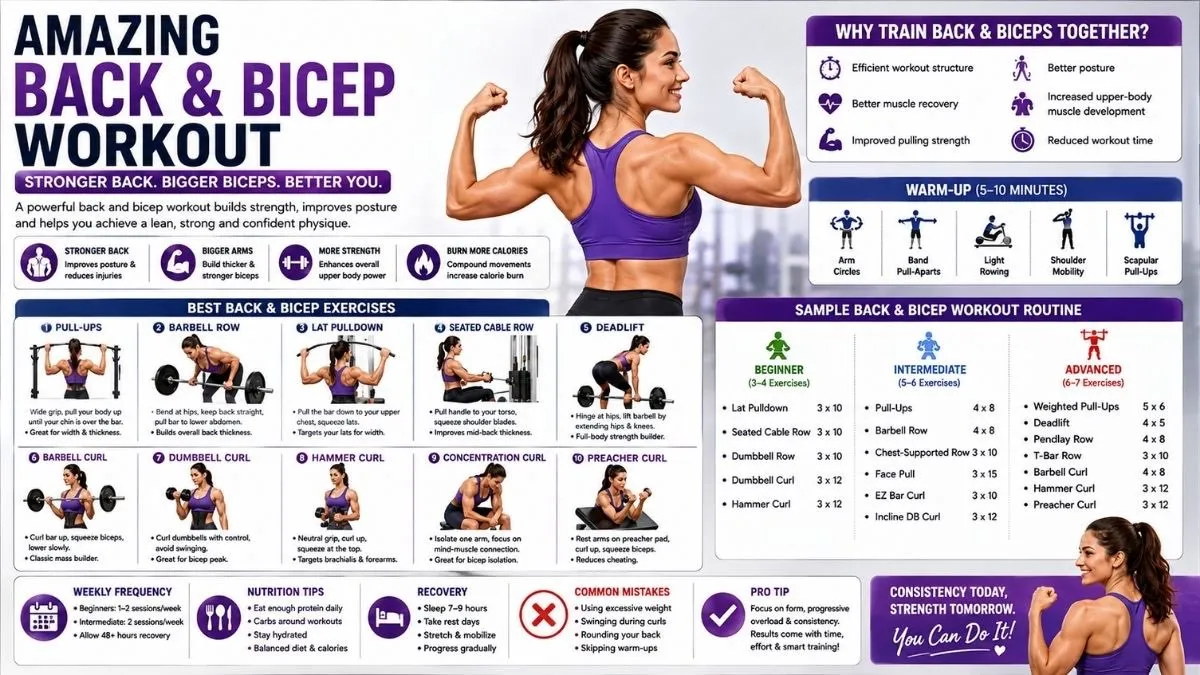
Warm-Up
Spend 5–10 minutes preparing your muscles.
Examples:
- Arm circles
- Band pull-aparts
- Light rowing
- Dynamic shoulder mobility
- Scapular pull-ups
A proper warm-up may improve performance and reduce the risk of injury.
Back Workout Exercises:
1. Pull-ups
Pull-ups refer to an upper-body compound pulling exercise in which the arms grip something in order to pull the body upwards with the wrists continuing in a neutral position, elbows flexing, and shoulders adduct.
A pull-up can be performed with any grip and if the grip isn’t high enough then you may bend your knees.

Pull-ups are primarily meant to target the back, but they also can be effective to target the arm, deltoid, and core muscles. It can add definition to the lower, middle, and upper back muscles along with mass, and width.
LoudFact Advice:
Lead with your shoulders and squeeze your elbows into your side. Avoid swinging your legs to put the focus on your back muscles.
Sets: 2
Reps: 20 per set
Rest: no rest
2. Barbell Bent Over Row
A bent-over row is a popular weight training exercise that targets a variety of back muscles. This compound exercise works with multiple muscles on your back simultaneously.
The bent-over row is often used for both bodybuilding and powerlifting. It is good exercise for increasing strength and size.
LoudFact Advice:
Grab a barbell with hands slightly wider than shoulder-width with your legs slightly bent, keep your back perfectly straight and bend your upper body until it’s perpendicular to the floor.
Sets: 4
Reps: 10 per set
Rest: no rest
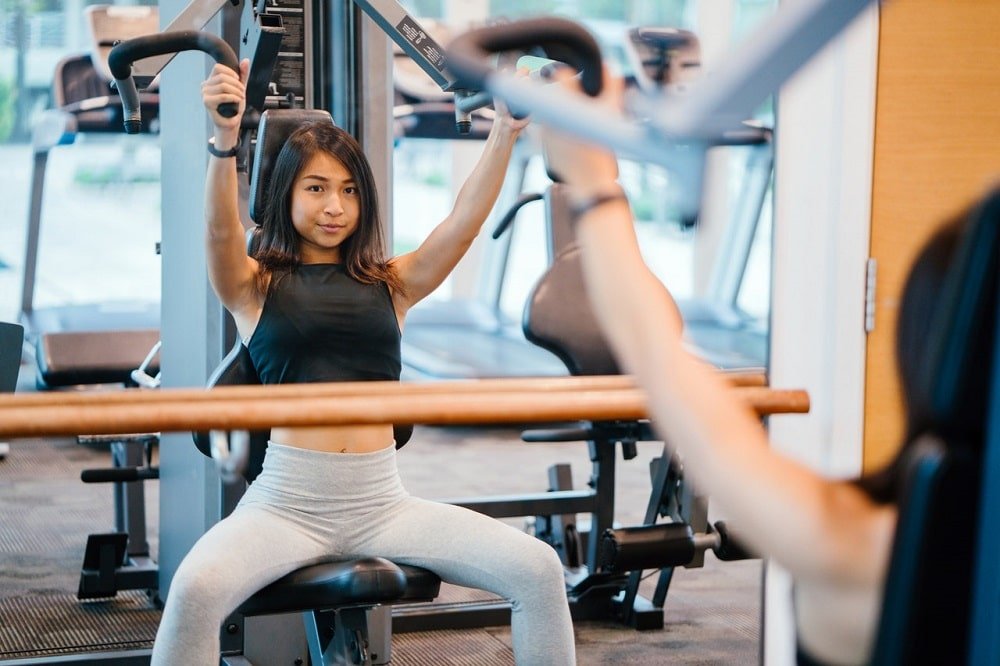
3. Lat pulldown
The lat pulldown exercise works great for the back muscles, especially the latissimus dorsi or the “lats,” the muscle just under the armpits. Don’t be overweight or else the focus will be shifted to the triceps instead of the lat muscles.
LoudFact Advice:
Kneel in front of the cable machine and pull the bar down to your chest, then return slowly to the start position. Make sure to keep your elbows slightly bent and keep your chest out.
Sets: 4
Reps: 10 per set
Rest: no rest
Bicep Workout Exercises:
1. Alternating dumbbell curl
Alternating dumbbell curl is an excellent arm exercise. However, don’t lift dumbbells beyond your capacity.
LoudFact Advice:
Grab a dumbbell in each hand with closed elbows, and complete a full repetition on one arm and then the other arm. Keep one arm stationary while you curl the other and alternate between sides.
Sets: 4
Reps: 10 per set
Rest: no rest

2. Barbell curl
The standing barbell curl is the cornerstone of many bicep-building routines. It is an isolated exercise because it involves the biceps and the elbow.
LoudFact Advice:
Your biceps are the secondary movers in your back exercises, which makes it easy to target both back muscles and biceps for this workout. Most importantly, don’t forget that the best way to see results from these exercises is by practicing good form.
Sets: 4
Reps: 10 per set
Rest: no sec
Weekly Training Frequency
Most people benefit from training back and biceps:
- 1–2 sessions per week for beginners
- 2 sessions per week for intermediate lifters
- Adjust volume based on recovery, goals and overall training split
Allow at least 48 hours before training the same muscle groups again.
Nutrition Tips
To support muscle growth and recovery:
- Eat enough protein throughout the day.
- Include carbohydrates around workouts for energy.
- Stay hydrated.
- Consume a balanced diet with adequate calories if building muscle is your goal.
Recovery
Muscles grow during recovery, not during the workout.
Support recovery by:
- Sleeping 7–9 hours per night
- Managing training volume
- Taking rest days
- Stretching after workouts
- Progressively increasing resistance over time
Common Mistakes
Avoid:
- Using excessive weight
- Swinging during curls
- Rounding your back during rows
- Skipping warm-ups
- Ignoring progressive overload
- Neglecting recovery
- Training to failure every session
Frequently Asked Questions
Yes. Since many back exercises already involve the biceps, training them in the same session is a common and efficient approach.
Pull-ups and lat pulldowns are effective for targeting the latissimus dorsi, which contributes to a wider back appearance.
For many people, 4–6 exercises per session provide sufficient training volume, depending on experience and intensity.
Yes. Beginners should start with lighter weights, focus on proper technique and gradually increase resistance as strength improves.
The deadlift is a compound movement that works multiple muscle groups, including the back, glutes, hamstrings and core.
Final Thoughts
A well-designed back and bicep workout combines compound pulling movements with targeted arm exercises to develop strength, improve posture and support balanced upper-body muscle growth.
Consistency, proper technique, progressive overload and adequate recovery are more important than performing a large number of exercises. Whether you’re just starting or looking to advance your training, following a structured routine and gradually increasing difficulty over time will help you achieve sustainable results.