
White phosphorus munitions have been reported in southern Lebanon during the current Israeli military campaign — generating immediate international condemnation and renewed debate about a weapon that is not banned under international law but whose use in civilian areas is explicitly restricted, and whose effects on human tissue are among the most severe of any incendiary.
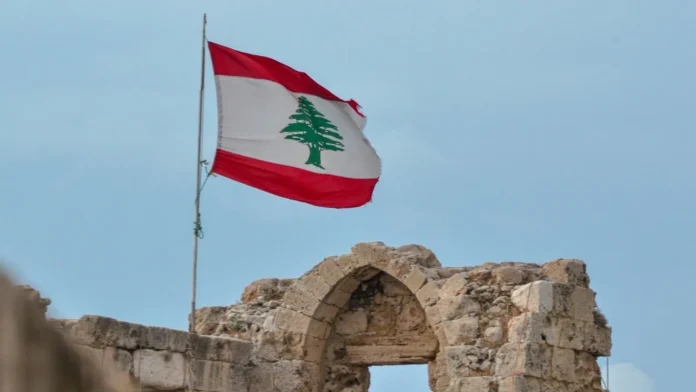
White phosphorus is not banned under international law, but can “create cruel injuries” and indiscriminate harm in civilian areas. A view of Beaufort Castle, southeast Lebanon, Friday, June 5, 2026.
The Israeli military confirmed hitting a vehicle and said the incident is being reviewed. Lebanon’s President Joseph Aoun called the strike “a flagrant violation to Lebanese sovereignty and international law.”
The reported use of white phosphorus near Beaufort Castle — the strategic hilltop fortress in southeastern Lebanon that Israeli forces seized on June 1 — brings one of the most controversial weapons in contemporary warfare into the already-fraught context of the Lebanon conflict. Understanding what white phosphorus does, what international law says about it, and why its appearance in southern Lebanon generates the response it does requires moving beyond the headline.
What White Phosphorus Is and How It Works
White phosphorus is a waxy, pale yellow chemical substance that ignites spontaneously when exposed to oxygen. It burns intensely at approximately 815 degrees Celsius — hot enough to melt steel, and sufficient to cause severe burns to human tissue on contact. The substance produces dense white smoke, which has given it its principal military uses: smoke screening for troop movements, target marking, and illumination.
What makes white phosphorus particularly dangerous — and particularly controversial in civilian contexts — is the nature of its burning properties:
It cannot be extinguished with water. Water causes white phosphorus to reignite. A burn victim doused with water is not helped; the phosphorus, if temporarily extinguished by contact with water, will reignite when the water evaporates or when the particle is exposed to oxygen again. The only effective way to stop white phosphorus burning is to submerge it in water completely to prevent any oxygen contact — which is not feasible for wounds on a human body.
It burns through tissue to bone. White phosphorus particles that contact human skin continue burning through the layers of tissue. Unlike conventional burns, which damage the outer layers, white phosphorus burns penetrate deeply and continue until the phosphorus is consumed or deprived of oxygen. The injuries it produces are among the most severe of any incendiary — causing deep tissue destruction, systemic toxicity from phosphorus absorption, and extremely difficult wound management.
It cannot be surgically removed while active. Medical personnel treating white phosphorus burns face the challenge of particles that may reignite on exposure to air when surgically exposed. Treatment protocols require keeping wounds wet and working in conditions that minimise oxygen exposure — requirements that are difficult to meet in field medical settings.
It produces toxic smoke. The white smoke generated by burning white phosphorus is not merely an obscurant — it contains phosphorus pentoxide, which reacts with moisture to produce phosphoric acid. Inhalation of the smoke can cause severe respiratory damage.
White Phosphorus in Lebanon: What Was Reported
The specific incident that prompted Lebanon’s presidential condemnation involved a vehicle struck by Israeli forces near Beaufort Castle. The Lebanese National News Agency confirmed the strike. The Israeli military confirmed the strike on the vehicle and stated the incident was under review.
Reports from south Lebanese villages in the area around Beaufort Castle in the days following its seizure have described the use of incendiary munitions. Human Rights Watch, which documented white phosphorus use by Israeli forces in Lebanon in 2023, has been tracking the current conflict.
Lebanon’s President Aoun’s characterisation of the incident as “a flagrant violation of Lebanese sovereignty and international law” encompasses multiple dimensions: the sovereignty dimension — Israeli forces operating in Lebanese territory — and the international humanitarian law dimension — the specific restrictions on white phosphorus use in civilian areas.
What International Law Says
The legal framework governing white phosphorus is more complex than popular debate usually acknowledges.
White phosphorus is not classified as a chemical weapon under the Chemical Weapons Convention. The CWC prohibits the use of chemicals whose toxic properties cause direct harm — white phosphorus’s primary mechanism is incendiary, not toxic, so it falls outside the convention’s prohibition framework.
White phosphorus is regulated under Protocol III of the Convention on Certain Conventional Weapons (CCW), which prohibits or restricts incendiary weapons. The key provisions are:
- Prohibition on use against civilians: Protocol III prohibits “making the civilian population as such, individual civilians, or civilian objects, the object of attack with incendiary weapons.”
- Restriction in civilian concentrations: Protocol III prohibits the use of air-delivered incendiary weapons in concentrations of civilians — and requires special precautions for ground-delivered incendiary weapons used in such areas.
Israel has not ratified Protocol III of the CCW, which creates a legal argument that it is not bound by these specific restrictions. The counter-argument — accepted by most international humanitarian law experts — is that the principle of distinction (between civilian and military targets) and the principle of proportionality are customary international law applicable to all states regardless of treaty ratification.
The practical legal question is whether white phosphorus was used in a way that violated these principles — whether it was used in areas with a civilian presence, whether the civilian harm was proportionate to the military advantage sought, and whether alternatives were available. Those questions require investigation of specific incidents by independent bodies.
Historical Precedent: Lebanon 2006, Gaza 2008-9
This is not the first time white phosphorus use by Israeli forces in Lebanon or the Palestinian territories has generated international attention and formal investigations.
Human Rights Watch documented white phosphorus use by Israel in Lebanon during the 2006 war, concluding that some use violated international humanitarian law due to its proximity to civilian areas. The organisation documented its use again during the 2008-2009 Gaza war, including the incident at the UNRWA school in Beit Lahia that produced the most widely circulated photographic evidence of white phosphorus in a civilian context.
In both cases, Israeli military officials defended the use as legitimate for smoke screening and denied targeting civilians. Human Rights Watch and other organisations conducted investigations and reached different conclusions about specific incidents.
The 2026 Lebanon conflict has produced similar documentation challenges: access to southern Lebanon for independent investigators is limited by active hostilities; Israeli military operations are ongoing; and the evidentiary standard required to establish whether Protocol III was violated requires specific information about intent, alternatives available, and civilian presence.
Why It Matters in the Current Context
The appearance of white phosphorus in the Lebanon conflict matters for reasons that extend beyond the specific legal question.
The Lebanon war’s relationship to the US-Iran ceasefire is direct: Iran has used Israeli operations in Lebanon as a justification for suspending ceasefire negotiations and threatening to close the Strait of Hormuz. Evidence of white phosphorus use — one of the most viscerally disturbing weapons in the military inventory — adds to the evidence base Iran uses to characterise Israeli and by extension US operations as ceasefire violations.
For the international community — particularly European governments that have been attempting to maintain credibility as mediators while supporting the ceasefire framework — documented use of white phosphorus in civilian areas creates a specific political problem: it demands a response that either condemns the weapon’s use or acknowledges complicity in its effects.
Lebanon’s President Aoun has made his condemnation clear. Whether that condemnation produces any change in Israeli operational behaviour, any international legal process, or any diplomatic consequence is the question that every previous white phosphorus controversy in this conflict has left unanswered.
LoudFact.com is an independent global news and explainer platform. This report is based on NPR reporting, Human Rights Watch documentation, the legal framework of the CCW and its Protocol III, and Lebanon’s National News Agency as of June 5-9, 2026.