
The United States launched 49 Tomahawk missiles and conducted fighter jet operations against Iranian military infrastructure for the second consecutive night on June 10-11, targeting IRGC command centres, missile depots, and air defence systems — while Iran shot down a US Apache helicopter, struck military bases in Kuwait, Bahrain, and Jordan, and the exchange claimed the lives of three Indian sailors aboard a struck tanker.
“The strikes are in response to Iran’s unwarranted and continued aggression,” CENTCOM said in a statement early on June 11, adding that US forces remained “vigilant, lethal, and ready.”
The United States launched another round of airstrikes on Iran this morning, after President Trump said Iran was taking “too long to negotiate.” The strikes targeted several sites along Iran’s coast, including military facilities in and around the Strait of Hormuz.
US military forces carried out a series of precision strikes against Iranian military infrastructure late on June 10 and into the early hours of June 11, launching 49 Tomahawk Land Attack Missiles and conducting fighter jet operations targeting facilities linked to Iran’s Islamic Revolutionary Guard Corps. According to CENTCOM, the operation began shortly after midnight and lasted approximately four hours. The strikes were launched in response to what US officials described as continued Iranian aggression following the downing of a US Army AH-64 Apache helicopter near the Strait of Hormuz earlier this week.
The Apache’s downing — the first US military helicopter lost in this conflict — represents a significant tactical development. The AH-64 Apache is one of the US Army’s primary attack helicopter platforms, and its loss to Iranian surface-to-air fire near the strait demonstrates that Iran’s residual air defence capacity, even after repeated US strikes on its radar and missile sites, retains the ability to threaten US aircraft.
What Was Struck
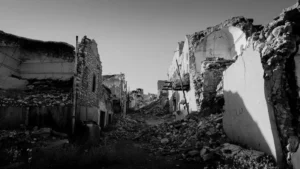
CENTCOM stated that it targeted Iranian military surveillance capabilities, communications systems, and air defense sites across Iran with precision munitions. The sites targeted posed a threat to US forces in the region and commercial ships attempting to transit the Strait of Hormuz, according to the US military.
The strikes marked the second consecutive day of US military action inside Iranian territory, reflecting a significant escalation in tensions between Washington and Tehran. US Defense Secretary Pete Hegseth, during a security cabinet meeting with Trump, stated that the US was “going to hit Iran hard” on Wednesday. “Those strikes that will happen tonight will be strong and clear and if they have to happen tomorrow night, they will be strong and clear,” Hegseth said.
The targeting of IRGC command-and-control centres represents an escalation beyond the radar installations and drone launch sites that characterised earlier exchanges. Command centres — facilities that coordinate IRGC military operations — are higher-value targets with direct implications for Iran’s ability to orchestrate its military campaign. Their destruction disrupts not only the specific capabilities they control but the broader operational coherence of the IRGC’s response to US pressure.
According to Iranian state media, explosions were heard in western Tehran and the southern Iranian cities of Sirik and Minab.
Explosions near Tehran — even in western districts removed from the city centre — represent the most geographically significant US strikes of the conflict. Previous strikes had been concentrated near the Strait of Hormuz and on Iran’s southern coastline. Strikes audible in the capital carry a different political weight.
The Apache and the Indian Sailors
Two specific incidents from the overnight exchange require particular attention.
The downing of the US Apache helicopter near the Strait of Hormuz is operationally and politically significant. The operation followed recent confrontations in and around the Strait of Hormuz, including the reported downing of a US Army AH-64 Apache helicopter by Iranian forces earlier in the week. The loss of a US military aircraft to Iranian fire, during a period when Iran’s military capacity has been repeatedly described as significantly degraded, suggests either that Iran’s residual air defence assets are more capable than assessed, or that the tactical environment in which US aircraft are operating is more dangerous than public characterisations of Iran’s military degradation implied.
Three Indian sailors have been confirmed dead after a US military strike on the Palau-flagged tanker MT Settebello off the coast of Oman, prompting India to lodge a formal protest with Washington.
The deaths of three Indian sailors on a tanker struck in the exchange introduce a new diplomatic dimension to the conflict. India has been one of the primary purchasers of Iranian oil throughout the war, using special arrangements to continue imports despite the broader disruption to Gulf shipping. The MT Settebello’s presence near the Hormuz region and the circumstances of its being struck — whether by US forces enforcing the blockade or in crossfire — will be the subject of India’s formal diplomatic protest and a serious complication for US-India relations.
Iran’s Retaliation
Iran responded quickly. The IRGC announced that its aerospace force and navy had launched a two-wave retaliatory strike against 18 US military targets, including bases hosting American troops in Kuwait, Bahrain, and Jordan. The IRGC also claimed that the Strait of Hormuz had been closed to all vessels due to regional insecurity.
The IRGC’s claim of a two-wave retaliatory strike against 18 targets across three countries represents the most coordinated Iranian retaliatory operation since the conflict began. Whether all 18 targets were actually struck, or whether the announcement represents an inflated claim of damage, will be assessed through CENTCOM damage assessments and allied government reports.
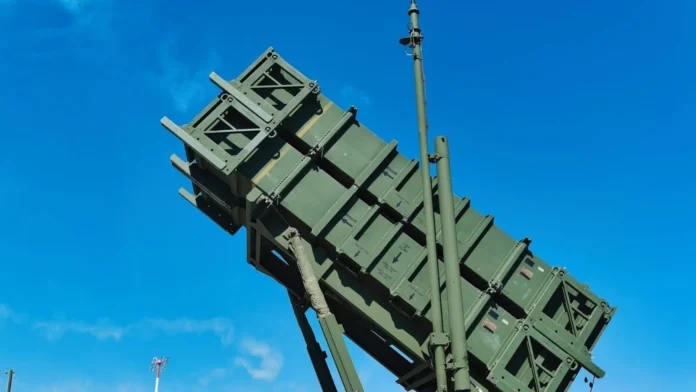
Jordan intercepted five missiles aimed at an area hosting a major airbase near Azraq while Kuwait and Bahrain said their air defences were engaging incoming fire. The attacks followed US strikes on Iranian air defence and radar sites near the Strait of Hormuz.
Jordan’s interception of five Iranian missiles targeting the Azraq airbase area extends the geography of the conflict to a country that has been a consistent US ally in the region but had not previously been a direct target of Iranian ballistic missile fire. The spread of Iranian missile activity to Jordan represents a further widening of the conflict’s geographic footprint.
Trump’s Threat: “Very Hard Tonight”
President Donald Trump on Thursday said the US will hit Iran “very hard tonight” and later take over its oil and gas sectors. The latest threat comes after a second day of intensified strikes between the US and Iran, pushing the Middle East closer to the resumption of full-scale war.
Trump’s threat to seize Iran’s oil infrastructure — its refineries, the Kharg Island oil terminal, and related facilities — is a significant escalation of rhetorical stakes beyond anything previously stated publicly. It implies that the conflict is moving toward a phase in which Iran’s energy export capacity itself is a military target.
Despite the escalation, both sides said talks to reach a peace deal are still continuing.
That sentence — both sides conducting strikes while claiming talks are continuing — is the defining paradox of this war’s most escalatory phase. Whether the talks that are nominally continuing have any substantive content left, or whether both sides are conducting military operations while maintaining the appearance of diplomatic engagement for their respective domestic audiences, is the question that the next 24 hours will begin to answer.
The Ceasefire’s Status
The April 8 ceasefire, which nominally remained in place through weeks of mutual strikes, claimed to have survived one exchange after another. After two consecutive nights of intensive US bombing, the downing of a US helicopter, three Indian sailors killed, Iranian strikes on Jordan, and Trump threatening to seize Iran’s oil sector, the ceasefire’s meaningful existence is difficult to sustain as a claim.
It is difficult to make a definitive call on whether this escalation will lead to full-scale fighting, NPR’s Greg Myre said. For two consecutive nights, there have been US attacks on Iran, and the president says there will be more tonight if Iran doesn’t agree to a deal. Rising gasoline prices, fueled by the US war with Iran, have driven inflation to its highest level in more than three years.
NPR’s assessment — that a definitive call on full-scale resumption is not yet possible — reflects the genuine uncertainty of the current moment. Both sides have conducted strikes at levels consistent with active warfare while simultaneously maintaining the fiction that diplomacy has not ended. The next 24 hours will likely clarify which description — escalating war or pressure tactics before a deal — is more accurate.
LoudFact.com is an independent global news and explainer platform. This report is based on CENTCOM statements, the Jerusalem Post, Radio Free Europe/Radio Liberty, the Defense News, NPR, and Euronews as of June 11, 2026.